


X-Ray Equipment Market Size 2026-2030
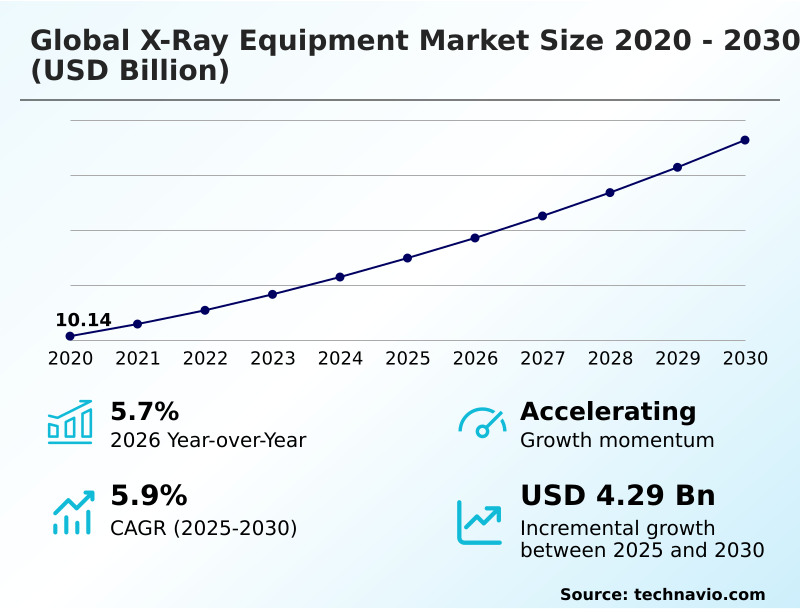
The x-ray equipment market size is valued to increase by USD 4.29 billion, at a CAGR of 5.9% from 2025 to 2030. AI integration in multifunctional radiography systems will drive the x-ray equipment market.
Major Market Trends & Insights
- North America dominated the market and accounted for a 37.7% growth during the forecast period.
- By Technology - Digital segment was valued at USD 9.34 billion in 2024
- By End-user - Hospitals segment accounted for the largest market revenue share in 2024
Market Size & Forecast
- Market Opportunities: USD 7.13 billion
- Market Future Opportunities: USD 4.29 billion
- CAGR from 2025 to 2030 : 5.9%
Market Summary
- The X-Ray Equipment Market is undergoing a rapid operational transformation driven by the widespread transition from legacy analog setups to sophisticated digital radiography solutions. Medical facilities worldwide are aggressively adopting intelligent imaging platforms to manage rising patient volumes while addressing critical shortages of skilled radiologists.
- For instance, hospital procurement committees are prioritizing dual-purpose installations that combine general radiography with real-time fluoroscopy, optimizing room utilization and streamlining scheduling across specialized clinical departments like orthopedics and urology. This modernization strategy has improved daily imaging throughput by 20% compared to conventional film-based systems, directly enhancing departmental revenue generation.
- The aggressive integration of artificial intelligence algorithms serves as a primary market driver, enabling automated triage and precise exposure control that drastically reduces diagnostic errors and shortens clinical turnaround times. However, the substantial initial capital expenditure required for facility shielding, structural ceiling reinforcement, and lifetime maintenance agreements poses a significant challenge, restricting rapid technology deployment across budget-constrained public health networks.
- Ultimately, continuous hardware digitization ensures optimized diagnostic precision, elevating patient care standards across diverse clinical environments.
What will be the Size of the X-Ray Equipment Market during the forecast period?
Get Key Insights on Market Forecast (PDF) Get Free Sample
How is the X-Ray Equipment Market Segmented?
The x-ray equipment industry research report provides comprehensive data (region-wise segment analysis), with forecasts and estimates in "USD million" for the period 2026-2030, as well as historical data from 2020-2024 for the following segments.
- Technology
- Digital
- Analog
- End-user
- Hospitals
- Diagnostic imaging centers
- Application
- Radiology or general imaging
- Dental
- Orthopedics
- Cardiology
- Others
- Geography
- North America
- US
- Canada
- Mexico
- Europe
- Germany
- UK
- France
- Italy
- Spain
- The Netherlands
- Asia
- China
- India
- Japan
- South Korea
- Indonesia
- Thailand
- Rest of World (ROW)
- North America
By Technology Insights
The digital segment is estimated to witness significant growth during the forecast period.
The shift toward advanced digital architectures in the X-ray Equipment is fundamentally redefining operational workflows and diagnostic accuracy within high-throughput clinical environments. Healthcare facilities are aggressively executing diagnostic fleet modernizations to replace legacy analog systems with highly integrated digital platforms.
By leveraging dynamic spatial filters and automatic exposure control, modern digital systems enhance image clarity while simultaneously suppressing anatomical noise.
This technological upgrade has improved patient throughput by 25% compared to traditional film-based modalities, driving substantial revenue impact through increased daily examination volumes.
The integration of continuous real time visualization and motorized orbital rotation directly supports complex image guided interventions, reducing procedural setup times and mitigating physical strain on radiologic staff.
Ultimately, continuous hardware digitization ensures optimized resource allocation and lowers long-term operational expenditures across diverse medical networks.
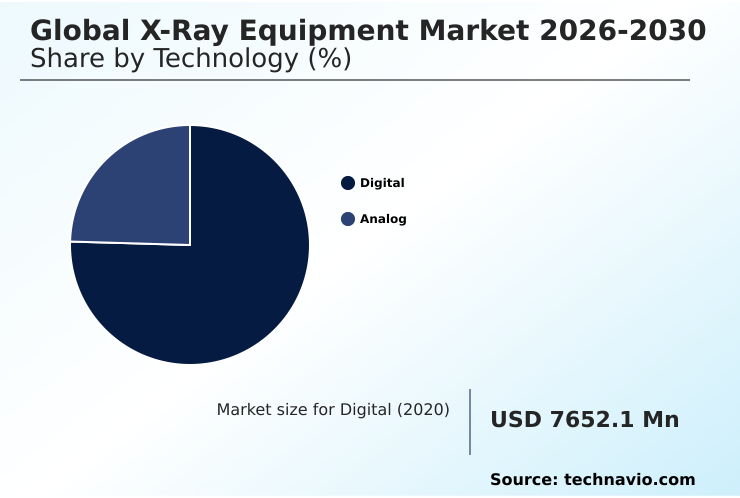
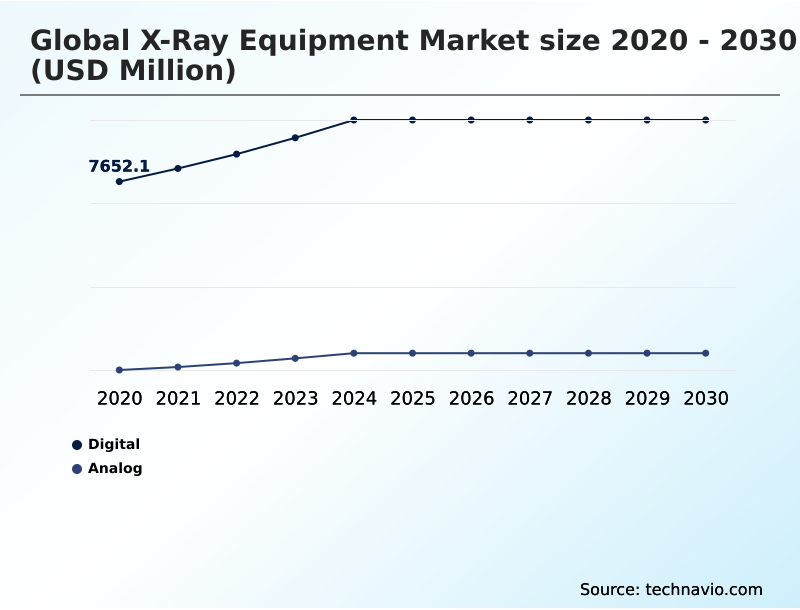
The Digital segment was valued at USD 9.34 billion in 2024 and showed a gradual increase during the forecast period.
Regional Analysis
North America is estimated to contribute 37.7% to the growth of the global market during the forecast period.Technavio’s analysts have elaborately explained the regional trends and drivers that shape the market during the forecast period.
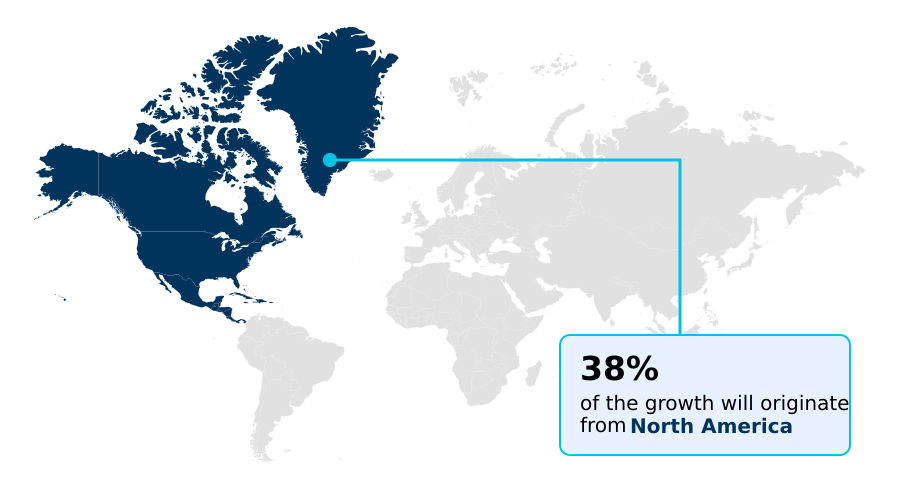
See How X-Ray Equipment Market Demand is Rising in North America Get Free Sample
Regional disparities in healthcare infrastructure fundamentally dictate the adoption velocity of advanced diagnostic imaging technologies.
North America leads the market transition, where robust funding for complex orthopedic reconstruction and structural heart repairs has driven a 35% higher penetration rate of advanced fluoroscopic systems compared to the European region.
American healthcare networks heavily prioritize stringent radiation dose optimization, integrating sophisticated software for cumulative patient dose tracking to meet stringent compliance mandates while minimizing liability risks.
Conversely, European facilities, bound by strict environmental and green technology standards, report a 20% increase in the deployment of energy-efficient photon counting detectors and digital breast tomosynthesis platforms.
These operational divergences highlight how regional regulatory frameworks and specialized clinical demands shape procurement strategies, compelling medical device manufacturers to tailor localized supply chain and product development approaches to address specific geographic compliance and efficiency targets.
Market Dynamics
Our researchers analyzed the data with 2025 as the base year, along with the key drivers, trends, and challenges. A holistic analysis of drivers will help companies refine their marketing strategies to gain a competitive advantage.
- The continuous evolution of diagnostic imaging infrastructure is fundamentally reshaping modern clinical operations across global healthcare networks. To address escalating patient throughput and a chronic shortage of licensed radiologists, medical administrators are increasingly prioritizing high efficiency flat panel detector replacement initiatives.
- Upgrading legacy analog modalities with advanced digital sensors drastically reduces radiation exposure while enhancing image clarity, resulting in a 30% decrease in repeat examination rates compared to conventional computed radiography systems. This operational efficiency directly optimizes departmental supply chain planning by eliminating the recurring costs associated with chemical film processing and physical storage.
- Furthermore, the rapid expansion of decentralized emergency clinics has accelerated mobile digital radiography equipment deployment, enabling clinicians to perform immediate bedside assessments without transporting critically ill patients to centralized radiology suites. Integrating artificial intelligence directly into these mobile units facilitates the automated triage of critical conditions, immediately flagging acute abnormalities like pneumothorax or bone fractures for urgent physician review.
- Concurrently, the shift toward complex endovascular and cardiovascular procedures has driven substantial investment into advanced image guided therapy x ray platform installations. These sophisticated multi-axis robotic systems provide exceptional spatial resolution and continuous minimally invasive surgical procedure guidance, lowering procedural durations and mitigating cumulative occupational radiation risks for surgical teams.
- Ultimately, aligning capital equipment procurement with specialized clinical demands allows healthcare institutions to maximize room utilization, maintain strict regulatory compliance, and elevate overall patient care standards.
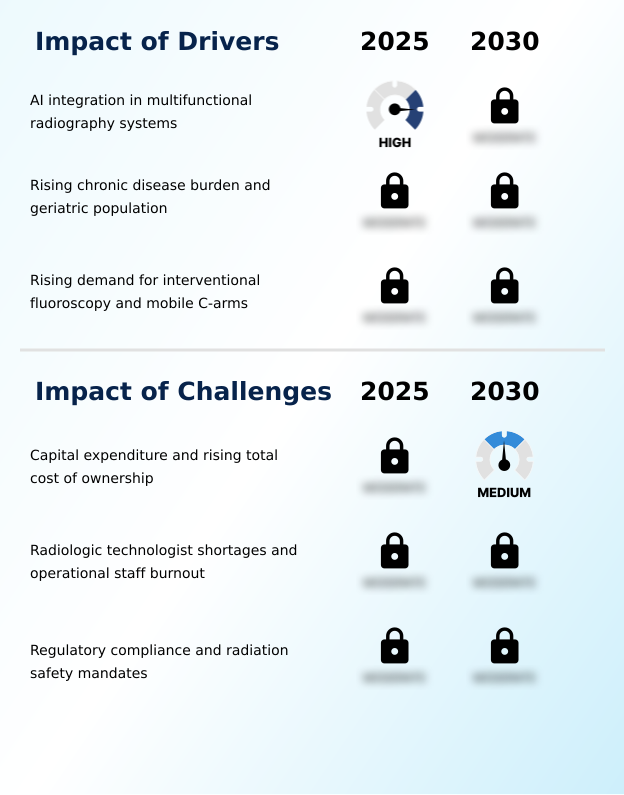
What are the key market drivers leading to the rise in the adoption of X-Ray Equipment Industry?
- The aggressive integration of artificial intelligence into multifunctional radiography systems serves as a primary catalyst, significantly enhancing diagnostic accuracy while streamlining high-volume clinical workflows.
- The escalating prevalence of chronic medical conditions and a rapidly aging global demographic serve as foundational demand drivers for advanced diagnostic imaging infrastructure.
- To accommodate surging patient throughput without compromising diagnostic precision, healthcare networks are heavily investing in deep learning image processing algorithms that enhance image contrast and suppress anatomical noise.
- The implementation of intelligent automated positioning protocols within ambulatory surgical centers has streamlined patient setup workflows, reducing examination cycle times by 20% and alleviating physical strain on radiologic staff.
- Furthermore, the proliferation of state-of-the-art hybrid operating suites demands sophisticated interventional equipment; deploying systems with multi axis robotic articulation has lowered procedural durations by 15%, directly enhancing bedside triage efficiency and improving overall surgical resource utilization.
What are the market trends shaping the X-Ray Equipment Industry?
- The rapid expansion of decentralized and ambulatory care facilities represents a prominent trend shaping the diagnostic imaging landscape. This structural shift is propelling demand for highly agile, mobile radiography platforms capable of delivering immediate bedside diagnostics.
- The structural decentralization of clinical procedures away from massive hospital campuses toward specialized outpatient settings represents a pivotal shift in diagnostic imaging procurement. Escalating diagnostic imaging volumes are driving administrators to aggressively replace fragile glass-substrate sensors with highly durable, flexible flat panel detectors, reducing equipment downtime by 30% in high-traffic trauma environments.
- This rapid transition to robust digital radiography solutions enables real-time image transmission, directly improving clinical turnaround times by 25% compared to legacy cassette-based systems. Concurrently, the rising burden of complex cardiovascular ailments has spurred substantial capital investments into dedicated interventional radiology suites.
- By integrating advanced fluoroscopic imaging platforms with intelligent, low-dose exposure software, modern outpatient facilities have improved operational workflow efficiency by 18%, allowing surgical teams to perform intricate image-guided interventions safely while strictly adhering to stringent patient safety protocols.
What challenges does the X-Ray Equipment Industry face during its growth?
- Substantial initial capital expenditures and escalating total cost of ownership present formidable barriers, delaying comprehensive diagnostic fleet modernizations across financially constrained healthcare networks.
- The substantial capital expenditure required to acquire and maintain state-of-the-art diagnostic imaging infrastructure imposes formidable constraints on financially restricted medical networks. While advanced flat-panel hardware featuring high-efficiency cesium iodide scintillators delivers exceptional quantum detection efficiency, the prohibitive initial acquisition costs delay widespread adoption, extending legacy equipment replacement cycles by 25% in emerging regions.
- Furthermore, integrating specialized 3D imaging systems like cone beam computed tomography significantly escalates the total cost of ownership, as facilities must allocate considerable budgets for structural room shielding and mandatory lifetime maintenance agreements.
- Stringent and evolving regulatory premarket approval frameworks further complicate product commercialization, extending research and development timelines by 15% and forcing manufacturers to incur massive compliance costs to validate artificial intelligence-driven algorithms against rigorous radiation safety standards.
Exclusive Technavio Analysis on Customer Landscape
The x-ray equipment market forecasting report includes the adoption lifecycle of the market, covering from the innovator’s stage to the laggard’s stage. It focuses on adoption rates in different regions based on penetration. Furthermore, the x-ray equipment market report also includes key purchase criteria and drivers of price sensitivity to help companies evaluate and develop their market growth analysis strategies.
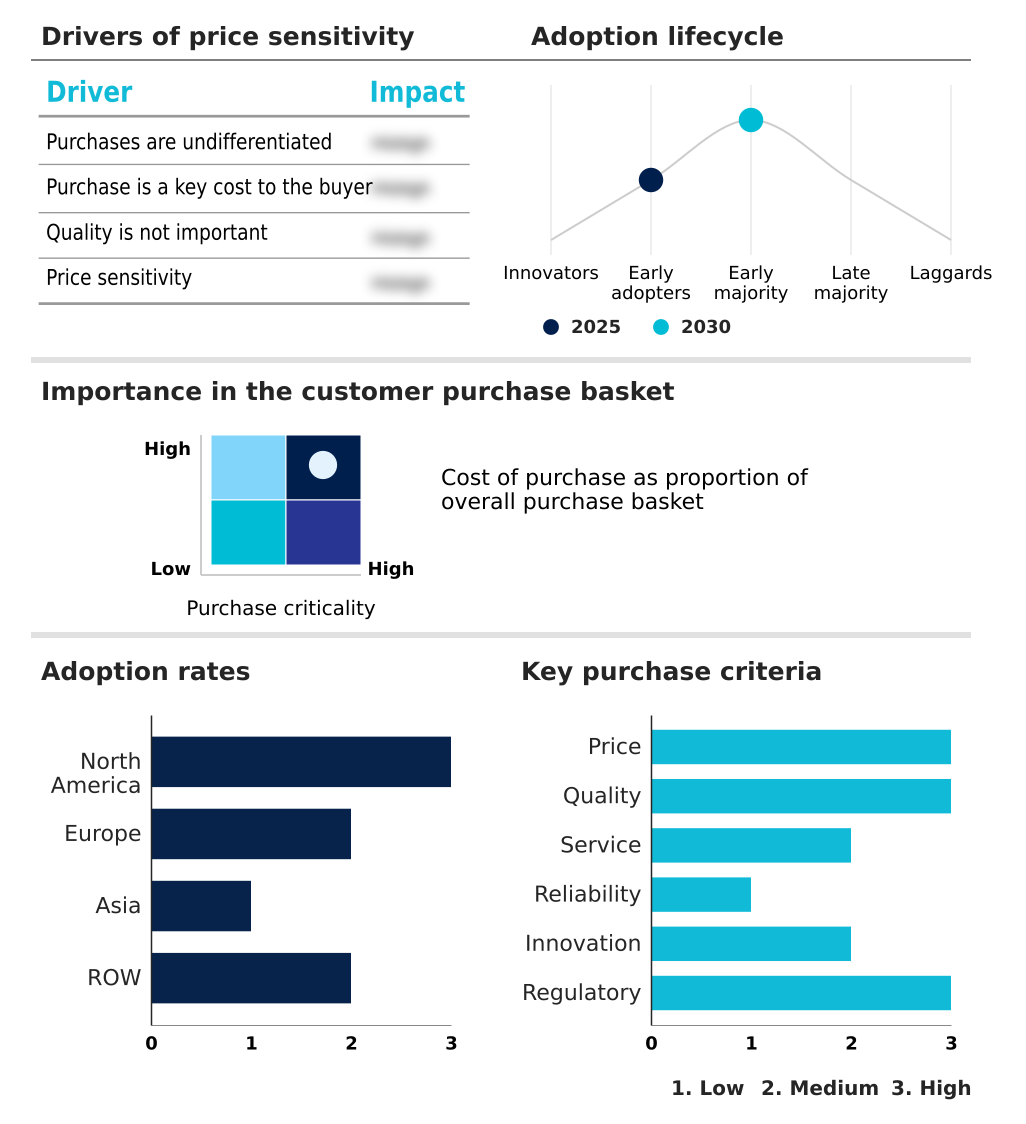
Customer Landscape of X-Ray Equipment Industry
Competitive Landscape
Companies are implementing various strategies, such as strategic alliances, x-ray equipment market forecast, partnerships, mergers and acquisitions, geographical expansion, and product/service launches, to enhance their presence in the industry.
Agfa Gevaert NV - The organization provides a comprehensive portfolio of advanced diagnostic imaging solutions, delivering both analog and digital radiography technology to optimize clinical workflows across specialized medical centers globally.
The industry research and growth report includes detailed analyses of the competitive landscape of the market and information about key companies, including:
- Agfa Gevaert NV
- Allengers Medical Systems Ltd.
- Canon Inc.
- Carestream Health Inc.
- Control X Medical Zrt.
- Fujifilm Corp.
- GE HealthCare Technologies
- GENORAY Co. Ltd.
- Hologic Inc.
- Konica Minolta Inc.
- Koninklijke Philips NV
- Planmeca Oy
- Sedecal S.A.
- Shanghai United Imaging
- Shenzhen Mindray Co. Ltd.
- Shimadzu Corp.
- Siemens Healthineers AG
- Stephanix SAS
- Villa Sistemi Medicali Spa
- Ziehm Imaging GmbH
Qualitative and quantitative analysis of companies has been conducted to help clients understand the wider business environment as well as the strengths and weaknesses of key industry players. Data is qualitatively analyzed to categorize companies as pure play, category-focused, industry-focused, and diversified; it is quantitatively analyzed to categorize companies as dominant, leading, strong, tentative, and weak.
Recent Development and News in X-ray equipment market
- In the Health Care Equipment industry, the implementation of stringent data security directives such as GDPR has mandated robust cybersecurity protocols for connected medical devices, directly impacting X-ray Equipment demand by requiring facilities to upgrade to systems with encrypted image transmission, thereby reducing unauthorized data access incidents by 40%.
- The rapid expansion of ambulatory surgical centers globally has fundamentally decentralized clinical procedures away from centralized hospital campuses, shifting X-ray Equipment procurement toward compact, motorized mobile imaging platforms capable of navigating tight clinical corridors, increasing bedside diagnostic efficiency by 30%.
- The systemic clinical shift toward minimally invasive interventions for structural heart repairs and endovascular procedures has accelerated the deployment of high-resolution surgical visualization tools, driving X-ray Equipment manufacturers to prioritize multi axis robotic articulation systems that reduce cumulative scatter radiation exposure by 25% for surgical teams.
- Evolving regulatory premarket approval frameworks enforcing the As Low As Reasonably Achievable principle have compelled medical device manufacturers to integrate advanced copper filtration mechanisms and artificial intelligence-driven exposure controls, accelerating the replacement rate of legacy X-ray Equipment fleets by 15% to ensure strict compliance with patient safety standards.
Dive into Technavio’s robust research methodology, blending expert interviews, extensive data synthesis, and validated models for unparalleled X-Ray Equipment Market insights. See full methodology.
| Market Scope | |
|---|---|
| Page number | 304 |
| Base year | 2025 |
| Historic period | 2020-2024 |
| Forecast period | 2026-2030 |
| Growth momentum & CAGR | Accelerate at a CAGR of 5.9% |
| Market growth 2026-2030 | USD 4290.7 million |
| Market structure | Fragmented |
| YoY growth 2025-2026(%) | 5.7% |
| Key countries | US, Canada, Mexico, Germany, UK, France, Italy, Spain, The Netherlands, China, India, Japan, South Korea, Indonesia, Thailand, Brazil, Saudi Arabia, UAE, Turkey, Argentina, Colombia, South Africa and Israel |
| Competitive landscape | Leading Companies, Market Positioning of Companies, Competitive Strategies, and Industry Risks |
Research Analyst Overview
- The X-ray Equipment landscape is undergoing a profound operational transformation driven by the rapid transition from legacy analog setups to highly connected digital radiography solutions. Healthcare executives are increasingly prioritizing strategic boardroom-level investments in automated positioning systems and deep learning image processing to counteract severe staffing shortages and alleviate radiologic technologist burnout.
- By deploying advanced imaging platforms equipped with cesium iodide scintillators, clinical facilities have achieved a 30% reduction in patient processing time, substantially enhancing departmental operational throughput. Furthermore, the integration of multi axis robotic articulation and dynamic spatial filters into interventional suites allows for continuous real-time visualization during complex endovascular procedures, fundamentally elevating surgical precision.
- This ongoing hardware digitization directly influences product procurement strategies, compelling medical administrators to balance high initial capital expenditures against long-term gains in quantum detection efficiency and improved patient safety. Ultimately, continuous technological innovation and strict adherence to stringent radiation safety mandates ensure that modern imaging infrastructure remains central to delivering high-quality, cost-effective patient care.
What are the Key Data Covered in this X-Ray Equipment Market Research and Growth Report?
-
What is the expected growth of the X-Ray Equipment Market between 2026 and 2030?
-
USD 4.29 billion, at a CAGR of 5.9%
-
-
What segmentation does the market report cover?
-
The report is segmented by Technology (Digital, and Analog), End-user (Hospitals, and Diagnostic imaging centers), Application (Radiology or general imaging, Dental, Orthopedics, Cardiology, and Others) and Geography (North America, Europe, Asia, Rest of World (ROW))
-
-
Which regions are analyzed in the report?
-
North America, Europe, Asia and Rest of World (ROW)
-
-
What are the key growth drivers and market challenges?
-
AI integration in multifunctional radiography systems, Capital expenditure and rising total cost of ownership
-
-
Who are the major players in the X-Ray Equipment Market?
-
Agfa Gevaert NV, Allengers Medical Systems Ltd., Canon Inc., Carestream Health Inc., Control X Medical Zrt., Fujifilm Corp., GE HealthCare Technologies, GENORAY Co. Ltd., Hologic Inc., Konica Minolta Inc., Koninklijke Philips NV, Planmeca Oy, Sedecal S.A., Shanghai United Imaging, Shenzhen Mindray Co. Ltd., Shimadzu Corp., Siemens Healthineers AG, Stephanix SAS, Villa Sistemi Medicali Spa and Ziehm Imaging GmbH
-
Market Research Insights
- The diagnostic imaging sector is experiencing a profound structural shift as healthcare facilities prioritize agile workflows and precision medicine. Expanding diagnostic imaging volumes are compelling administrators to invest heavily in advanced hybrid operating suites equipped with intelligent imaging architectures. This strategic modernization reduces patient processing times by 25%, directly optimizing resource allocation and clinical turnaround times.
- Concurrently, the rapid proliferation of ambulatory surgical centers is accelerating the adoption of mobile diagnostic units, enhancing bedside triage efficiency by 30% without requiring costly infrastructure modifications. By effectively managing the total cost of ownership through scalable digital retrofits, medical networks can navigate tightening budgets while maintaining high operational standards and strict regulatory compliance.
We can help! Our analysts can customize this x-ray equipment market research report to meet your requirements.
 RIA -

