


Wet Tissue And Wipe Market Size 2026-2030
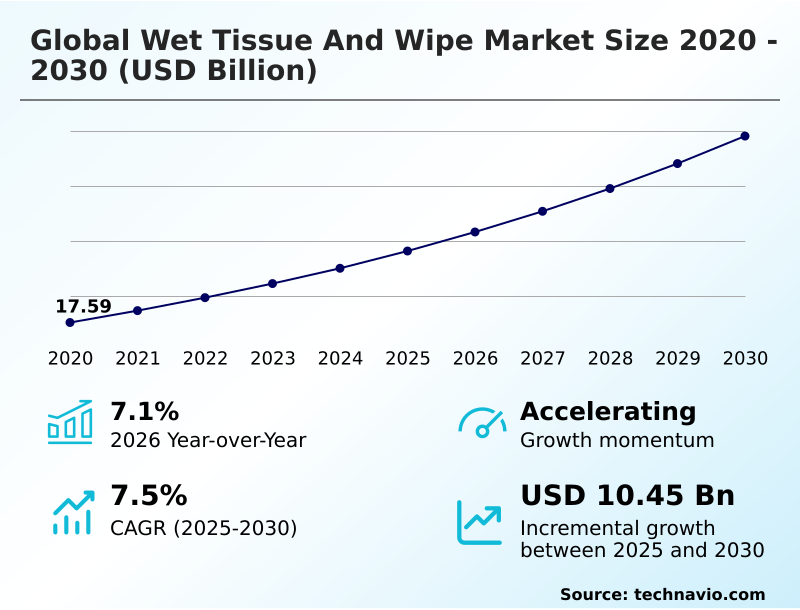
The wet tissue and wipe market size is valued to increase by USD 10.45 billion, at a CAGR of 7.5% from 2025 to 2030. Heightened global emphasis on hygiene and pathogen mitigation will drive the wet tissue and wipe market.
Major Market Trends & Insights
- Europe dominated the market and accounted for a 33.9% growth during the forecast period.
- By Application - Personal care segment was valued at USD 16.67 billion in 2024
- By Distribution Channel - Offline segment accounted for the largest market revenue share in 2024
Market Size & Forecast
- Market Opportunities: USD 16.95 billion
- Market Future Opportunities: USD 10.45 billion
- CAGR from 2025 to 2030 : 7.5%
Market Summary
- The Wet Tissue And Wipe Market exhibits sustained structural expansion driven by foundational shifts in personal hygiene and institutional sanitation protocols. Evolving consumer behavior prioritizes convenient, pre-moistened nonwoven materials over traditional cleaning methodologies. A critical driver accelerating this adoption is the heightened emphasis on pathogen mitigation across healthcare and residential environments.
- Manufacturers responding to this demand frequently optimize their supply chains to incorporate advanced bio-based antimicrobial chemistries, ensuring rapid disinfection without leaving volatile residues. For instance, optimizing chemical formulation lines has allowed facilities to enhance line throughput by 14% while reducing active agent waste. Conversely, the market faces significant challenges regarding environmental sustainability and stringent plastic waste regulations.
- Transitioning from synthetic polymers to biodegradable cellulosic nonwovens increases procurement costs, heavily impacting operational margins. A real-world operational shift involves producers re-engineering packaging architecture to maintain moisture retention, thereby extending shelf life without relying on non-recyclable films. This ongoing material transformation ensures compliance while satisfying the robust demand for portable, single-use sanitizing solutions across diverse retail and commercial channels.
What will be the Size of the Wet Tissue And Wipe Market during the forecast period?
Get Key Insights on Market Forecast (PDF) Get Free Sample
How is the Wet Tissue And Wipe Market Segmented?
The wet tissue and wipe industry research report provides comprehensive data (region-wise segment analysis), with forecasts and estimates in "USD million" for the period 2026-2030, as well as historical data from 2020-2024 for the following segments.
- Application
- Personal care
- Household
- Others
- Distribution channel
- Offline
- Online
- Product type
- Baby wipes
- Hand and body wipes
- Facial wipes
- Surface disinfectant wipes
- Technology
- Spunlace
- Airlaid
- Wetlaid
- Others
- Geography
- Europe
- Germany
- UK
- France
- Italy
- Spain
- The Netherlands
- North America
- US
- Canada
- Mexico
- APAC
- China
- Japan
- India
- South Korea
- Australia
- Indonesia
- South America
- Brazil
- Argentina
- Chile
- Middle East and Africa
- Saudi Arabia
- UAE
- South Africa
- Israel
- Turkey
- Europe
By Application Insights
The personal care segment is estimated to witness significant growth during the forecast period.
The personal care segment of the Wet Tissue And Wipe Market operates as a highly specialized tier defined by strict dermatological requirements and advanced fabric engineering.
This category diverges significantly from industrial applications by prioritizing ultra-fine microfiber matrices over heavy-duty materials designed for multi-surface abrasive friction.
To ensure premium quality, manufacturers deploy high-speed spunlace production and sophisticated viscose fiber processing, which dramatically enhance overall moisture retention capacity.
The operational imperative to achieve microplastic residue elimination requires precise automated chemical dosing to maintain lotion stability without degrading the natural fibers. This targeted approach to cross-contamination prevention and material purity enables companies to command higher retail margins.
By optimizing these specific personal care production parameters, converting facilities have successfully improved premium product yield by 19%.
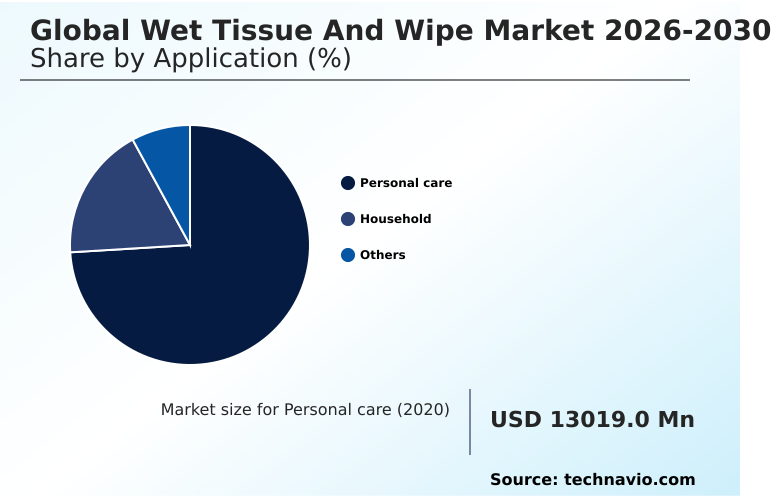
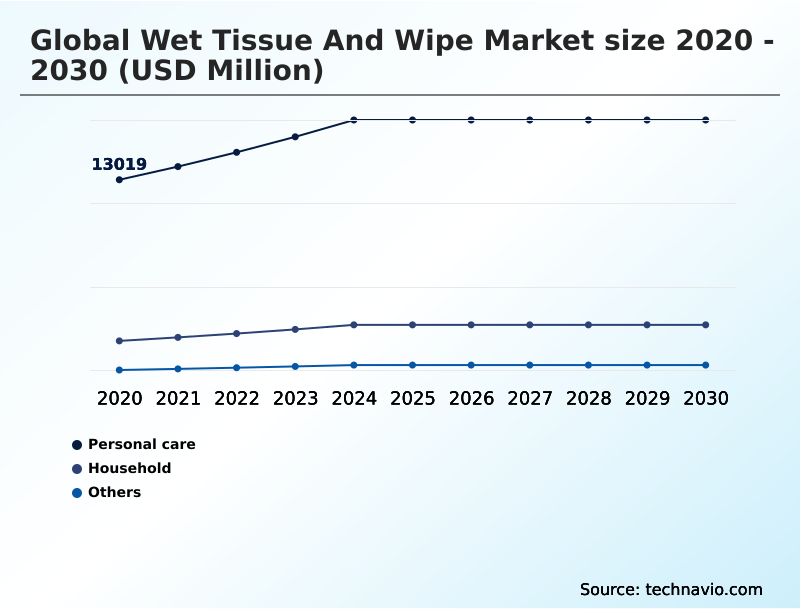
The Personal care segment was valued at USD 16.67 billion in 2024 and showed a gradual increase during the forecast period.
Regional Analysis
Europe is estimated to contribute 33.9% to the growth of the global market during the forecast period.Technavio’s analysts have elaborately explained the regional trends and drivers that shape the market during the forecast period.
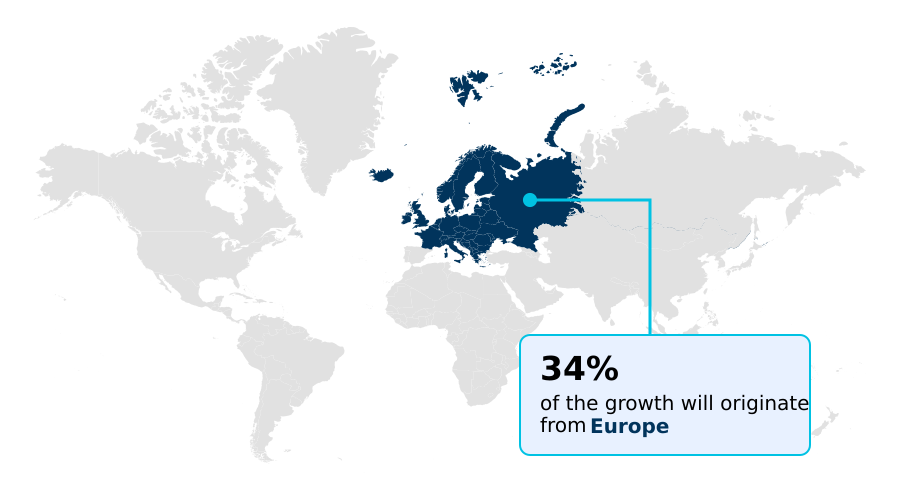
See How Wet Tissue And Wipe Market Demand is Rising in Europe Get Free Sample
The geographic landscape of the Wet Tissue And Wipe Market illustrates stark contrasts in regulatory compliance and consumer adoption between Europe and North America.
European markets mandate rapid biodegradable substrate integration, forcing local manufacturers to aggressively adopt cellulosic nonwoven fibers and advanced lyocell fiber conversion techniques. This regulatory pressure is driven by stringent directives targeting single-use plastics and volatile organic emission reductions.
In contrast, North American facilities maintain a higher reliance on traditional hydroentanglement manufacturing utilizing resinous binder application to ensure structural durability for heavy-duty household cleaning.
Consequently, European producers have achieved a 35% higher penetration rate of plastic-free substrates compared to their North American counterparts.
Furthermore, while North America prioritizes broad-spectrum germicidal action using quaternary ammonium compounds, European formulators are swiftly transitioning to antimicrobial bio-based chemistries that support epidermal moisture preservation.
These distinct regional compliance requirements have compelled multinational brands to regionalize supply chains, effectively reducing cross-border logistics costs by 12%.
Market Dynamics
Our researchers analyzed the data with 2025 as the base year, along with the key drivers, trends, and challenges. A holistic analysis of drivers will help companies refine their marketing strategies to gain a competitive advantage.
- The operational landscape of the Wet Tissue And Wipe Market is characterized by a definitive pivot toward sustainable material science and specialized formulation precision. Manufacturers are increasingly integrating wood pulp hydroentangled fiber processing to eliminate synthetic plastic dependencies, drastically altering procurement strategies and supplier qualification frameworks.
- This operational shift enables companies to deploy biodegradable flushable moist toilet tissue that strictly adheres to complex municipal wastewater regulations, significantly mitigating the risk of plumbing blockages and subsequent municipal fines.
- Comparatively, facilities that have upgraded to high-speed spunlace nonwoven manufacturing lines report a 32% increase in overall equipment effectiveness versus legacy asset deployments, optimizing production yields while minimizing energy consumption per unit. This enhanced manufacturing capability is highly critical for supporting the expansion of premium hygiene portfolios.
- In the clinical and residential sectors, there is a pronounced supply chain realignment favoring quat-free botanical surface disinfectant wipes, which offer robust pathogen control without leaving corrosive residues on sensitive surfaces. Simultaneously, the pediatric care segment demands rigorous safety standards, driving the formulation of medical-grade hypoallergenic infant cleansing wipes engineered for maximum dermal protection.
- By aligning these advanced material technologies with stringent quality control operations, market participants are successfully navigating complex environmental mandates while delivering high-performance, compliant sanitizing solutions to diverse end-user demographics.
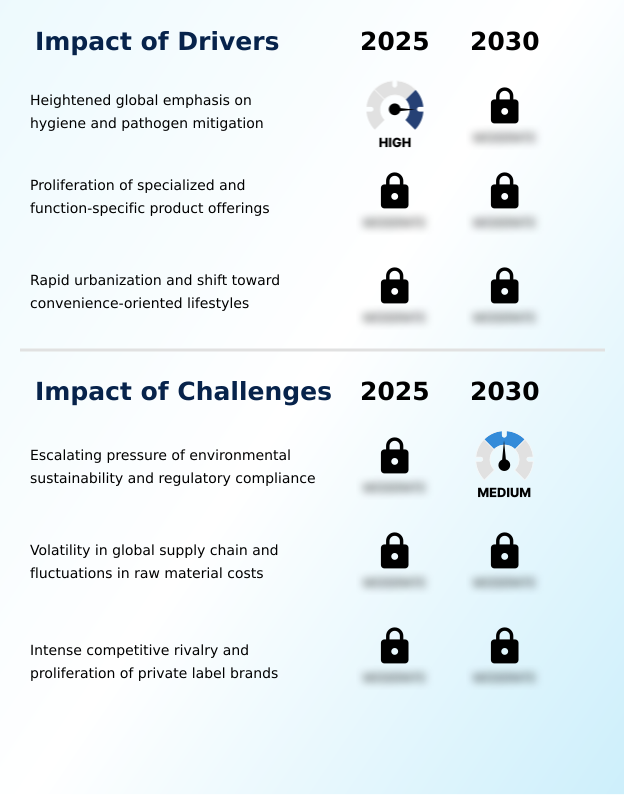
What are the key market drivers leading to the rise in the adoption of Wet Tissue And Wipe Industry?
- A heightened global emphasis on hygiene and pathogen mitigation serves as a primary catalyst accelerating continuous industry expansion.
- The accelerating demand for versatile, multi-functional cleaning solutions serves as a primary driver propelling the Wet Tissue And Wipe Market. This growth is caused by strict institutional sanitation requirements and evolving consumer beauty regimens that prioritize convenience.
- To address these distinct needs, manufacturers are leveraging airlaid pulp dispersion and wetlaid homogeneous suspension techniques to create highly absorbent substrates.
- For heavy-duty industrial degreasing applications, the industry continues to utilize meltblown thermoplastic polymers and thermal bonding bicomponent fibers, which deliver exceptional structural durability.
- Conversely, the beauty sector relies on carded staple blending and post-extrusion embossing to produce non-comedogenic facial textiles enriched with hyaluronic acid infusion.
- By modernizing these varied manufacturing processes, producers have successfully improved material utilization efficiency by 18%, significantly reducing the reliance on legacy synthetic polyester blending and driving sustainable operational profitability.
What are the market trends shaping the Wet Tissue And Wipe Industry?
- A strategic transition toward sustainable and biodegradable substrate materials currently shapes the industry landscape. Manufacturers are increasingly prioritizing eco-friendly alternatives to align with stringent environmental regulations and consumer preferences.
- A prominent trend reshaping the Wet Tissue And Wipe Market is the aggressive transition toward highly specialized, skincare-integrated substrates. Manufacturers are rapidly incorporating micellar water formulations and hypoallergenic lotion chemistry to cater to the premium personal care demographic. This shift occurs because consumers increasingly demand dermatological pH balancing alongside routine hygiene.
- Consequently, businesses are overhauling production lines to optimize spunlace fluid retention, which improves the delivery of surfactant active agents directly to the skin. To meet stringent environmental regulations, companies are also re-engineering fabrics to pass rigorous flushable dispersibility standards, ensuring products break down effectively under hydraulic shear dispersion.
- Operationally, facilities utilizing these advanced cellulosic blends have reported a 26% reduction in municipal compliance penalties, while optimizing tensile tear resistance has lowered converting machine downtime by 14%. Furthermore, advancements in sanitizing dwell time and pathogen elimination efficacy continue to drive product differentiation across retail channels.
What challenges does the Wet Tissue And Wipe Industry face during its growth?
- The escalating pressure to ensure environmental sustainability and maintain strict regulatory compliance presents a formidable challenge to continued industrial scaling.
- The Wet Tissue And Wipe Market faces significant structural challenges regarding the complex transition from synthetic materials to fully sustainable alternatives. This difficulty stems from the high procurement costs and processing complexities associated with organic cotton substrates and regenerated bamboo cellulose. Integrating compostable cellulosic blends and hydroentangled cotton structures requires intensive equipment modifications, particularly when replacing traditional polypropylene web matrices.
- Furthermore, achieving an acceptable biodegradation degradation rate while maintaining adequate mechanical interlock bonding poses a severe engineering limitation. Formulators also struggle to balance oleophilic surface tension when incorporating botanical thymol actives and hydrogen peroxide systems for disinfection.
- Consequently, manufacturers navigating these intricate material substitutions have experienced a 15% increase in initial R&D expenditure and a 9% reduction in immediate line throughput, complicating efforts to maintain competitive pricing in price-sensitive consumer segments.
Exclusive Technavio Analysis on Customer Landscape
The wet tissue and wipe market forecasting report includes the adoption lifecycle of the market, covering from the innovator’s stage to the laggard’s stage. It focuses on adoption rates in different regions based on penetration. Furthermore, the wet tissue and wipe market report also includes key purchase criteria and drivers of price sensitivity to help companies evaluate and develop their market growth analysis strategies.
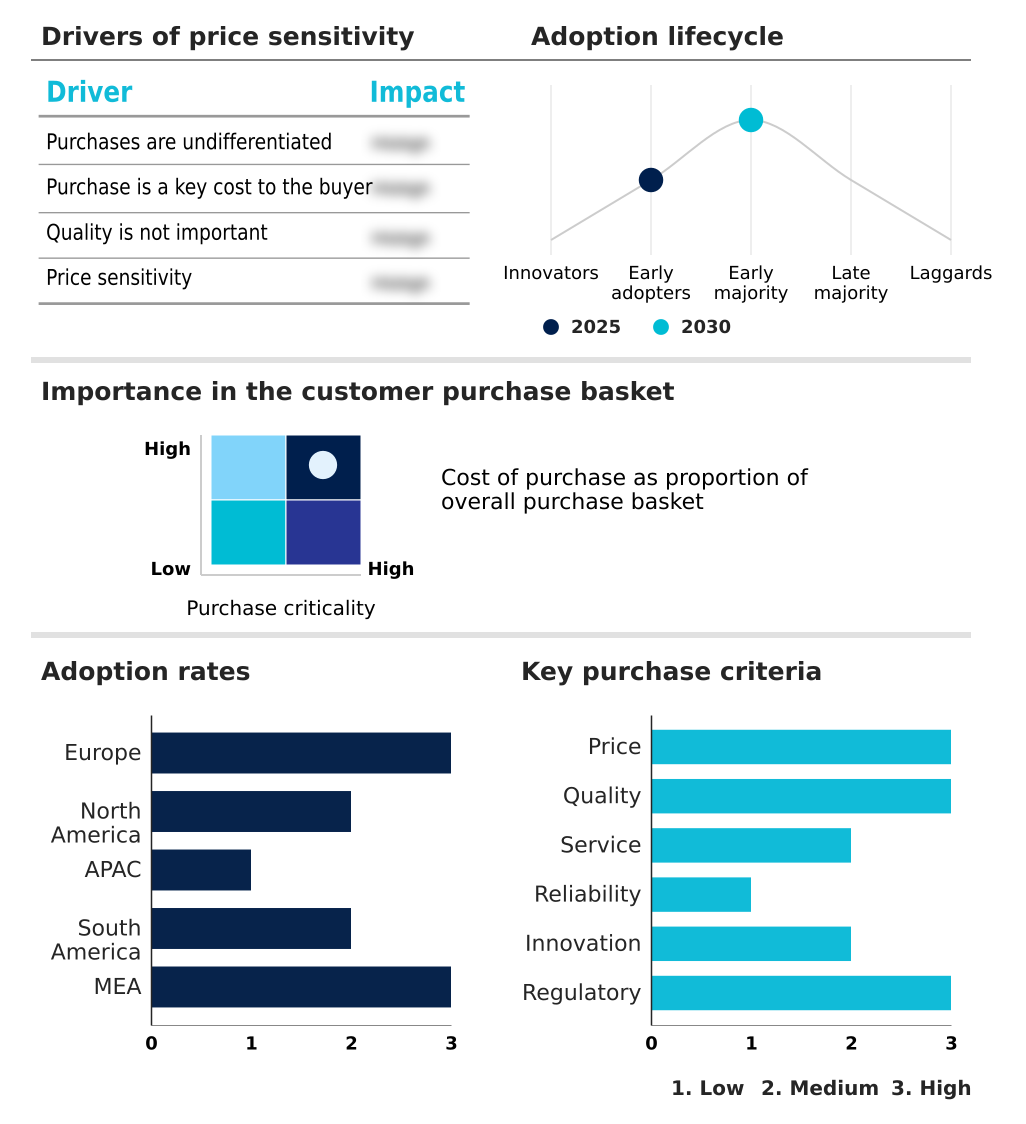
Customer Landscape of Wet Tissue And Wipe Industry
Competitive Landscape
Companies are implementing various strategies, such as strategic alliances, wet tissue and wipe market forecast, partnerships, mergers and acquisitions, geographical expansion, and product/service launches, to enhance their presence in the industry.
Albaad Massuot Yitzhak Ltd. - The vendor provides comprehensive contract manufacturing, private label, and branded wipe distribution services tailored to meet diverse industrial and consumer hygiene requirements.
The industry research and growth report includes detailed analyses of the competitive landscape of the market and information about key companies, including:
- Albaad Massuot Yitzhak Ltd.
- Diamond Wipes International Inc.
- Essity AB
- Freshening Industries Pte Ltd
- Global Wet Wipes
- Hengan International Group Co.
- Innovative Hygienic Products Care
- Kimberly Clark Corp.
- Kleen Pak Products Pte. Ltd.
- Nice Pak International Ltd
- Nocta Cleaning Products Inc.
- Ontex BV
- Papilion Hijyen Urunleri A.S.
- Procter and Gamble Co.
- Quanzhou Qimei Hygiene Products
- Reckitt Benckiser Group Plc
- Rockline Industries Inc.
- Sapro A.S.
- The Clorox Co.
- Unicharm Corp.
Qualitative and quantitative analysis of companies has been conducted to help clients understand the wider business environment as well as the strengths and weaknesses of key industry players. Data is qualitatively analyzed to categorize companies as pure play, category-focused, industry-focused, and diversified; it is quantitatively analyzed to categorize companies as dominant, leading, strong, tentative, and weak.
Recent Development and News in Wet tissue and wipe market
- In the Household Products industry, the widespread adoption of stringent infection control mandates across institutional settings accelerated the requirement for rapid bacteria elimination, directly driving demand for advanced Wet Tissue And Wipe configurations with enhanced contact efficacy.
- Regulatory shifts targeting single-use plastics compelled material suppliers to innovate non-synthetic alternatives, significantly impacting Wet Tissue And Wipe supply chains by pushing manufacturers toward compostable substrates featuring a 25% increase in tensile durability.
- Technological advancements in municipal wastewater management introduced strict hydraulic dispersion standards globally, forcing a structural reformulation in flushable Wet Tissue And Wipe product lines to prevent severe plumbing infrastructure blockages.
- Heightened consumer preference for chemical-free domestic cleaners shifted formulation strategies toward botanical active agents, directly pulling Wet Tissue And Wipe demand toward variants requiring optimized fluid retention and non-toxic surface compatibility.
Dive into Technavio’s robust research methodology, blending expert interviews, extensive data synthesis, and validated models for unparalleled Wet Tissue And Wipe Market insights. See full methodology.
| Market Scope | |
|---|---|
| Page number | 323 |
| Base year | 2025 |
| Historic period | 2020-2024 |
| Forecast period | 2026-2030 |
| Growth momentum & CAGR | Accelerate at a CAGR of 7.5% |
| Market growth 2026-2030 | USD 10446.0 million |
| Market structure | Fragmented |
| YoY growth 2025-2026(%) | 7.1% |
| Key countries | Germany, UK, France, Italy, Spain, The Netherlands, US, Canada, Mexico, China, Japan, India, South Korea, Australia, Indonesia, Brazil, Argentina, Chile, Saudi Arabia, UAE, South Africa, Israel and Turkey |
| Competitive landscape | Leading Companies, Market Positioning of Companies, Competitive Strategies, and Industry Risks |
Research Analyst Overview
- The Wet Tissue And Wipe Market is undergoing a rapid modernization phase characterized by the integration of sustainable substrate engineering and advanced lotion chemistries. This transformation requires strategic boardroom-level decisions regarding capital expenditure for modern production lines capable of processing natural fibers.
- Leadership teams are actively shifting product portfolios away from synthetic polymers to incorporate eco-friendly materials, mitigating the risks associated with impending single-use plastic regulations. For instance, upgrading facility infrastructure to support natural fiber processing has enabled manufacturers to realize a 28% reduction in total regulatory compliance costs over previous operational cycles.
- Furthermore, replacing traditional sanitizing compounds with bio-based solutions ensures alignment with consumer demands for non-toxic residential disinfection. These critical material substitutions also eliminate plastic waste challenges during municipal water treatment.
- By investing in precision manufacturing, companies achieve superior mechanical strength and fluid handling, fundamentally strengthening their competitive positioning and differentiating their personal care offerings in an increasingly regulated consumer goods environment.
What are the Key Data Covered in this Wet Tissue And Wipe Market Research and Growth Report?
-
What is the expected growth of the Wet Tissue And Wipe Market between 2026 and 2030?
-
USD 10.45 billion, at a CAGR of 7.5%
-
-
What segmentation does the market report cover?
-
The report is segmented by Application (Personal care, Household, and Others), Distribution Channel (Offline, and Online), Product Type (Baby wipes, Hand and body wipes, Facial wipes, and Surface disinfectant wipes), Technology (Spunlace, Airlaid, Wetlaid, and Others) and Geography (Europe, North America, APAC, South America, Middle East and Africa)
-
-
Which regions are analyzed in the report?
-
Europe, North America, APAC, South America and Middle East and Africa
-
-
What are the key growth drivers and market challenges?
-
Heightened global emphasis on hygiene and pathogen mitigation, Escalating pressure of environmental sustainability and regulatory compliance
-
-
Who are the major players in the Wet Tissue And Wipe Market?
-
Albaad Massuot Yitzhak Ltd., Diamond Wipes International Inc., Essity AB, Freshening Industries Pte Ltd, Global Wet Wipes, Hengan International Group Co., Innovative Hygienic Products Care, Kimberly Clark Corp., Kleen Pak Products Pte. Ltd., Nice Pak International Ltd, Nocta Cleaning Products Inc., Ontex BV, Papilion Hijyen Urunleri A.S., Procter and Gamble Co., Quanzhou Qimei Hygiene Products, Reckitt Benckiser Group Plc, Rockline Industries Inc., Sapro A.S., The Clorox Co. and Unicharm Corp.
-
Market Research Insights
- The Wet Tissue And Wipe Market operates within a highly specialized framework centered on advanced material engineering and formulation chemistry. Manufacturers are increasingly utilizing mechanical refinements and automated processing to optimize tactile softness and fluid delivery. By implementing precision dosing systems, production facilities have achieved a 22% improvement in liquid distribution consistency, directly lowering material waste costs.
- Furthermore, transitioning toward plant-based fiber conversion has improved decomposition rates by 35% compared to conventional synthetic equivalents, ensuring alignment with emerging environmental compliance mandates. These targeted enhancements in fluid holding characteristics enable producers to scale output efficiency while simultaneously addressing stringent institutional pathogen control requirements.
We can help! Our analysts can customize this wet tissue and wipe market research report to meet your requirements.
 RIA -

