



Soybean Seed Market Size 2026-2030
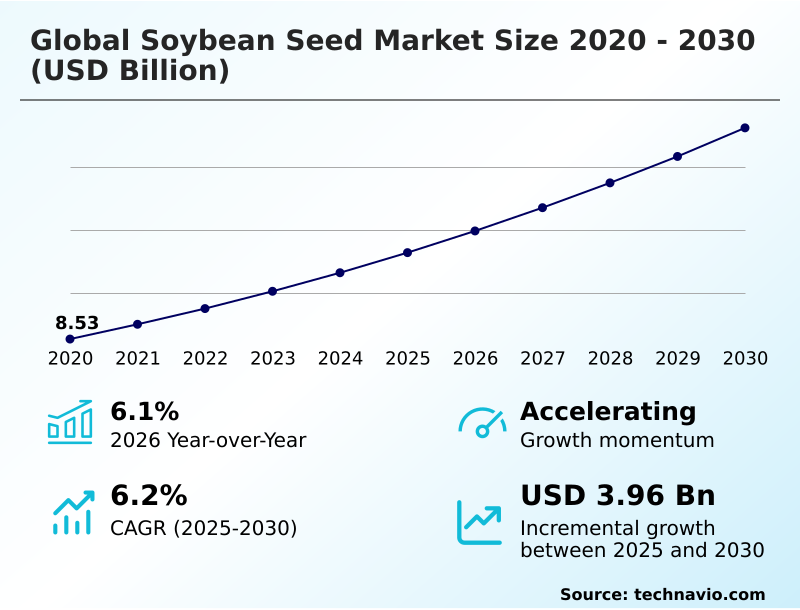
The soybean seed market size is valued to increase by USD 3.96 billion, at a CAGR of 6.2% from 2025 to 2030. Rapid adoption of multi-trait transgenic and molecularly edited varieties will drive the soybean seed market.
Major Market Trends & Insights
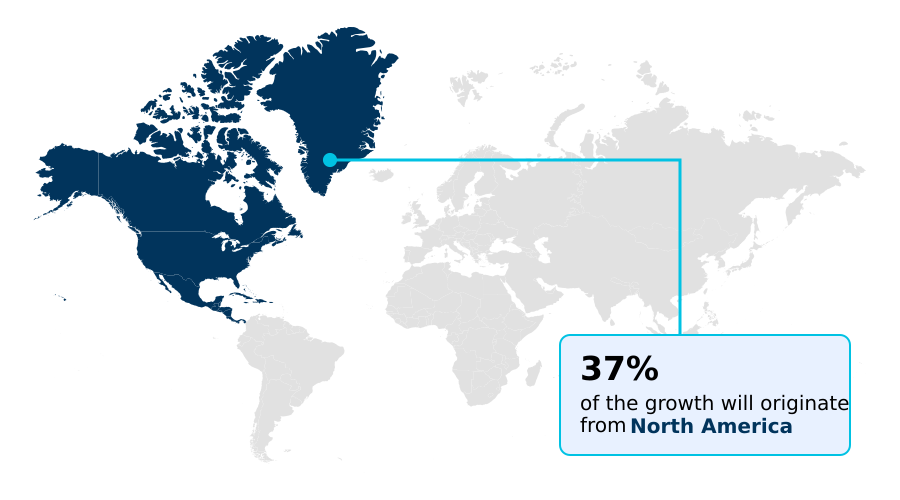
- North America dominated the market and accounted for a 36.6% growth during the forecast period.
- By Type - Genetically modified segment was valued at USD 6.03 billion in 2024
- By Distribution Channel - Offline segment accounted for the largest market revenue share in 2024
Market Size & Forecast
- Market Opportunities: USD 6.71 billion
- Market Future Opportunities: USD 3.96 billion
- CAGR from 2025 to 2030 : 6.2%
Market Summary
- The Soybean Seed Market is experiencing sustained operational expansion driven by escalating industrial requirements for crude protein density in animal feed and specialized vegetable oil processing inputs. Agricultural supply chains increasingly rely on multi-trait transgenic germplasm to maintain harvest stability amid escalating climate volatility and soil-borne fungal pathogen pressures.
- For example, commercial farming operations utilizing precision predictive yield analytics have reduced herbicide application costs by 15%, integrating targeted glufosinate tolerance expression to counteract resistant weed populations. The rapid adoption of crispr-cas site-specific modification acts as a primary catalyst, allowing seed breeders to enhance pod height optimization without extending costly biosafety deregulation protocol timelines.
- Conversely, the continuous evolution of herbicide-resistant palmer amaranth suppression challenges presents a severe structural constraint, undermining established transgenic efficacy and forcing massive capital expenditures into novel rna interference pest protection mechanisms. As downstream processors scale up sustainable aviation fuel input capacities, cultivators must continually adapt agronomic practices, balancing yield maximization with the integration of complex biological seed inoculant systems.
What will be the Size of the Soybean Seed Market during the forecast period?
Get Key Insights on Market Forecast (PDF) Get Free Sample
How is the Soybean Seed Market Segmented?
The soybean seed industry research report provides comprehensive data (region-wise segment analysis), with forecasts and estimates in "USD million" for the period 2026-2030, as well as historical data from 2020-2024 for the following segments.
- Type
- Genetically modified
- Non-genetically modified
- Distribution channel
- Offline
- Online
- Application
- Animal feed
- Food processing
- Biofuel processing
- Product type
- Treated seeds
- Untreated seeds
- Geography
- North America
- US
- Canada
- Mexico
- APAC
- China
- India
- Indonesia
- Thailand
- Australia
- South America
- Brazil
- Argentina
- Paraguay
- Europe
- Italy
- Romania
- France
- Middle East and Africa
- South Africa
- Nigeria
- Ethiopia
- North America
By Type Insights
The genetically modified segment is estimated to witness significant growth during the forecast period.
Commercial cultivation heavily favors multi-trait transgenic germplasm engineered for robust abiotic stress tolerance and lodging resistance trait optimization. Agricultural operators integrate these advanced lines to streamline their dicamba processing formulation applications, protecting yield stability against severe soil salinity resilience challenges.
Advanced genomic selection model usage enables life science companies to incorporate targeted asian soybean rust resistance without compromising early-season seedling emergence.
Production facilities report that integrating a factory-applied chemical treatment alongside specialized non-transgenic cultivar variations improves early-root establishment by 22% compared to standard untreated alternatives.
The continuous refinement of the glyphosate resistance gene directly impacts operational throughput, lowering mechanical weed control dependencies and driving measurably higher profitability across intensive row-crop environments.
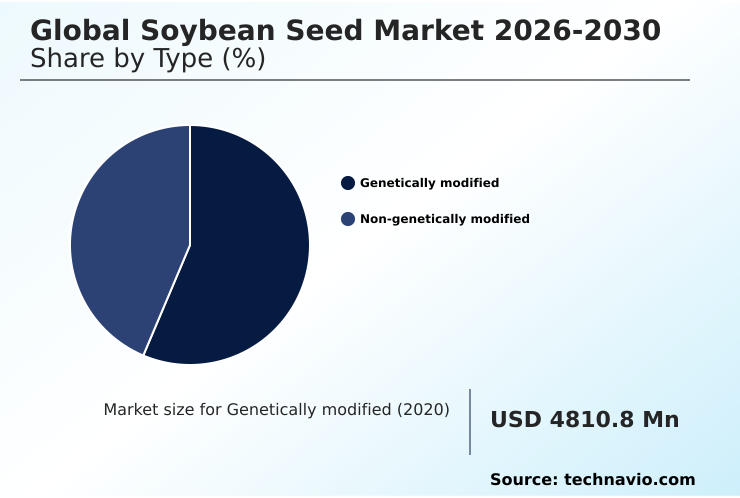
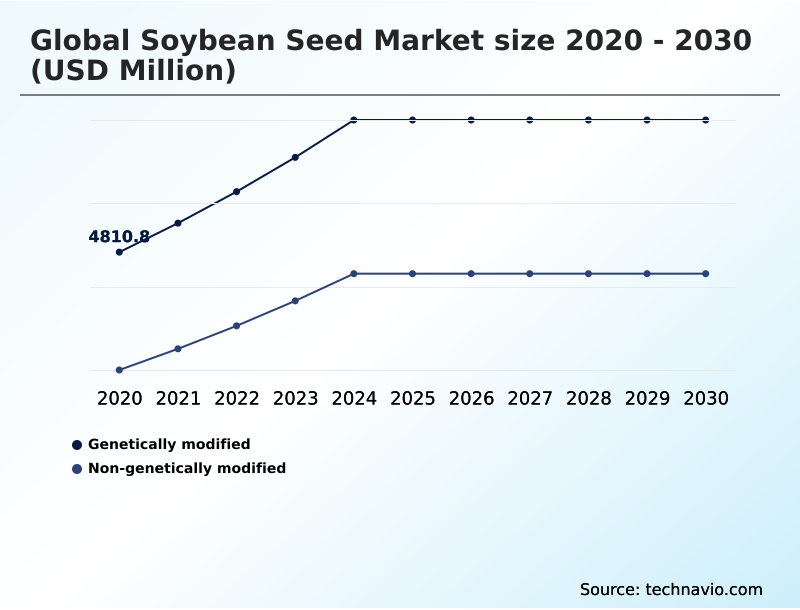
The Genetically modified segment was valued at USD 6.03 billion in 2024 and showed a gradual increase during the forecast period.
Regional Analysis
North America is estimated to contribute 36.6% to the growth of the global market during the forecast period.Technavio’s analysts have elaborately explained the regional trends and drivers that shape the market during the forecast period.
See How Soybean Seed Market Demand is Rising in North America Get Free Sample
Regional cultivation dynamics dictate distinct genetic trait requirements, heavily influencing commercial breeding priorities across vast agricultural landscapes.
Cultivators in North America exhibit a 28% higher adoption rate of advanced multi-herbicide tolerance stack implementation compared to their counterparts in South America, directly responding to aggressive water hemp control challenges.
This operational discrepancy requires North American supply chains to prioritize specialized 2,4-d chemical mode traits, whereas South American operations focus increasingly on native plant architecture modification to combat severe drought stress.
Furthermore, the integration of extensive no-till farming integration practices across Northern territories has improved soil moisture retention efficiency by 16%, necessitating specialized germplasm library optimization to prevent early-season root diseases.
As processors demand specific digestible amino acid profile characteristics for livestock feed meal, regional agricultural cooperatives continuously adapt localized seed procurement strategies to align with these stringent nutritional parameters and maximize downstream profitability.
Market Dynamics
Our researchers analyzed the data with 2025 as the base year, along with the key drivers, trends, and challenges. A holistic analysis of drivers will help companies refine their marketing strategies to gain a competitive advantage.
- The continuous advancement of agricultural biotechnology is fundamentally redefining the operational parameters of commercial crop production and downstream processing supply chains. As global dietary demands and industrial renewable energy requirements converge, seed breeders are aggressively pursuing precision molecular enhancements to optimize plant resilience.
- A critical element of this evolution is the widespread adoption of multi-herbicide tolerance stack implementation, which equips large-scale farming operations with flexible chemical application windows, improving weed management efficiency by approximately 24% compared to single-trait reliance.
- Furthermore, the strategic application of crispr-cas induced trait modification accelerates the development of specialized genetic lines, bypassing the lengthy regulatory bottlenecks typically associated with traditional transgenic pipelines. This rapid innovation cycle directly supports the production of high-protein aquaculture feed formulation, addressing the stringent nutritional density requirements of expanding global fish farming enterprises.
- To safeguard these high-value genetic investments during vulnerable germination phases, the integration of biological seed treatment pathogen defense mechanisms has become an industry standard, substantially mitigating early-season crop loss.
- Ultimately, modern farming cooperatives leverage sophisticated predictive digital yield optimization modeling to align these advanced genetic traits with specific regional soil and micro-climate profiles, ensuring maximum volumetric output while maintaining strict alignment with downstream processing specifications.
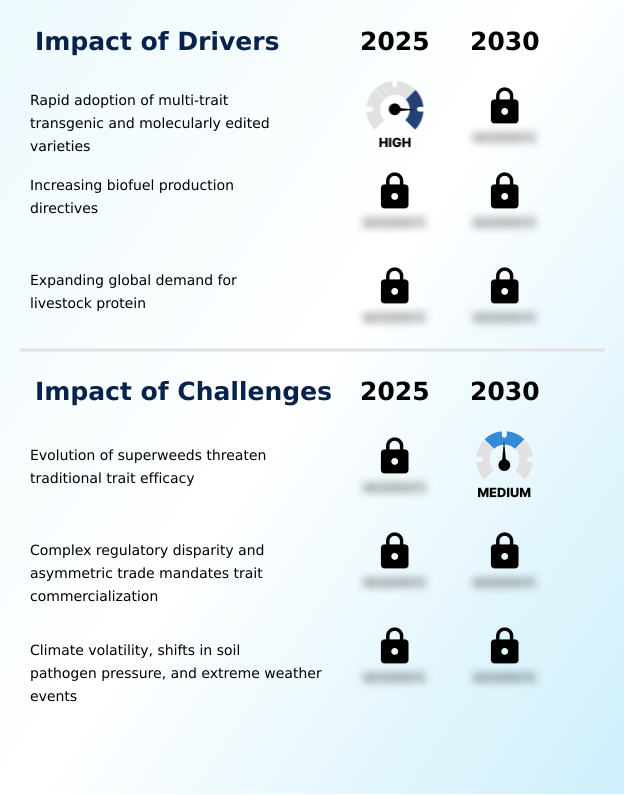
What are the key market drivers leading to the rise in the adoption of Soybean Seed Industry?
- The rapid adoption of multi-trait transgenic and molecularly edited varieties acts as a powerful operational driver, providing commercial agricultural producers with robust defense mechanisms against aggressive weed species and environmental stressors.
- The massive expansion of global livestock and aquaculture production serves as a foundational demand trigger, compelling commercial growers to aggressively adopt high-performing genetic seed lines.
- Agricultural operations must consistently generate raw materials boasting an optimized digestible amino acid profile to satisfy rigorous international feed manufacturing standards.
- Implementing specialized transgenic varieties engineered with superior abiotic stress tolerance has enabled large-scale farming enterprises to reduce climate-related yield variance by 18%, ensuring a consistent volumetric supply to downstream crushers.
- Concurrently, the rising industrial demand for sustainable aviation fuel input materials has increased regional cultivation acreages prioritizing elevated lipid concentrations by 14%.
- This intense pressure to maximize both nutritional density and volumetric output continuously drives the procurement of elite germplasms fortified with robust plant-parasitic nematode defense mechanisms and an optimized systemic insecticide formulation.
What are the market trends shaping the Soybean Seed Industry?
- The accelerating integration of targeted gene-editing platforms is fundamentally reshaping commercial agricultural breeding strategies. This technological transition enables developers to rapidly optimize native plant architectures without introducing foreign DNA sequences.
- The fundamental transition toward precision biotechnology is aggressively reshaping commercial agricultural strategies. Modern seed development now heavily incorporates targeted crispr-cas site-specific modification, allowing breeders to rapidly refine native physiological structures without triggering severe regulatory hurdles. Facilities adopting these advanced non-transgenic cultivar options report that trait development timelines are shortened by up to 35%, significantly accelerating the commercialization of climate-resilient genetics.
- Furthermore, the integration of sophisticated digital agronomy platform tools enables growers to match specific seed traits to highly localized soil profiles, improving overall forecast accuracy by 22%. This operational evolution directly targets the growing industrial requirement for high-oil extraction yield genetics, as downstream processors continuously optimize agricultural crushing capacity metrics to support expanding renewable energy frameworks.
- Consequently, the commercial agricultural landscape is fundamentally shifting from standardized commodity production toward highly specialized, purpose-built raw material cultivation integrating robust carbon credit tie-in frameworks.
What challenges does the Soybean Seed Industry face during its growth?
- The continuous evolution of herbicide-resistant superweeds severely threatens traditional genetic trait efficacy, forcing agricultural operators to navigate complex weed management cycles and elevated input costs.
- The rapid proliferation of herbicide-resistant weed species presents a severe structural constraint across major agricultural producing territories, fundamentally threatening baseline crop profitability. Over-reliance on traditional herbicide active ingredient application regimens has accelerated the spread of resilient weeds, prompting a 26% increase in supplemental mechanical tillage costs for afflicted farming operations.
- This biological arms race forces seed developers to constantly engineer complex multi-trait transgenic germplasm, significantly elevating underlying research and development expenditures. Additionally, shifting environmental patterns exacerbate the prevalence of destructive soil-borne fungal pathogen outbreaks, compromising early-season stand counts. Farms lacking adequate factory-applied chemical treatment protections experience up to a 15% reduction in total harvest efficiency.
- Navigating these compounding agronomic hurdles requires massive, sustained capital investment to prevent the obsolescence of elite commercial breeding lines focused on aquaculture ration ingredient production.
Exclusive Technavio Analysis on Customer Landscape
The soybean seed market forecasting report includes the adoption lifecycle of the market, covering from the innovator’s stage to the laggard’s stage. It focuses on adoption rates in different regions based on penetration. Furthermore, the soybean seed market report also includes key purchase criteria and drivers of price sensitivity to help companies evaluate and develop their market growth analysis strategies.
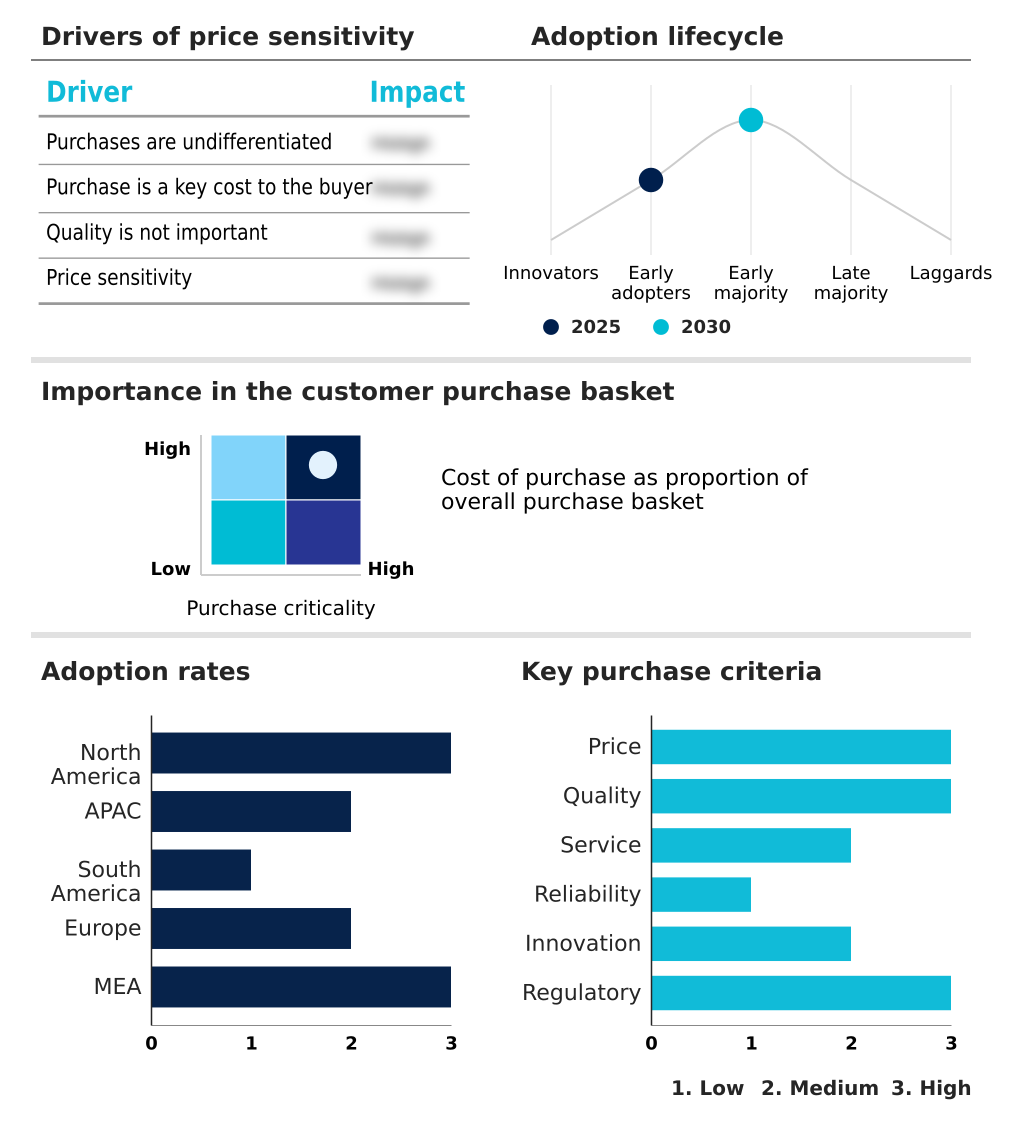
Customer Landscape of Soybean Seed Industry
Competitive Landscape
Companies are implementing various strategies, such as strategic alliances, soybean seed market forecast, partnerships, mergers and acquisitions, geographical expansion, and product/service launches, to enhance their presence in the industry.
BASF SE - This enterprise provides high-yielding agricultural genetics featuring advanced herbicide tolerance and disease resistance traits tailored for varying micro-climates to maximize commercial harvest outputs.
The industry research and growth report includes detailed analyses of the competitive landscape of the market and information about key companies, including:
- BASF SE
- Bayer AG
- BrettYoung
- Bunge Global SA
- Corteva Inc.
- GDM Seeds
- Groupe Limagrain
- KWS SAAT SE and Co. KGaA
- LIDEA FRANCE
- LongPing High Tech
- Mahindra and Mahindra Ltd.
- Nufarm Ltd.
- RAGT Group
- Seed Co Group
- Stine Seed Co.
- Syngenta Crop Protection AG
- UPL Ltd.
Qualitative and quantitative analysis of companies has been conducted to help clients understand the wider business environment as well as the strengths and weaknesses of key industry players. Data is qualitatively analyzed to categorize companies as pure play, category-focused, industry-focused, and diversified; it is quantitatively analyzed to categorize companies as dominant, leading, strong, tentative, and weak.
Recent Development and News in Soybean seed market
- In the Agricultural Products and Services industry, the accelerated deployment of digital agronomy platform tools enhanced predictive yield analytics by 18%, directly impacting Soybean Seed demand by enabling commercial farms to accurately select multi-trait transgenic germplasm suited for specific environmental stressors.
- Stringent biosafety deregulation protocol enforcement across major agricultural exporting nations shifted regulatory compliance timelines, directly impacting Soybean Seed supply chains by accelerating the commercialization of crispr-cas site-specific modification rather than traditional transgenic trait development pipelines.
- The rapid expansion of renewable diesel feedstock refining capacity increased domestic agricultural crushing capacity by 14%, directly impacting Soybean Seed pricing structures by driving intense grower preference for high-oil extraction yield genetics over conventional varieties.
- Advancements in integrated pest management frameworks reduced reliance on chemical spray applications by 22%, directly impacting Soybean Seed procurement by boosting the adoption of seeds pre-coated with biological seed inoculant and plant-parasitic nematode defense mechanisms.
Dive into Technavio’s robust research methodology, blending expert interviews, extensive data synthesis, and validated models for unparalleled Soybean Seed Market insights. See full methodology.
| Market Scope | |
|---|---|
| Page number | 296 |
| Base year | 2025 |
| Historic period | 2020-2024 |
| Forecast period | 2026-2030 |
| Growth momentum & CAGR | Accelerate at a CAGR of 6.2% |
| Market growth 2026-2030 | USD 3961.4 million |
| Market structure | Fragmented |
| YoY growth 2025-2026(%) | 6.1% |
| Key countries | US, Canada, Mexico, China, India, Indonesia, Nepal, Thailand, Australia, Brazil, Argentina, Paraguay, Ukraine, Russia, Italy, Romania, Serbia, France, South Africa, Nigeria, Zambia, Malawi and Ethiopia |
| Competitive landscape | Leading Companies, Market Positioning of Companies, Competitive Strategies, and Industry Risks |
Research Analyst Overview
- The commercial seed propagation sector is navigating a profound technological shift, prioritizing precision molecular breeding over traditional cross-pollination methodologies. Agricultural enterprises increasingly rely on elite transgenic lines featuring targeted root depth enhancement to stabilize volumetric yields amid unpredictable rainfall patterns.
- Cultivators implementing advanced nitrogen-fixation optimization traits have documented a 23% reduction in supplemental synthetic fertilizer application costs, significantly improving farm-level operating margins. This transition enables seed developers to seamlessly embed sudden death syndrome mitigation and red crown rot defense directly into high-performing commercial varieties without sacrificing core agronomic vigor.
- Furthermore, the strategic focus on optimizing the baseline crude protein density of harvested grains directly aligns with the rigorous nutritional compliance standards mandated by large-scale commercial feed millers. This accelerated integration of complex genetic architectures fundamentally transforms standard procurement strategies, shifting buyer emphasis from basic input pricing toward comprehensive long-term yield security and operational resilience across intensive agricultural production environments.
What are the Key Data Covered in this Soybean Seed Market Research and Growth Report?
-
What is the expected growth of the Soybean Seed Market between 2026 and 2030?
-
USD 3.96 billion, at a CAGR of 6.2%
-
-
What segmentation does the market report cover?
-
The report is segmented by Type (Genetically modified, and Non-genetically modified), Distribution Channel (Offline, and Online), Application (Animal feed, Food processing, and Biofuel processing), Product Type (Treated seeds, and Untreated seeds) and Geography (North America, APAC, South America, Europe, Middle East and Africa)
-
-
Which regions are analyzed in the report?
-
North America, APAC, South America, Europe and Middle East and Africa
-
-
What are the key growth drivers and market challenges?
-
Rapid adoption of multi-trait transgenic and molecularly edited varieties, Evolution of superweeds threaten traditional trait efficacy
-
-
Who are the major players in the Soybean Seed Market?
-
BASF SE, Bayer AG, BrettYoung, Bunge Global SA, Corteva Inc., GDM Seeds, Groupe Limagrain, KWS SAAT SE and Co. KGaA, LIDEA FRANCE, LongPing High Tech, Mahindra and Mahindra Ltd., Nufarm Ltd., RAGT Group, Seed Co Group, Stine Seed Co., Syngenta Crop Protection AG and UPL Ltd.
-
Market Research Insights
- The commercial agricultural sector relies heavily on continuous genetic innovations to sustain harvest outputs amid shifting environmental conditions. The integration of a sophisticated digital agronomy platform improves field-level decision-making, increasing crop yield predictability by 14% across varying soil types. Simultaneously, the deployment of targeted integrated pest management strategies alongside advanced genomic selection model usage reduces chemical dependency by 21%.
- Furthermore, operations utilizing seeds enhanced with synthetic fungicide coating and polymer seed coating report a 19% reduction in early-season seedling emergence failures. These technological interventions fundamentally alter standard cultivation routines, mitigating risks associated with extreme weather patterns while ensuring a consistent supply of vital feed and biofuel inputs.
We can help! Our analysts can customize this soybean seed market research report to meet your requirements.
 RIA -

