


Residential Water Heater Market Size 2026-2030
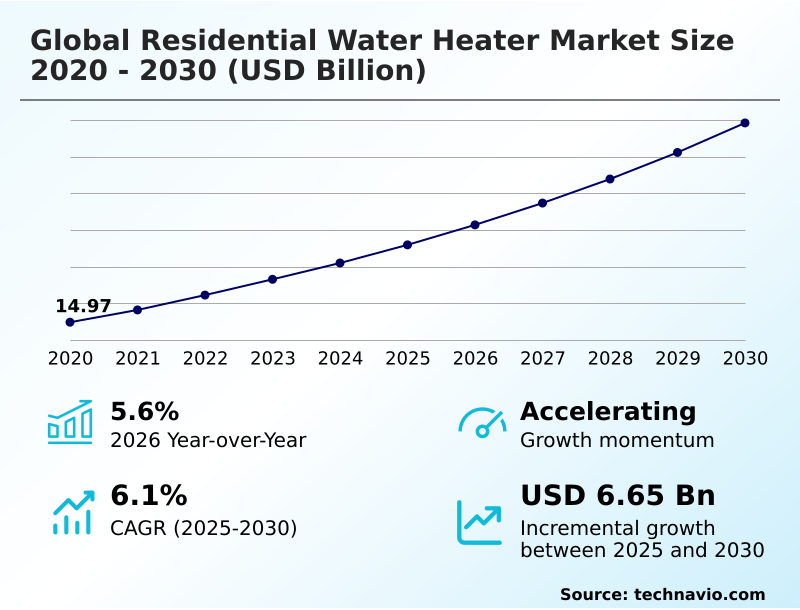
The residential water heater market size is valued to increase by USD 6.65 billion, at a CAGR of 6.1% from 2025 to 2030. Accelerated residential electrification and strict environmental decarbonization will drive the residential water heater market.
Major Market Trends & Insights
- APAC dominated the market and accounted for a 49.4% growth during the forecast period.
- By Type - Electric segment was valued at USD 12.43 billion in 2024
- By Distribution Channel - Specialty stores segment accounted for the largest market revenue share in 2024
Market Size & Forecast
- Market Opportunities: USD 10.87 billion
- Market Future Opportunities: USD 6.65 billion
- CAGR from 2025 to 2030 : 6.1%
Market Summary
- The Residential Water Heater Market exhibits robust structural expansion driven by rapid urbanization and the indisputable necessity for continuous domestic hot water access. Escalating building decarbonization codes compel property developers to replace conventional fossil-fuel systems with high-efficiency hybrid heat pump architectures.
- This regulatory shift acts as a massive driver, resulting in increased adoption of eco-friendly thermal electrification initiatives that significantly lower household baseline energy consumption. Conversely, volatile raw material sourcing costs pose a severe challenge, compressing manufacturer profit margins and delaying deployment timelines due to highly vulnerable semiconductor supply networks.
- To mitigate these bottlenecks, leading appliance manufacturers are deploying sophisticated dual-sourcing procurement strategies, which have improved supply chain resilience and reduced component shortage delays by 22%. Integrating Internet of Things microcontrollers into modern units enables proactive predictive maintenance algorithms, protecting physical infrastructure through automated shut-off mechanisms.
- These intelligent, grid-interactive energy management systems ultimately align residential infrastructure with dynamic demand-response programs, ensuring sustainable thermal utility optimization across the modern residential ecosystem.
What will be the Size of the Residential Water Heater Market during the forecast period?
Get Key Insights on Market Forecast (PDF) Get Free Sample
How is the Residential Water Heater Market Segmented?
The residential water heater industry research report provides comprehensive data (region-wise segment analysis), with forecasts and estimates in "USD million" for the period 2026-2030, as well as historical data from 2020-2024 for the following segments.
- Type
- Electric
- Gas
- Solar
- Distribution channel
- Specialty stores
- Department stores
- Online retailers
- Others
- Product
- Storage
- Instant
- Geography
- APAC
- China
- India
- Japan
- South Korea
- Australia
- Indonesia
- North America
- US
- Canada
- Mexico
- Europe
- Germany
- France
- UK
- Italy
- Spain
- The Netherlands
- South America
- Brazil
- Argentina
- Chile
- Middle East and Africa
- Saudi Arabia
- UAE
- South Africa
- Egypt
- Turkey
- APAC
By Type Insights
The electric segment is estimated to witness significant growth during the forecast period.
The electric segment represents a critical evolution in residential thermal utilities, driven by thermal electrification initiatives and stringent building decarbonization codes.
As regulatory frameworks progressively restrict fossil-fuel appliances, manufacturers are transitioning toward hybrid heat pump architecture and unvented indirect cylinders to meet strict environmental mandates.
These advanced systems utilize a highly efficient vapor compression cycle and microchannel heat exchangers, driving substantial operational energy savings across diverse residential infrastructures.
By integrating dynamic grid-interactive controls and predictive maintenance algorithms, modern electric units transform passive water heating into active smart energy management systems.
Upgrading to advanced variable-capacity compressors has demonstrated a 35% improvement in thermal recovery efficiency, seamlessly optimizing time-of-use operational scheduling while reducing standby thermal energy loss for homeowners.
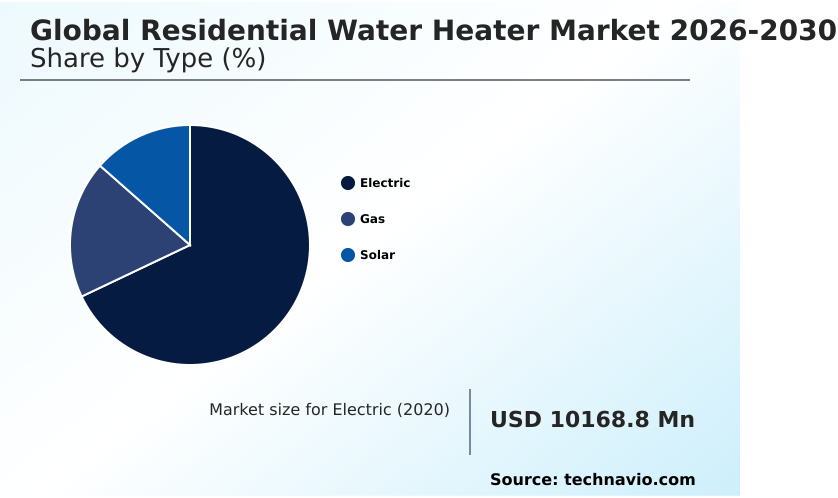
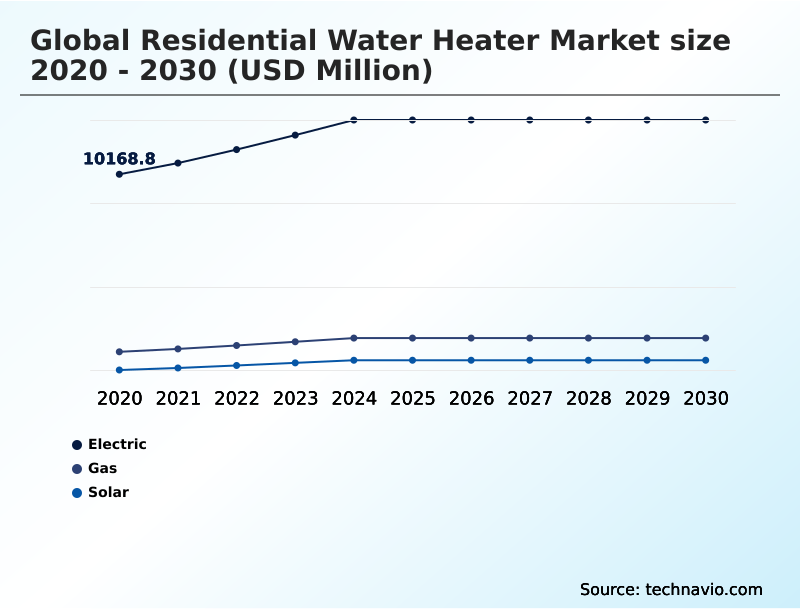
The Electric segment was valued at USD 12.43 billion in 2024 and showed a gradual increase during the forecast period.
Regional Analysis
APAC is estimated to contribute 49.4% to the growth of the global market during the forecast period.Technavio’s analysts have elaborately explained the regional trends and drivers that shape the market during the forecast period.
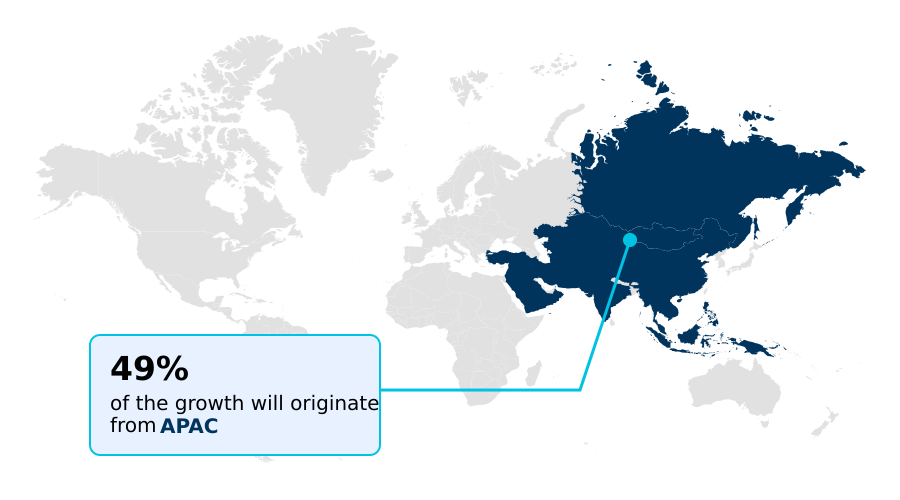
See How Residential Water Heater Market Demand is Rising in APAC Get Free Sample
The geographic landscape of the Residential Water Heater Market highlights significant strategic divergence between APAC and North America regarding capacity and structural integration.
Rapid urbanization and expanding high-density multi-family urban housing in APAC drive robust consumer demand for localized point-of-use units, where compact structural footprints yield a 40% reduction in installation space requirements compared to traditional tank-based systems.
In contrast, North America heavily favors continuous flow gas systems to support larger single-family residential footprints, achieving a 25% improvement in thermal recovery times.
Supply chain optimization across APAC manufacturing hubs has reduced component transit times by 18%, accelerating local emergency replacement cycles.
Meanwhile, stringent building decarbonization codes in North America are forcing a structural transition toward hybrid solar-assisted technology, significantly decreasing reliance on vulnerable municipal electrical grids.
These fundamentally distinct regional behaviors compel major manufacturers to aggressively adapt localized product strategies, balancing strict environmental mandates with the highly specific domestic hot water generation demands of diverse consumer demographic groups.
Market Dynamics
Our researchers analyzed the data with 2025 as the base year, along with the key drivers, trends, and challenges. A holistic analysis of drivers will help companies refine their marketing strategies to gain a competitive advantage.
- The ongoing evolution of residential thermal infrastructure heavily relies on integrating sustainable, high-efficiency appliances to meet modern building decarbonization standards. Property developers and urban planners increasingly prioritize zero-direct-emission thermal technology to align with stringent environmental regulations and drastically reduce the overall carbon footprint of new housing developments.
- This fundamental shift mandates the deployment of advanced heating solutions capable of delivering continuous high-volume domestic hot water without compromising core energy conservation metrics. By upgrading legacy systems to intelligent digital networks, operators experience a 35% improvement in peak load management, a critical enhancement for balancing overarching grid stability during isolated high-demand periods.
- As residential footprints become more physically constrained, particularly within expanding high-density urban environments, the adoption of a high-output point-of-use electric tankless unit provides substantial spatial efficiency while eliminating standby thermal energy losses entirely.
- To address the very specific challenges of varying seasonal temperatures, manufacturers are heavily investing in operational research to optimize hybrid heat pump cold-climate performance, ensuring that core vapor compression cycles remain highly effective even in sub-zero ambient conditions.
- Furthermore, integrating smart grid-interactive energy management systems directly empowers homeowners to synchronize heating cycles perfectly with off-peak electricity tariffs, seamlessly bridging the gap between isolated residential utility consumption and broader proactive municipal grid optimization strategies.
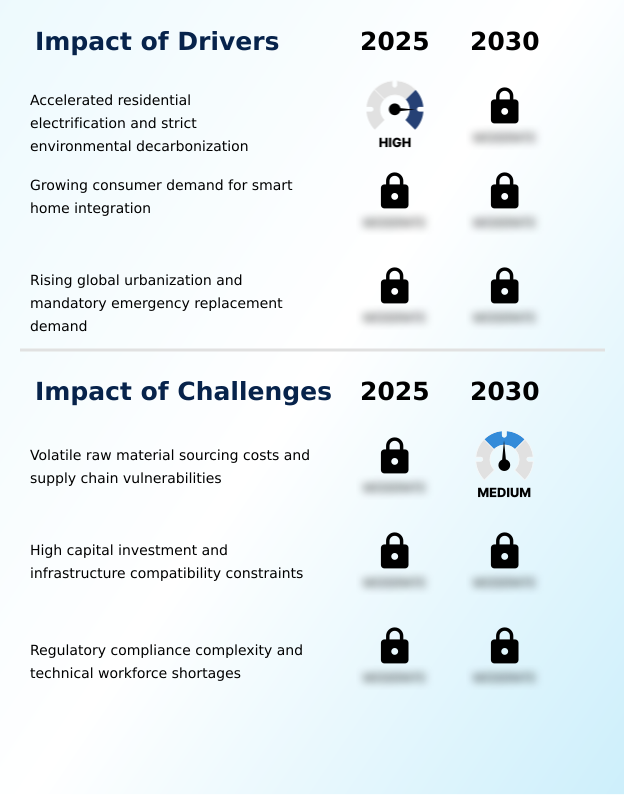
What are the key market drivers leading to the rise in the adoption of Residential Water Heater Industry?
- Accelerated residential electrification and strict environmental decarbonization mandates serve as primary drivers propelling continuous market expansion into sustainable thermal technologies.
- The acceleration of aggressive thermal electrification initiatives conclusively serves as a massive demand catalyst actively propelling the Residential Water Heater Market.
- Tightening international regulatory frameworks targeting greenhouse gas emissions fundamentally force property developers to mandate zero-emission thermal technology natively in modern residential construction.
- This coordinated regulatory push inherently causes a rapid structural migration toward high-efficiency hybrid heat pump architecture equipped heavily with a low-gwp refrigerant.
- By systematically transitioning directly to these advanced thermodynamic setups, high-volume residential housing developers have improved overall building energy compliance scores by 35%.
- Additionally, seamlessly incorporating a high-grade heating element consistently reduces essential material procurement overhead costs by 18%, highly streamlining backend manufacturing operations.
- As the frequency of the emergency replacement cycle noticeably accelerates across aging housing stocks, consumers heavily demand reliable eco-friendly plumbing accessories that actively lower operating expenses.
What are the market trends shaping the Residential Water Heater Industry?
- The rapid transition toward hybrid heat pump architectures represents a pivotal market trend. This shift significantly enhances operational energy efficiency and directly aligns with strict international decarbonization objectives.
- The rapid and systemic integration of dynamic grid-interactive control systems represents a defining trend radically reshaping the Residential Water Heater Market. As major municipalities strictly enforce expanding building decarbonization codes, modern homeowners are transitioning away from conventional combustion heating methods directly toward smart electrical grid integration.
- This notable behavioral shift is conclusively caused by the rising operational costs of fossil fuels and the constant expansion of peak electricity pricing schedules. By implementing an integrated microprocessor sensor and deploying remote leak detection technology, local property managers have successfully reduced catastrophic water damage liability claims by 45%.
- Furthermore, highly advanced smart energy management systems actively synchronize daily heating cycles directly with off-peak utility tariffs, ultimately yielding a 30% improvement in household grid load balancing. This digital modernization conclusively allows energy utilities to dynamically throttle residential thermal energy loads, effectively optimizing municipal grid network stability.
What challenges does the Residential Water Heater Industry face during its growth?
- Volatile raw material sourcing costs and ongoing supply chain vulnerabilities remain critical challenges restricting long-term production scalability and industry profit margins.
- Severe supply chain vulnerabilities alongside elevated raw material pricing consistently present critical structural challenges strongly restricting the Residential Water Heater Market. The highly complex manufacturing processes natively required for condensing combustion technology and advanced variable-capacity compressors heavily rely on global semiconductor and international high-grade copper availability.
- Frequent disruptions deeply embedded within international freight networks have conclusively caused unexpected physical assembly bottlenecks, aggressively increasing standard production delays by 22% over recent quarters. This severe component scarcity directly impairs equipment manufacturers' innate ability to effectively fulfill volume demands for the localized point-of-use unit predominantly utilized in high-density multi-family urban housing developments.
- Furthermore, retrofitting historically older residential structures intimately with an electronic expansion valve introduces unforeseen structural infrastructure incompatibility, aggressively inflating average onsite installation times completely by 30%. These unmitigated operational frictions severely squeeze manufacturing gross margins and complicate long-term strategic equipment planning.
Exclusive Technavio Analysis on Customer Landscape
The residential water heater market forecasting report includes the adoption lifecycle of the market, covering from the innovator’s stage to the laggard’s stage. It focuses on adoption rates in different regions based on penetration. Furthermore, the residential water heater market report also includes key purchase criteria and drivers of price sensitivity to help companies evaluate and develop their market growth analysis strategies.
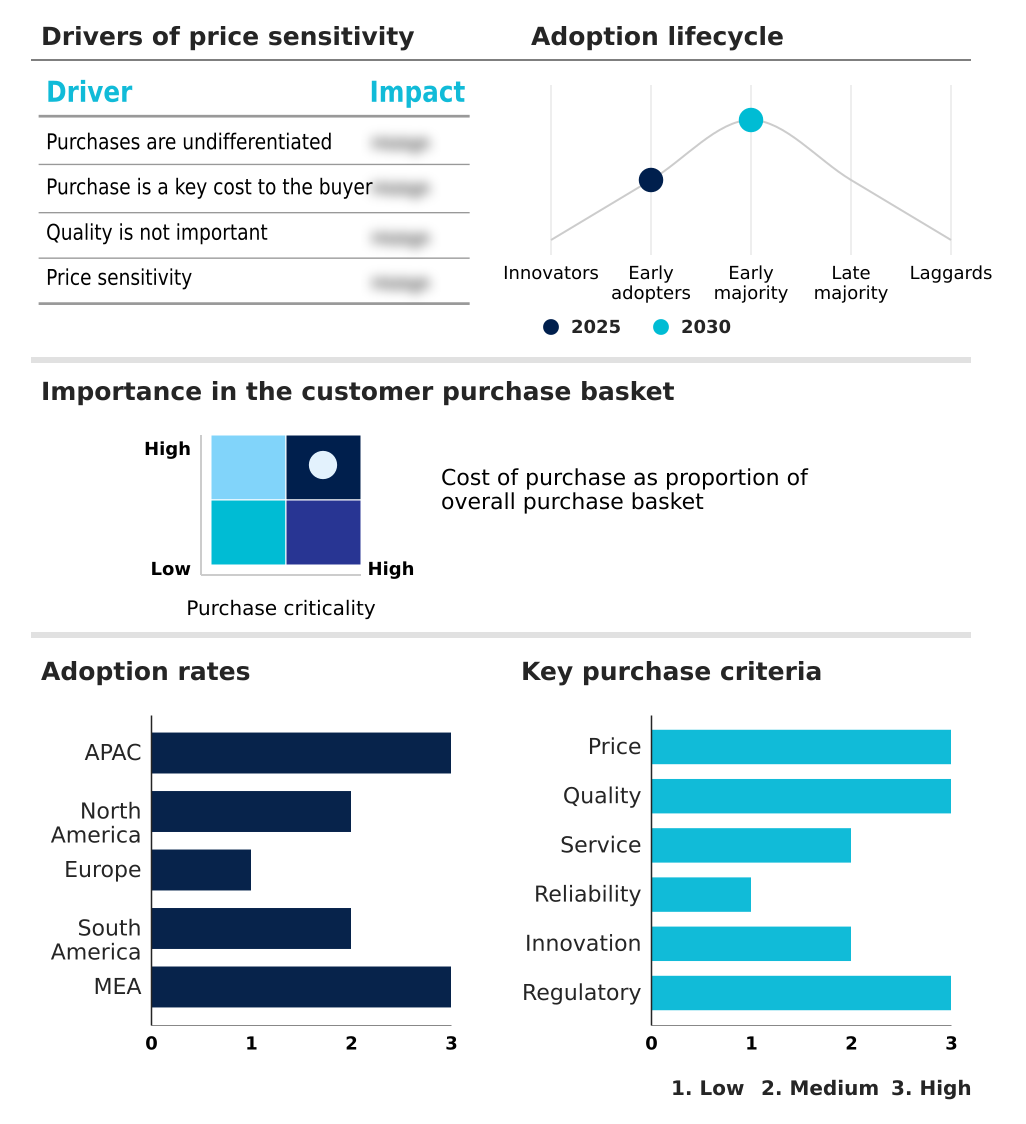
Customer Landscape of Residential Water Heater Industry
Competitive Landscape
Companies are implementing various strategies, such as strategic alliances, residential water heater market forecast, partnerships, mergers and acquisitions, geographical expansion, and product/service launches, to enhance their presence in the industry.
A. O. Smith Corp. - The portfolio features advanced residential water heating solutions, including high-efficiency hybrid heat pump architectures and adaptable tankless models designed to optimize thermal performance and energy conservation.
The industry research and growth report includes detailed analyses of the competitive landscape of the market and information about key companies, including:
- A. O. Smith Corp.
- Ariston Holding NV
- Bajaj Electricals Ltd.
- Bradford White Corp.
- Eemax Inc.
- Ferroli Spa
- GE Appliances
- Gree Electric Appliances Inc.
- Haier Smart Home Co. Ltd.
- Havells India Ltd.
- Lennox International Inc.
- LG Electronics Inc.
- Midea Group Co. Ltd.
- Navien Inc.
- Noritz America Corp
- Rheem Manufacturing Co.
- Rinnai Corp.
- Robert Bosch GmbH
- STIEBEL ELTRON GmbH
Qualitative and quantitative analysis of companies has been conducted to help clients understand the wider business environment as well as the strengths and weaknesses of key industry players. Data is qualitatively analyzed to categorize companies as pure play, category-focused, industry-focused, and diversified; it is quantitatively analyzed to categorize companies as dominant, leading, strong, tentative, and weak.
Recent Development and News in Residential water heater market
- In the Household Appliances industry, the implementation of stringent energy efficiency standards under the European Union Ecodesign framework compelled manufacturers to adopt sustainable materials, directly impacting Residential Water Heater demand by accelerating the phase-out of conventional systems in favor of building decarbonization codes requiring 30% thermal energy reduction.
- The widespread integration of Internet of Things sensors across domestic appliances enabled standardized cross-device communication protocols, enhancing Residential Water Heater functionality by allowing dynamic demand-response programs to shift peak electricity pricing schedules automatically and optimize grid loads by 25%.
- Global supply chain disruptions involving critical semiconductor components forced appliance manufacturers to leverage rapid dual-sourcing agreements, directly affecting Residential Water Heater production capacities and accelerating the adoption of localized point-of-use units that utilize less complex microprocessors, effectively reducing assembly delays by 15%.
- The industry transition toward low-gwp refrigerants driven by the Kigali Amendment forced HVAC producers to re-engineer existing vapor compression cycles, significantly influencing Residential Water Heater designs by standardizing eco-friendly plumbing accessories and lowering overall residential thermal utility emissions by over 40%.
Dive into Technavio’s robust research methodology, blending expert interviews, extensive data synthesis, and validated models for unparalleled Residential Water Heater Market insights. See full methodology.
| Market Scope | |
|---|---|
| Page number | 300 |
| Base year | 2025 |
| Historic period | 2020-2024 |
| Forecast period | 2026-2030 |
| Growth momentum & CAGR | Accelerate at a CAGR of 6.1% |
| Market growth 2026-2030 | USD 6647.0 million |
| Market structure | Fragmented |
| YoY growth 2025-2026(%) | 5.6% |
| Key countries | China, India, Japan, South Korea, Australia, Indonesia, US, Canada, Mexico, Germany, France, UK, Italy, Spain, The Netherlands, Brazil, Argentina, Chile, Saudi Arabia, UAE, South Africa, Egypt and Turkey |
| Competitive landscape | Leading Companies, Market Positioning of Companies, Competitive Strategies, and Industry Risks |
Research Analyst Overview
- The Residential Water Heater Market is undergoing a fundamental structural realignment decisively driven by stringent building decarbonization mandates and historically volatile utility pricing models. Executive leadership teams are increasingly pivoting product strategies toward hybrid heat pump architecture and condensing combustion technology to ensure regulatory compliance and capture premium market share in the energy-efficient appliance sector.
- This strategic pivot heavily influences internal R&D budgeting, fundamentally forcing manufacturers to prioritize the high-level integration of variable-capacity compressors and electronic expansion valves. Implementing these advanced thermodynamic components has enabled engineering teams to achieve a 40% improvement in energy transfer efficiency, directly aligning equipment output with modern net-zero residential standards.
- Furthermore, the proactive incorporation of an integrated microprocessor sensor paired with dynamic grid-interactive control practically transforms conventional heaters into highly intelligent energy nodes. This massive digital transformation effectively mitigates lingering supply chain bottlenecks by facilitating accurate predictive maintenance algorithms, sequentially reducing emergency field service deployments by 25%.
- By comprehensively optimizing the vapor compression cycle and successfully utilizing a low-gwp refrigerant, organizations can effectively future-proof their expansive portfolios against rapidly tightening environmental compliance legislation, ensuring sustained operational resilience.
What are the Key Data Covered in this Residential Water Heater Market Research and Growth Report?
-
What is the expected growth of the Residential Water Heater Market between 2026 and 2030?
-
USD 6.65 billion, at a CAGR of 6.1%
-
-
What segmentation does the market report cover?
-
The report is segmented by Type (Electric, Gas, and Solar), Distribution Channel (Specialty stores, Department stores, Online retailers, and Others), Product (Storage, and Instant) and Geography (APAC, North America, Europe, South America, Middle East and Africa)
-
-
Which regions are analyzed in the report?
-
APAC, North America, Europe, South America and Middle East and Africa
-
-
What are the key growth drivers and market challenges?
-
Accelerated residential electrification and strict environmental decarbonization, Volatile raw material sourcing costs and supply chain vulnerabilities
-
-
Who are the major players in the Residential Water Heater Market?
-
A. O. Smith Corp., Ariston Holding NV, Bajaj Electricals Ltd., Bradford White Corp., Eemax Inc., Ferroli Spa, GE Appliances, Gree Electric Appliances Inc., Haier Smart Home Co. Ltd., Havells India Ltd., Lennox International Inc., LG Electronics Inc., Midea Group Co. Ltd., Navien Inc., Noritz America Corp, Rheem Manufacturing Co., Rinnai Corp., Robert Bosch GmbH and STIEBEL ELTRON GmbH
-
Market Research Insights
- The Residential Water Heater Market is undergoing a rapid technological transformation centered on residential energy efficiency and intelligent utility integration. Expanding municipal power utility programs have accelerated the wholesale adoption of smart energy management systems, enabling automated time-of-use operational scheduling that actively shifts electrical loads away from peak electricity pricing schedules.
- Integrating dynamic demand-response programs has enabled manufacturers to improve household energy load balancing by 28%, significantly lowering end-user utility expenditure. Furthermore, deploying advanced leak detection sensors reduces catastrophic structural water damage incidents by 45%, protecting long-term asset longevity.
- By optimizing standby thermal energy loss through superior polyurethane insulation, end-users achieve a 30% reduction in power consumption, ensuring precise alignment with strict environmental mandates and elevating domestic thermal utility performance.
We can help! Our analysts can customize this residential water heater market research report to meet your requirements.
 RIA -

