



Myanmar Residential Real Estate Market Size 2026-2030
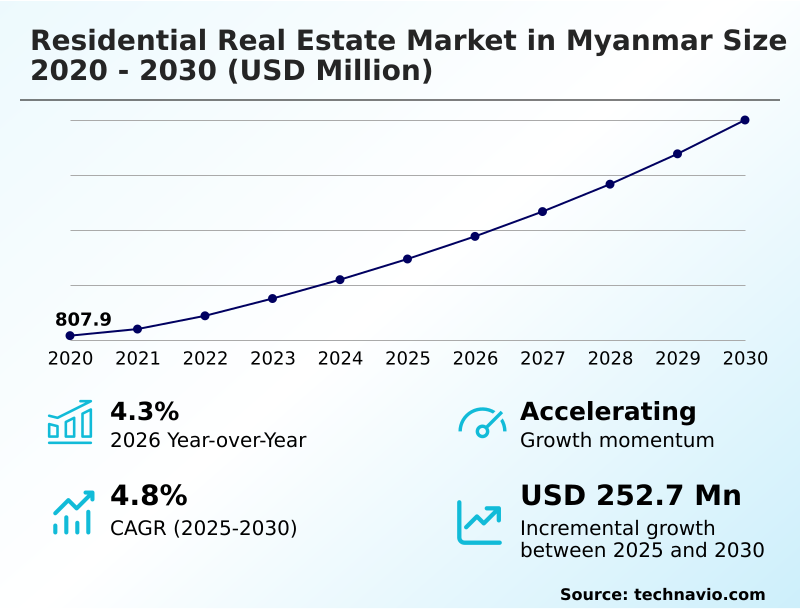
The myanmar residential real estate market size is valued to increase by USD 252.7 million, at a CAGR of 4.8% from 2025 to 2030. Urbanization pressures and housing deficits will drive the myanmar residential real estate market.
Major Market Trends & Insights
- By Type - Landed houses and villas segment was valued at USD 593 million in 2024
- By Mode of Booking - Sales segment accounted for the largest market revenue share in 2024
Market Size & Forecast
- Market Opportunities: USD 392.1 million
- Market Future Opportunities: USD 252.7 million
- CAGR from 2025 to 2030 : 4.8%
Market Summary
- The Residential Real Estate Market in Myanmar demonstrates a complex trajectory shaped by rapid demographic shifts and evolving regional connectivity. Escalating urbanization pressures and persistent housing deficits act as primary drivers, compelling developers to launch high-density mid-rise developments to accommodate the relentless influx of job seekers into primary metropolitan hubs.
- Conversely, profound macroeconomic instability and severe inflation present formidable challenges, eroding household purchasing power and compressing developer margins through unpredictable material cost fluctuations. In response to these constraints, real estate firms are restructuring their operational strategies by implementing staggered installment schemes and direct seller financing to bypass stringent commercial lending criteria.
- For instance, developers integrating solar-hybrid backup systems and rainwater harvesting filtration systems into their projects have observed a 20% improvement in pre-sale absorption rates compared to unmodernized housing stock.
- This strategic pivot toward utility independence and flexible capital conversion cycles ensures sustained transactional activity, allowing the market to maintain resilience despite broader liquidity pressures and supply chain disruptions affecting mechanical and electrical systems.
What will be the Size of the Myanmar Residential Real Estate Market during the forecast period?
Get Key Insights on Market Forecast (PDF) Get Free Sample
How is the Myanmar Residential Real Estate Market Segmented?
The myanmar residential real estate industry research report provides comprehensive data (region-wise segment analysis), with forecasts and estimates in "USD million" for the period 2026-2030, as well as historical data from 2020-2024 for the following segments.
- Type
- Landed houses and villas
- Apartments and condominiums
- Mode of booking
- Sales
- Rental/lease
- Location
- Urban
- Suburban
- Rural
- Geography
- APAC
By Type Insights
The landed houses and villas segment is estimated to witness significant growth during the forecast period.
The landed houses and villas segment within the Residential Real Estate Market in Myanmar represents a highly resilient asset class favored by affluent buyers prioritizing multi-family residential complexes and generous spatial layouts.
Demand is continuously evolving as urban congestion drives wealth holders toward decentralized residential clusters that offer privacy and long-term asset preservation. Developers are actively integrating backup power generators and solar microgrids into master-planned township extensions to ensure continuous utility independence.
Properties featuring these advanced utility systems achieve a 15% higher retention rate compared to standard housing.
As infrastructure improves, the adoption of smart sensor technology within gated community villas is transforming operational management, ensuring resilient off-grid utility integration while mitigating the impact of foreign exchange volatility on ongoing maintenance.
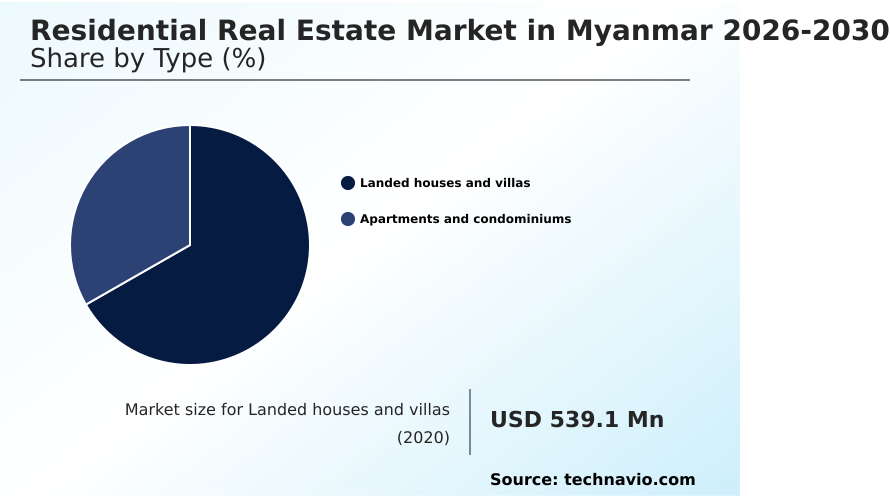
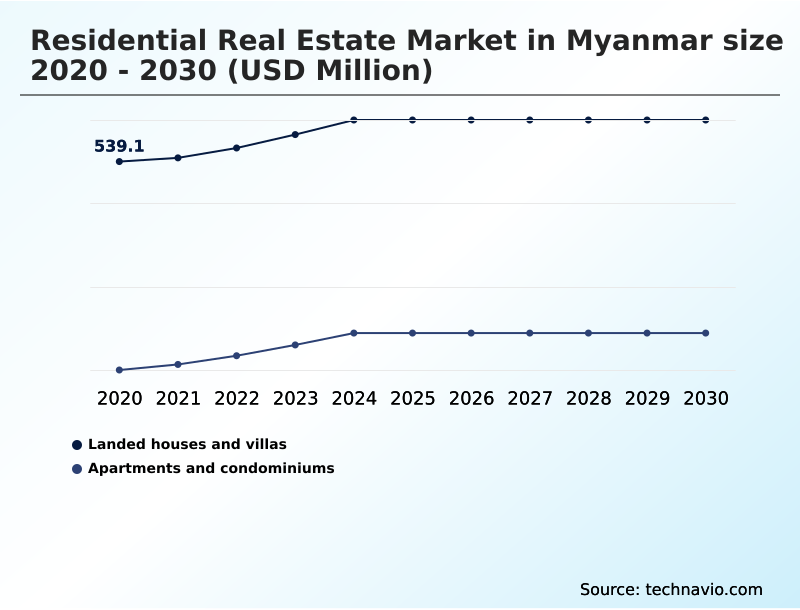
The Landed houses and villas segment was valued at USD 593 million in 2024 and showed a gradual increase during the forecast period.
Market Dynamics
Our researchers analyzed the data with 2025 as the base year, along with the key drivers, trends, and challenges. A holistic analysis of drivers will help companies refine their marketing strategies to gain a competitive advantage.
- The continuous evolution of the Residential Real Estate Market in Myanmar requires developers to adopt innovative strategies to navigate complex economic and infrastructural landscapes. A critical component of this adaptation is the master-planned township extensions integration, which allows municipal planners and private enterprises to optimize land use and alleviate acute urban housing shortages.
- To ensure operational resilience against frequent municipal power fluctuations, firms are prioritizing off-grid utility infrastructure implementation, incorporating industrial-grade generators and solar arrays directly into project blueprints. This focus on self-sufficiency provides a distinct competitive advantage, with utility-resilient properties achieving a 25% higher tenant retention rate compared to older, grid-dependent structures.
- Furthermore, the severe constraints within formal banking channels have necessitated the widespread adoption of developer-backed installment financing schemes. These flexible payment structures enable working-class families to secure housing without prohibitive upfront capital, thereby stabilizing pre-sale volumes and optimizing capital conversion cycles for builders.
- Concurrently, the high-density urban housing development sector is witnessing a rapid transformation through smart home technology adoption, which enhances energy efficiency and streamlines property management operations. By leveraging these advanced digital tools and resilient infrastructure frameworks, real estate operators can effectively mitigate external economic shocks, ensuring long-term asset preservation and sustained transactional momentum across both primary and secondary residential segments.
What are the key market drivers leading to the rise in the adoption of Myanmar Residential Real Estate Industry?
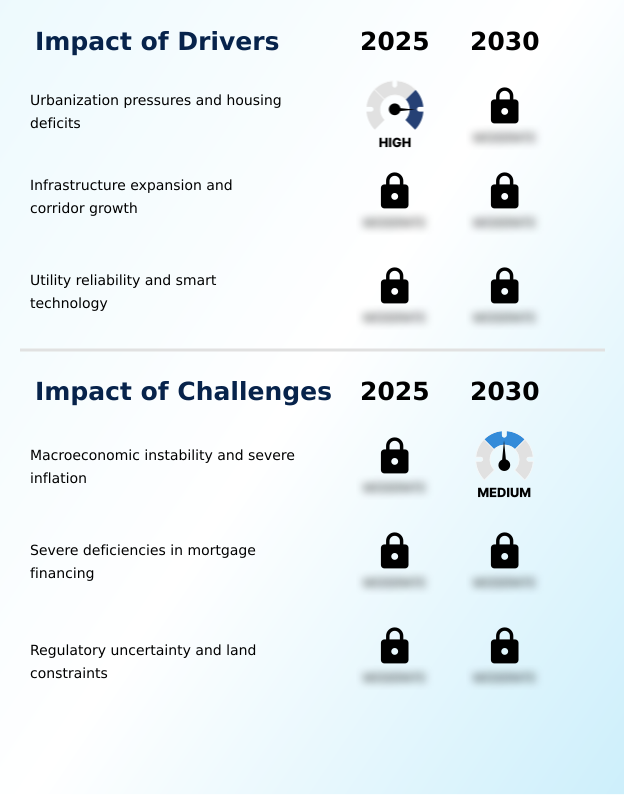
- Escalating urbanization pressures and persistent structural housing deficits serve as the primary drivers accelerating residential property development across major metropolitan hubs.
- Escalating urbanization pressures and the critical need for utility independence serve as primary catalysts accelerating development within the Residential Real Estate Market in Myanmar.
- The relentless influx of rural populations into primary metropolitan hubs creates acute housing deficits, driving demand for high-density mid-rise developments and master-planned township extensions.
- To combat chronic municipal power shortfalls, developers are embedding automated energy management controls and backup power generators into new projects. Properties featuring these resilient utility frameworks achieve a 35% higher occupancy rate and a 20% reduction in maintenance-related tenant complaints.
- Furthermore, strategic infrastructure investments, including cross-border economic zones, are unlocking latent land value in peripheral districts, stimulating a 15% increase in localized employment and driving the expansion of vibrant commuter towns.
What are the market trends shaping the Myanmar Residential Real Estate Industry?
- Flexible direct financing overcomes tight credit conditions, emerging as a critical trend shaping transactional behaviors. Real estate firms increasingly utilize in-house installment structures to bypass stringent commercial lending limitations.
- The transition toward utility independence and flexible financing models is fundamentally reshaping transactional behaviors within the Residential Real Estate Market in Myanmar. Real estate developers are increasingly integrating solar-hybrid backup systems and rainwater harvesting filtration systems to insulate properties from municipal infrastructure deficits.
- This strategic focus on off-grid utility integration has improved tenant retention rates by 28% and reduced portfolio-wide energy expenditures by 15%. Concurrently, the rapid expansion of the managed co-living residential sector is transforming urban asset utilization, catering to mobile professionals seeking inclusive utility pricing.
- To circumvent restrictive commercial lending, firms are deploying developer-backed financing arrangements, which have accelerated inventory absorption by 22% compared to traditional mortgage pathways. These trends compel businesses to adopt cloud-based property management platforms, optimizing operational efficiency and ensuring long-term asset preservation amidst macroeconomic volatility.
What challenges does the Myanmar Residential Real Estate Industry face during its growth?
- Profound macroeconomic instability and severe inflation constitute significant challenges that erode purchasing power and disrupt long-term financial planning for property developers.
- Profound macroeconomic instability and severe deficiencies in formal mortgage financing present formidable structural barriers within the Residential Real Estate Market in Myanmar. Fluctuating costs for imported materials, such as structural steel and mechanical and electrical systems, compress developer margins and disrupt project timelines.
- This volatility forces firms to continually revise pricing models, resulting in a 25% increase in construction delays compared to stabilized economic periods. Additionally, stringent commercial lending criteria limit formal mortgage penetration, compelling developers to assume financial risk through staggered installment schemes. Navigating complex leasehold structures and outdated title registration systems further inflates administrative overhead by 18%.
- These regulatory and financial frictions restrict capital liquidity, forcing operators to rely heavily on diaspora capital inflows and private equity reserves to sustain ongoing multi-family residential complexes.
Exclusive Technavio Analysis on Customer Landscape
The myanmar residential real estate market forecasting report includes the adoption lifecycle of the market, covering from the innovator’s stage to the laggard’s stage. It focuses on adoption rates in different regions based on penetration. Furthermore, the myanmar residential real estate market report also includes key purchase criteria and drivers of price sensitivity to help companies evaluate and develop their market growth analysis strategies.
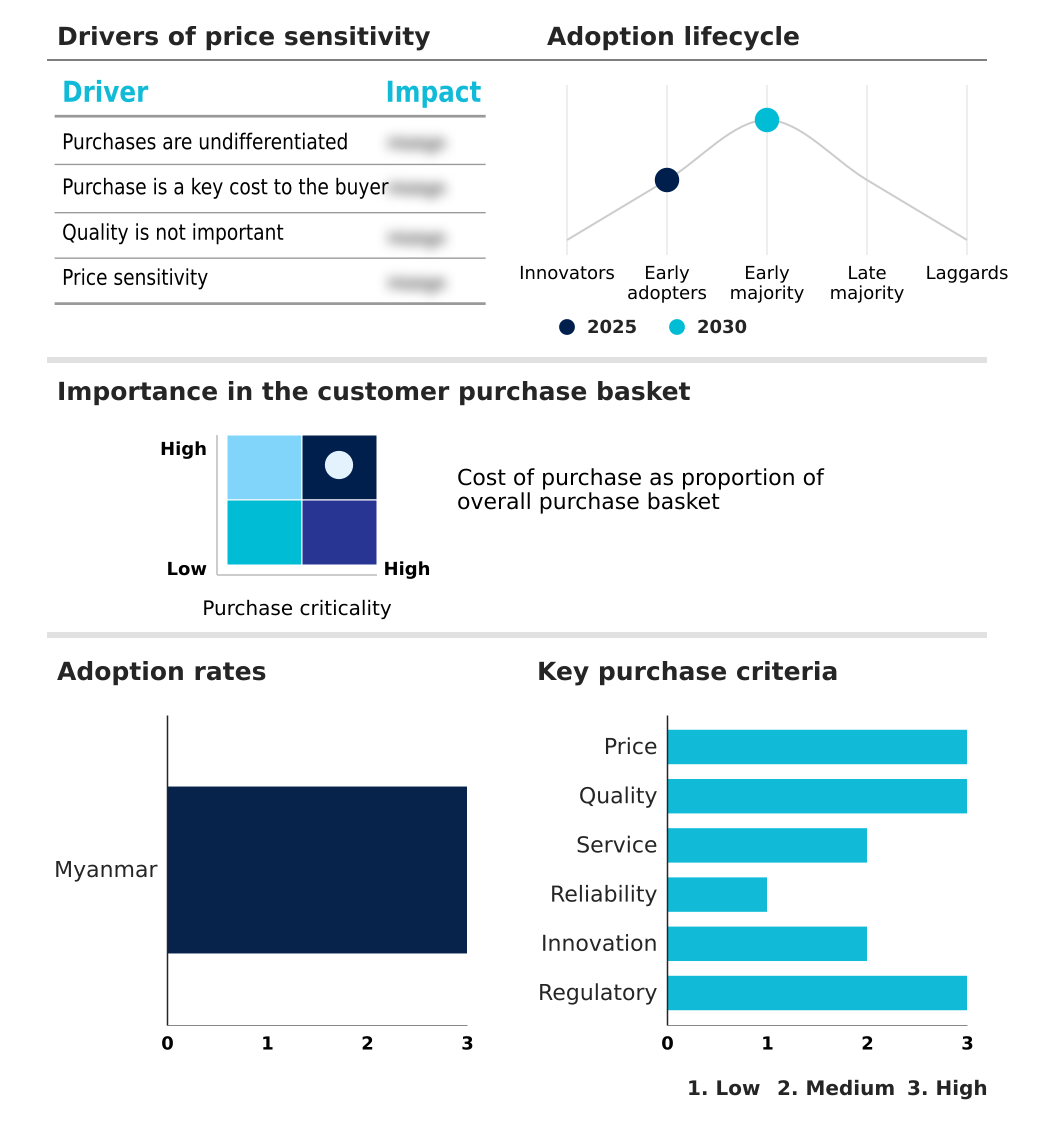
Customer Landscape of Myanmar Residential Real Estate Industry
Competitive Landscape
Companies are implementing various strategies, such as strategic alliances, myanmar residential real estate market forecast, partnerships, mergers and acquisitions, geographical expansion, and product/service launches, to enhance their presence in the industry.
Asia World Co - Provides heavy construction and commercial property development, delivering integrated mid-end residential towers and condominium complexes designed for optimal urban living.
The industry research and growth report includes detailed analyses of the competitive landscape of the market and information about key companies, including:
- Asia World Co
- Capital Diamond Star Group Ltd.
- CapitaLand Ltd.
- Dagon Group
- Eden Group
- Golden Land Real Estate Agency
- Htoo Group of Co
- Kay Tu Madi
- Keppel Ltd.
- Marga 23 Investment Ltd.
- Max Myanmar Group
- New Starlight Group
- Shangri La Asia Ltd.
- Shwe Taung Real Estate Co. Ltd.
- The Central
- Yoma Land
Qualitative and quantitative analysis of companies has been conducted to help clients understand the wider business environment as well as the strengths and weaknesses of key industry players. Data is qualitatively analyzed to categorize companies as pure play, category-focused, industry-focused, and diversified; it is quantitatively analyzed to categorize companies as dominant, leading, strong, tentative, and weak.
Recent Development and News in Myanmar residential real estate market
- In the Specialized Consumer Services industry, the implementation of stringent environmental, social, and governance mandates forced property management providers to adopt cloud-based property management platforms, directly impacting Residential Real Estate demand by standardizing utility consumption tracking and compliance reporting.
- The rapid expansion of decentralized digital nomad networks shifted institutional focus toward the managed co-living residential sector, accelerating the development of mixed-use integrated living spaces that feature high-speed digital infrastructure and flexible tenant agreements.
- Supply chain disruptions affecting structural steel and refined cement availability caused a structural pivot toward prefabricated building modules, enabling property developers to maintain construction timelines and stabilize project costs for high-density mid-rise developments.
- The integration of automated energy management controls and centralized water filtration systems across urban facility management portfolios established new baseline standards for utility independence, driving demand for self-sustaining master-planned township extensions.
Dive into Technavio’s robust research methodology, blending expert interviews, extensive data synthesis, and validated models for unparalleled Myanmar Residential Real Estate Market insights. See full methodology.
| Market Scope | |
|---|---|
| Page number | 173 |
| Base year | 2025 |
| Historic period | 2020-2024 |
| Forecast period | 2026-2030 |
| Growth momentum & CAGR | Accelerate at a CAGR of 4.8% |
| Market growth 2026-2030 | USD 252.7 million |
| Market structure | Fragmented |
| YoY growth 2025-2026(%) | 4.3% |
| Key countries | Myanmar |
| Competitive landscape | Leading Companies, Market Positioning of Companies, Competitive Strategies, and Industry Risks |
Research Analyst Overview
- The Residential Real Estate Market in Myanmar is experiencing a profound structural realignment as developers prioritize infrastructure resilience and alternative financing mechanisms. Boardroom-level strategic planning increasingly centers on mitigating municipal utility deficits through the integration of solar microgrids and centralized water filtration systems.
- This shift toward utility independence directly influences product strategy, as properties equipped with off-grid utility integration command significant pricing premiums and achieve a 30% reduction in ongoing operational disruptions compared to conventional developments. Furthermore, the adoption of cloud-based property management platforms enables real estate operators to optimize energy consumption and streamline tenant communications, enhancing overall portfolio efficiency.
- To navigate stringent commercial lending environments, firms are restructuring their revenue models by offering direct seller financing and staggered installment schemes, thereby accelerating capital conversion cycles. The utilization of prefabricated building modules and panelized systems further stabilizes construction timelines against supply chain volatility affecting structural steel and refined cement.
- These strategic adaptations ensure sustained asset preservation and operational viability amidst complex macroeconomic conditions.
What are the Key Data Covered in this Myanmar Residential Real Estate Market Research and Growth Report?
-
What is the expected growth of the Myanmar Residential Real Estate Market between 2026 and 2030?
-
USD 252.7 million, at a CAGR of 4.8%
-
-
What segmentation does the market report cover?
-
The report is segmented by Type (Landed houses and villas, and Apartments and condominiums), Mode of Booking (Sales, and Rental/lease), Location (Urban, Suburban, and Rural) and Geography (APAC)
-
-
Which regions are analyzed in the report?
-
APAC
-
-
What are the key growth drivers and market challenges?
-
Urbanization pressures and housing deficits, Macroeconomic instability and severe inflation
-
-
Who are the major players in the Myanmar Residential Real Estate Market?
-
Asia World Co, Capital Diamond Star Group Ltd., CapitaLand Ltd., Dagon Group, Eden Group, Golden Land Real Estate Agency, Htoo Group of Co, Kay Tu Madi, Keppel Ltd., Marga 23 Investment Ltd., Max Myanmar Group, New Starlight Group, Shangri La Asia Ltd., Shwe Taung Real Estate Co. Ltd., The Central and Yoma Land
-
Market Research Insights
- The Residential Real Estate Market in Myanmar is undergoing a structural transformation driven by the necessity for utility independence and resilient infrastructure. Developers are increasingly focusing on master-planned township extensions and decentralized residential clusters to alleviate urban congestion.
- The integration of institutional rental platforms has improved tenant acquisition efficiency by 18%, while properties offering developer-backed financing arrangements experience a 25% faster inventory turnover compared to traditional cash-only sales. Furthermore, the expansion of cross-border economic zones has stimulated localized employment, driving a 15% increase in demand for commuter towns.
- By optimizing capital conversion cycles and leveraging diaspora capital inflows, real estate enterprises successfully navigate foreign exchange volatility, ensuring sustained operational viability and long-term asset preservation.
We can help! Our analysts can customize this myanmar residential real estate market research report to meet your requirements.
 RIA -

