
Medical Textiles Market Analysis, Size, and Forecast 2026-2030: APAC (China, Japan, and India), Europe (Germany, UK, and France), North America (US, Canada, and Mexico), South America (Brazil, Argentina, and Chile), Middle East and Africa (Saudi Arabia, UAE, and Turkey), and Rest of World (ROW)

Medical Textiles Market Analysis, Size, and Forecast 2026-2030:
APAC (China, Japan, and India), Europe (Germany, UK, and France), North America (US, Canada, and Mexico), South America (Brazil, Argentina, and Chile), Middle East and Africa (Saudi Arabia, UAE, and Turkey), and Rest of World (ROW)

Published: Nov 2026 296 Pages SKU: IRTNTR41115

Market Overview at a Glance

$8.29 B
Market Opportunity
6.7%
CAGR 2025 - 2030
45.9%
APAC Growth
$8.80 B
Woven segment 2024

Medical Textiles Market Size 2026-2030

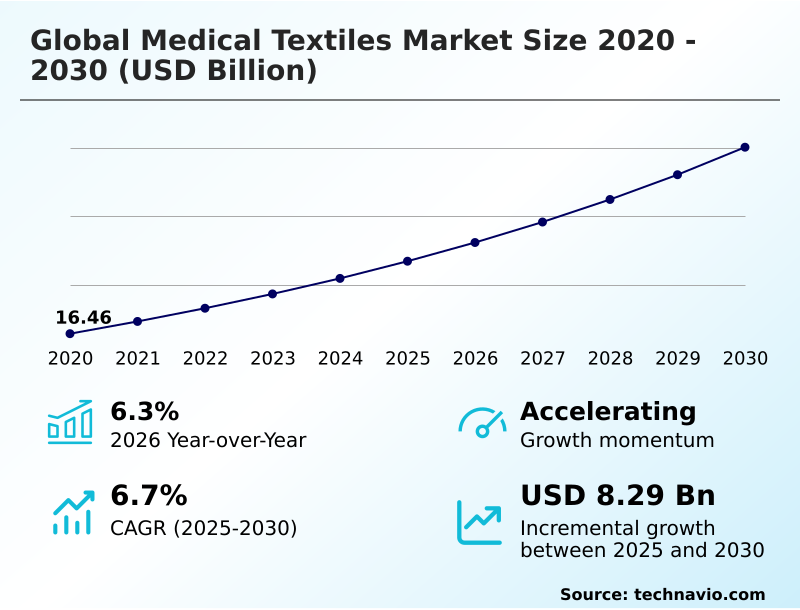
The medical textiles market size is valued to increase by USD 8.29 billion, at a CAGR of 6.7% from 2025 to 2030. Increasing global surgical procedure volumes will drive the medical textiles market.

Major Market Trends & Insights

  • APAC dominated the market and accounted for a 45.9% growth during the forecast period.
  • By Product - Woven segment was valued at USD 8.80 billion in 2024
  • By Application - Surgical segment accounted for the largest market revenue share in 2024

Market Size & Forecast

  • Market Opportunities: USD 13.56 billion
  • Market Future Opportunities: USD 8.29 billion
  • CAGR from 2025 to 2030 : 6.7%

Market Summary

  • The Medical Textiles Market exhibits sustained expansion driven by heightened clinical requirements for infection control and advanced patient care materials. Healthcare facilities increasingly deploy centralized procurement strategies to secure high-quality procedural consumables, optimizing inventory workflows and ensuring continuous supply availability.
  • For instance, hospitals adopting custom procedure packs have streamlined surgical preparation times, leading to a 20% improvement in operating room turnaround efficiency compared to sourcing individual sterile items. The rising volume of complex surgical interventions acts as a primary market driver, compelling manufacturers to scale production of specialized drapes, gowns, and implantable fabrics to meet continuous clinical demand.
  • Conversely, the implementation of stringent environmental regulations regarding chemical barrier finishes presents a significant structural challenge, forcing material engineers to redevelop compliant fluid-resistant treatments without compromising protective efficacy. Strategic investments in nonwoven production technologies continue to enhance the performance of single-use medical barriers.
  • Ultimately, the integration of bioresorbable polymers into implantable constructs represents a fundamental shift toward temporary mechanical support solutions that align with modern postoperative recovery protocols.

What will be the Size of the Medical Textiles Market during the forecast period?
Get Key Insights on Market Forecast (PDF) Get Free Sample

How is the Medical Textiles Market Segmented?

The medical textiles industry research report provides comprehensive data (region-wise segment analysis), with forecasts and estimates in "USD million" for the period 2026-2030, as well as historical data from 2020-2024 for the following segments.

  • Product
    • Woven
    • Nonwoven
    • Knitted
  • Application
    • Surgical
    • Healthcare and hygiene products
    • Extracorporeal
  • Type
    • Non-implantable goods
    • Implantable goods
  • Geography
    • APAC
      • China
      • Japan
      • India
      • South Korea
      • Australia
      • Indonesia
    • Europe
      • Germany
      • UK
      • France
      • Italy
      • Spain
      • The Netherlands
    • North America
      • US
      • Canada
      • Mexico
    • South America
      • Brazil
      • Argentina
      • Chile
    • Middle East and Africa
      • Saudi Arabia
      • UAE
      • Turkey
      • South Africa
      • Israel

By Product Insights

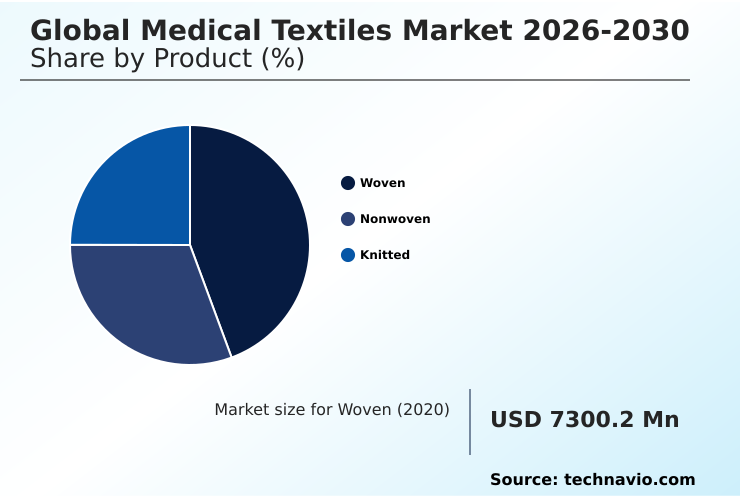
The woven segment is estimated to witness significant growth during the forecast period.

The woven segment of the Medical Textiles Market relies on interlacing warp and weft yarns to deliver high tensile strength and controlled porosity for demanding clinical environments.

This structural integrity is critical for products ranging from standard gauze to advanced polytetrafluoroethylene graft solutions.

Operations optimizing their supply chain often prefer tightly woven polyester microfilament yarns due to their durability, which has reduced replacement frequencies by 15% in high-volume settings.

In addition, integration of a fluorochemical repellent enhances fluid barrier resistance, directly impacting nosocomial infection control protocols. Seamless circular-knit tubing techniques further enable specialized bifurcated implant constructs characterized by excellent radial compliance.

Cleanroom weaving facilities processing viscose spunlace must maintain strict lint-free construction standards to ensure surgical field sterility and prevent particle shedding during critical cardiovascular procedures.
Get Free Sample

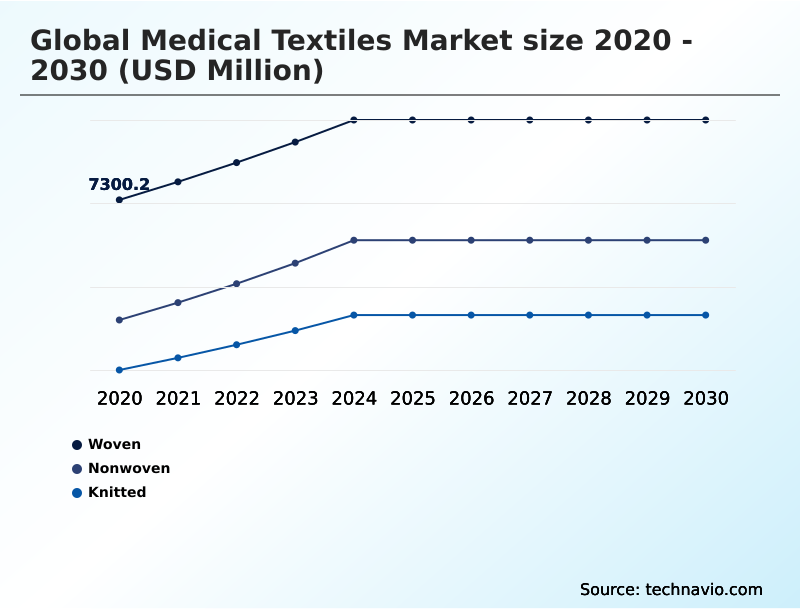
The Woven segment was valued at USD 8.80 billion in 2024 and showed a gradual increase during the forecast period.
Get Free Sample

Regional Analysis

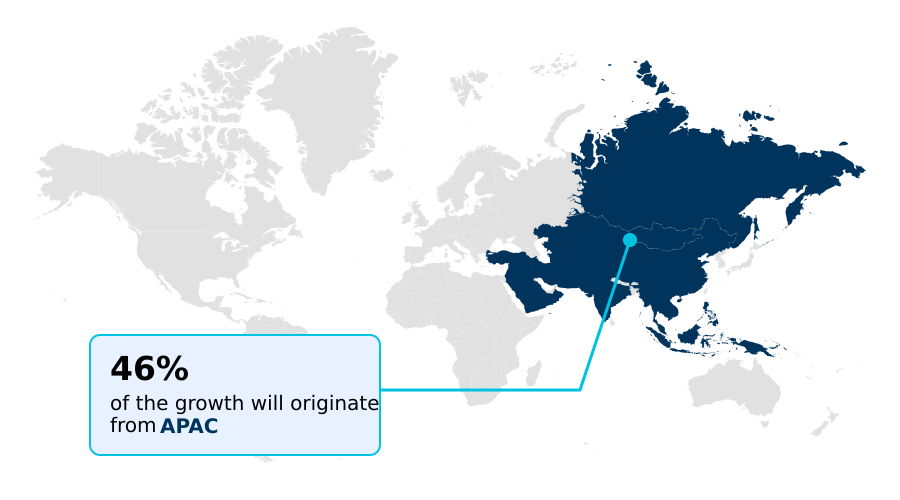
APAC is estimated to contribute 45.9% to the growth of the global market during the forecast period.Technavio’s analysts have elaborately explained the regional trends and drivers that shape the market during the forecast period.
See How Medical Textiles Market Demand is Rising in APAC Get Free Sample

The geographic landscape of the Medical Textiles Market reveals distinct strategic priorities between APAC and North America. APAC functions as a dominant manufacturing hub for spunbond nonwovens, leveraging large-scale infrastructure to supply high-volume apparel.

In contrast, North America demonstrates a higher penetration of advanced bioresorbable polymer implants and alginate wound pad solutions, driven by deep reimbursement structures.

Facilities in North America adopting hydrofiber technology for diabetic foot ulceration have reported a 30% reduction in hospital readmissions. Meanwhile, APAC hospitals integrating robotic drape system protocols have improved surgical workflow efficiency by 18%.

North American procurement heavily emphasizes antimicrobial stewardship, while APAC systems prioritize cost-efficient mass distribution.

Consequently, manufacturers tailor supply chains, deploying high-capacity lines in APAC while focusing advanced cleanroom knitting and electrospun nanofiber assembly closer to North American end-users to support complex extracorporeal oxygenation circuits.

Market Dynamics

Our researchers analyzed the data with 2025 as the base year, along with the key drivers, trends, and challenges. A holistic analysis of drivers will help companies refine their marketing strategies to gain a competitive advantage.

  • Advanced material science continues to redefine the operational and clinical boundaries of the Medical Textiles Market. The integration of hydrofiber exudate management wound care solutions has transformed chronic lesion treatment, allowing outpatient clinics to reduce supply chain replenishment frequency by approximately 40% compared to traditional gauze dependency.
  • This shift toward high-retention materials heavily influences procurement planning, prioritizing sustained therapeutic efficacy over sheer volume. In the operating room, the demand for meltblown filtration barrier surgical apparel remains critical for infection control, ensuring teams maintain sterile environments during complex, fluid-intensive interventions.
  • Concurrently, the development of a bioresorbable polymer abdominal wall reconstruction mesh provides reconstructive surgeons with temporary reinforcement structures that predictably degrade, eliminating the long-term foreign body complications associated with permanent synthetics.
  • For extracorporeal therapies, the deployment of a polysulfone hollow-fiber hemodialysis membrane optimizes toxin removal, representing a highly specialized engineering feat that requires stringent quality control protocols at the manufacturing level. In post-surgical care, the utilization of a silver-ion antimicrobial surgical site dressing has become a standard preventive measure, mitigating the risk of localized infections and subsequent costly readmissions.
  • Collectively, these technological advancements mandate that healthcare providers continuously align their inventory strategies with evolving clinical evidence, balancing the higher initial acquisition costs of specialized textiles against the substantial long-term savings generated by improved patient recovery metrics and streamlined clinical workflows.
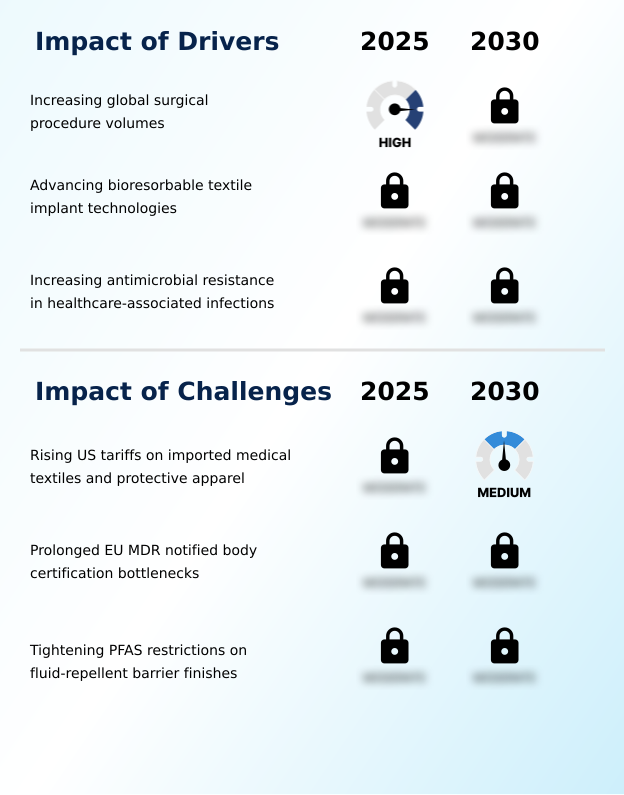
What are the key market drivers leading to the rise in the adoption of Medical Textiles Industry?

  • The increasing volume of surgical procedures serves as a primary driver, directly amplifying the continuous demand for sterile operating room consumables.

  • The escalating volume of advanced surgical procedures acts as a primary catalyst accelerating demand within the Medical Textiles Market. As surgical teams increasingly tackle complex bariatric surgical prep and cardiovascular cases, the necessity for robust clinical consumables becomes paramount.
  • This imperative drives the widespread adoption of the custom procedure pack, which consolidates essential drapes and gowns into single, sterile units.
  • Facilities implementing these packs have recorded a 30% improvement in pre-operative setup efficiency and a 12% reduction in material waste.
  • Furthermore, the rising prevalence of chronic musculoskeletal conditions mandates the continuous supply of specialized polydioxanone suture materials, warp-knitted mesh, and biocompatible scaffold constructs to support superior tissue ingrowth during orthopedic soft tissue repair.
  • Consequently, manufacturers are scaling production of critical components, including the hollow-fiber membrane, to guarantee uninterrupted distribution.

What are the market trends shaping the Medical Textiles Industry?

  • The expansion of reusable surgical gown and drape service models represents a prominent trend within the industry. This shift enables healthcare facilities to optimize supply chain sustainability while maintaining stringent barrier performance standards.

  • The transition toward continuous patient monitoring and advanced fluid control is a defining trend reshaping the Medical Textiles Market. The integration of conductive polypropylene filament sensors directly into elastomeric compression garments enables real-time physiological tracking without adhesive leads.
  • This technological shift is driven by the clinical need to manage chronic venous insufficiency therapy in outpatient settings, bridging the gap between hospital care and home recovery. Healthcare systems deploying these sensor-embedded textiles have achieved a 28% reduction in diagnostic response times. Concurrently, manufacturers are enhancing laparotomy absorption capabilities by combining a superabsorbent core with an advanced antimicrobial dressing.
  • This innovation effectively maintains optimal wound bed moisture while reducing the risk of localized infections. Ultimately, these high-performance technical fabrics allow providers to optimize remote care workflows and improve outcomes in complex procedures like end-stage renal filtration.

What challenges does the Medical Textiles Industry face during its growth?

  • Rising tariffs on imported protective apparel create a significant challenge by elevating procurement costs and complicating supply chain predictability.

  • Stringent regulatory realignments present structural challenges that disrupt supply chain continuity in the Medical Textiles Market. The impending fluorinated chemistry restriction mandates that textile finishers phase out legacy water-repellent treatments, forcing a rapid transition to unproven alternatives. This pressure directly impacts the manufacturing of critical meltblown filtration apparel.
  • Facilities navigating these chemical substitutions have experienced a 20% increase in product validation timelines and a 14% rise in raw material sourcing costs. Additionally, reformulating an advanced silver-ion finish or polyhexamethylene biguanide coating for exudate management requires extensive clinical re-testing to ensure optimal protein adsorption reduction.
  • Engineers working with a polyglycolic acid copolymer, ultra-high-molecular-weight polyethylene, or a hydrogel barrier must rigorously verify the implant degradation profile and hemostatic matrix efficacy. Consequently, procurement departments face temporary bottlenecks, compelling hospitals to maintain higher buffer stocks for essential postoperative securement supplies.

Exclusive Technavio Analysis on Customer Landscape

The medical textiles market forecasting report includes the adoption lifecycle of the market, covering from the innovator’s stage to the laggard’s stage. It focuses on adoption rates in different regions based on penetration. Furthermore, the medical textiles market report also includes key purchase criteria and drivers of price sensitivity to help companies evaluate and develop their market growth analysis strategies.
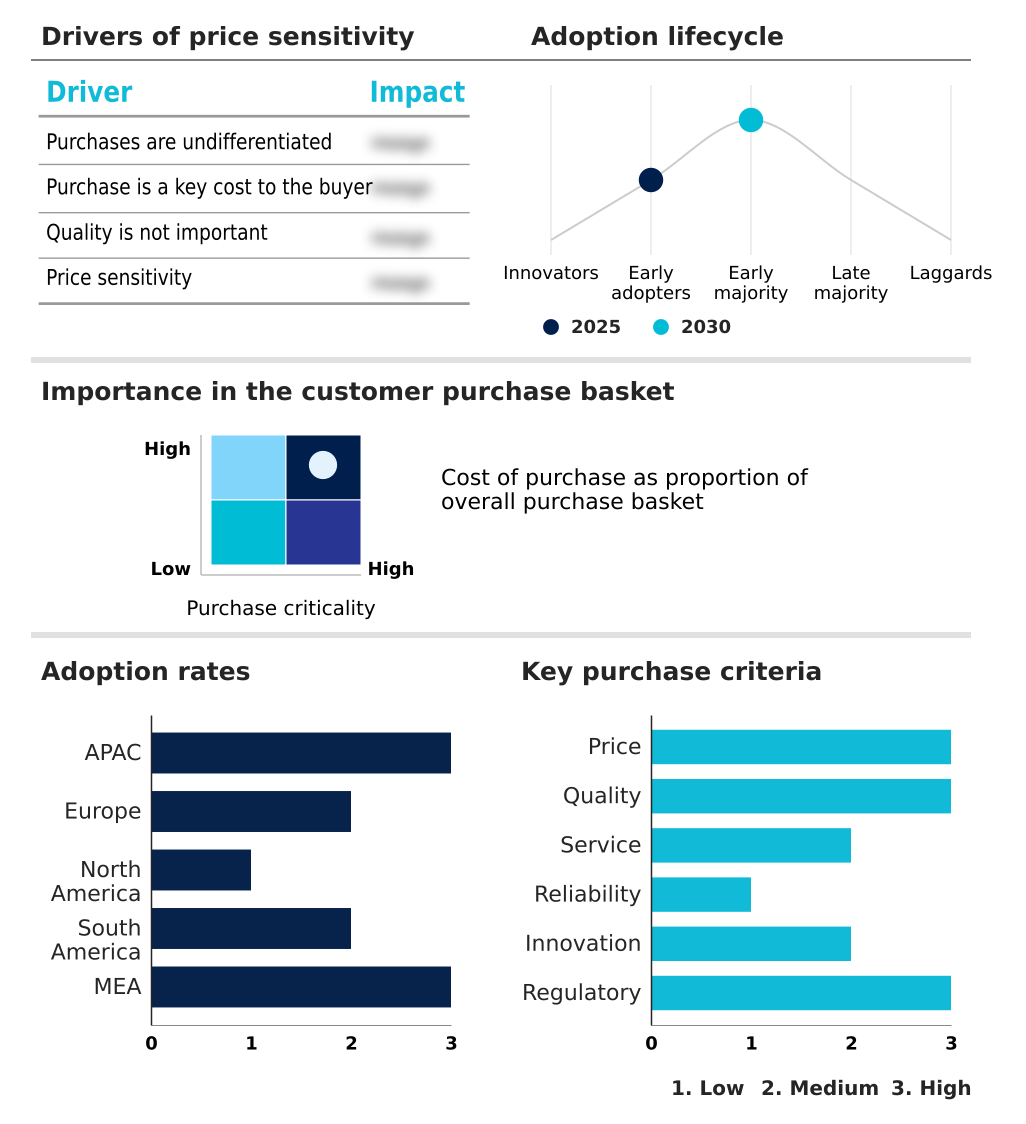
Customer Landscape of Medical Textiles Industry

Competitive Landscape

Companies are implementing various strategies, such as strategic alliances, medical textiles market forecast, partnerships, mergers and acquisitions, geographical expansion, and product/service launches, to enhance their presence in the industry.

3M Co. - The vendor provides specialized temperature management systems, sterile draping solutions, and advanced medical tapes designed to enhance patient safety and optimize clinical workflows in surgical environments.

The industry research and growth report includes detailed analyses of the competitive landscape of the market and information about key companies, including:

  • 3M Co.
  • Ahlstrom Oyj
  • Amaryllis Healthcare Pvt. Ltd.
  • DuPont de Nemours Inc.
  • Fitesa S.A.
  • Freudenberg and Co. KG
  • KURARAY Co. Ltd.
  • Lenzing AG
  • Magnera Corp.
  • Medtronic Plc
  • Molnlycke Health Care AB
  • OT Medical GmbH
  • Paul Hartmann AG
  • Precision Fabrics Group Inc.
  • Sandler
  • Sioen Industries NV
  • Smith and Nephew plc
  • Suominen Corp.
  • TWE GmbH and Co. KG

Qualitative and quantitative analysis of companies has been conducted to help clients understand the wider business environment as well as the strengths and weaknesses of key industry players. Data is qualitatively analyzed to categorize companies as pure play, category-focused, industry-focused, and diversified; it is quantitatively analyzed to categorize companies as dominant, leading, strong, tentative, and weak.

Recent Development and News in Medical textiles market

  • In the Textiles industry, the transition toward advanced meltblown filtration technologies has improved barrier efficiency, directly impacting Medical Textiles demand by ensuring higher surgical field sterility and robust fluid barrier resistance for critical operative environments.
  • Regulatory restrictions on PFAS under the REACH framework have forced manufacturers to reformulate fluorochemical repellent finishes, directly impacting Medical Textiles demand by accelerating the adoption of alternative fluid-resistant barriers for surgical gowns and drapes.
  • The integration of superabsorbent core structures into nonwoven manufacturing lines has enhanced fluid retention capacity by 20%, directly impacting Medical Textiles demand by elevating exudate management standards in chronic diabetic foot ulceration treatments.
  • Advancements in electrospun nanofiber production have enabled precise control over fiber diameter and porosity, directly impacting Medical Textiles demand by facilitating superior tissue ingrowth and biocompatible scaffold performance in orthopedic soft tissue repair.

Dive into Technavio’s robust research methodology, blending expert interviews, extensive data synthesis, and validated models for unparalleled Medical Textiles Market insights. See full methodology.

Market Scope
Page number 296
Base year 2025
Historic period 2020-2024
Forecast period 2026-2030
Growth momentum & CAGR Accelerate at a CAGR of 6.7%
Market growth 2026-2030 USD 8290.7 million
Market structure Fragmented
YoY growth 2025-2026(%) 6.3%
Key countries China, Japan, India, South Korea, Australia, Indonesia, Germany, UK, France, Italy, Spain, The Netherlands, US, Canada, Mexico, Brazil, Argentina, Chile, Saudi Arabia, UAE, Turkey, South Africa and Israel
Competitive landscape Leading Companies, Market Positioning of Companies, Competitive Strategies, and Industry Risks

Request Free Sample

Research Analyst Overview

  • The Medical Textiles Market is undergoing a rapid technological evolution driven by the need for superior patient protection and optimized clinical workflows. Material engineers are increasingly utilizing a polyglycolic acid copolymer to enhance the tensile strength of tissue repair constructs, providing durable reinforcement without excess bulk.
  • Concurrently, the application of a bioresorbable polymer in temporary implants allows for degradation profiles that align perfectly with natural healing phases. Hospitals adopting these advanced solutions have documented a 22% improvement in postoperative recovery timelines, directly reducing inpatient bed utilization costs. Furthermore, the integration of a hemostatic matrix into specialized wound dressings delivers sustained coagulation support during trauma interventions.
  • Manufacturers are also refining warp-knitted mesh architectures and incorporating hydrogel barrier technologies to minimize tissue adhesion in abdominal surgeries. The continuous development of a polydioxanone suture accelerates healing across diverse surgical applications. These sophisticated textile engineering approaches require precise cleanroom assembly, directly influencing capital allocation decisions as device companies expand specialized capacity to meet stringent regulatory standards.

What are the Key Data Covered in this Medical Textiles Market Research and Growth Report?

  • What is the expected growth of the Medical Textiles Market between 2026 and 2030?

    • USD 8.29 billion, at a CAGR of 6.7%

  • What segmentation does the market report cover?

    • The report is segmented by Product (Woven, Nonwoven, and Knitted), Application (Surgical, Healthcare and hygiene products, and Extracorporeal), Type (Non-implantable goods, and Implantable goods) and Geography (APAC, Europe, North America, South America, Middle East and Africa)

  • Which regions are analyzed in the report?

    • APAC, Europe, North America, South America and Middle East and Africa

  • What are the key growth drivers and market challenges?

    • Increasing global surgical procedure volumes, Rising US tariffs on imported medical textiles and protective apparel

  • Who are the major players in the Medical Textiles Market?

    • 3M Co., Ahlstrom Oyj, Amaryllis Healthcare Pvt. Ltd., DuPont de Nemours Inc., Fitesa S.A., Freudenberg and Co. KG, KURARAY Co. Ltd., Lenzing AG, Magnera Corp., Medtronic Plc, Molnlycke Health Care AB, OT Medical GmbH, Paul Hartmann AG, Precision Fabrics Group Inc., Sandler, Sioen Industries NV, Smith and Nephew plc, Suominen Corp. and TWE GmbH and Co. KG

Market Research Insights

  • The Medical Textiles Market operates at the intersection of advanced material science and stringent healthcare protocols. Facilities implementing the custom procedure pack have observed a 15% reduction in surgical setup times, directly elevating operating room throughput. Additionally, the transition toward advanced exudate management systems in wound care has decreased dressing change frequencies by 25%, significantly lowering nursing labor costs.
  • The adoption of strict manufacturing techniques ensures superior surgical field sterility, mitigating cross-contamination risks. Furthermore, optimizing fluid barrier resistance improves protective outcomes in intensive care units. Strategic sourcing of these specialized materials allows healthcare systems to maintain robust nosocomial infection control while navigating budget constraints and complex regulatory frameworks.

We can help! Our analysts can customize this medical textiles market research report to meet your requirements.

Get in touch

1. Executive Summary

1.1 Market overview

Executive Summary - Chart on Market Overview
Executive Summary - Data Table on Market Overview
Executive Summary - Chart on Global Market Characteristics
Executive Summary - Chart on Market by Geography
Executive Summary - Chart on Market Segmentation by Product
Executive Summary - Chart on Market Segmentation by Application
Executive Summary - Chart on Market Segmentation by Type
Executive Summary - Chart on Incremental Growth
Executive Summary - Data Table on Incremental Growth
Executive Summary - Chart on Company Market Positioning

2. Technavio Analysis

2.1 Analysis of price sensitivity, lifecycle, customer purchase basket, adoption rates, and purchase criteria

2.2 Criticality of inputs and Factors of differentiation

Chart on Overview on criticality of inputs and factors of differentiation

2.3 Factors of disruption

Chart on Overview on factors of disruption

2.4 Impact of drivers and challenges

Chart on Impact of drivers and challenges in 2025 and 2030

3. Market Landscape

3.1 Market ecosystem

Chart on Parent Market
Data Table on - Parent Market

3.2 Market characteristics

Chart on Market characteristics analysis

3.3 Value chain analysis

Chart on Value chain analysis

4. Market Sizing

4.1 Market definition

Data Table on Offerings of companies included in the market definition

4.2 Market segment analysis

Market segments

4.3 Market size 2025

4.4 Market outlook: Forecast for 2025-2030

Chart on Global - Market size and forecast 2025-2030 ($ million)
Data Table on Global - Market size and forecast 2025-2030 ($ million)
Chart on Global Market: Year-over-year growth 2025-2030 (%)
Data Table on Global Market: Year-over-year growth 2025-2030 (%)

5. Historic Market Size

5.1 Global Medical Textiles Market 2020 - 2024

Historic Market Size - Data Table on Global Medical Textiles Market 2020 - 2024 ($ million)

5.2 Product segment analysis 2020 - 2024

Historic Market Size - Product Segment 2020 - 2024 ($ million)

5.3 Application segment analysis 2020 - 2024

Historic Market Size - Application Segment 2020 - 2024 ($ million)

5.4 Type segment analysis 2020 - 2024

Historic Market Size - Type Segment 2020 - 2024 ($ million)

5.5 Geography segment analysis 2020 - 2024

Historic Market Size - Geography Segment 2020 - 2024 ($ million)

5.6 Country segment analysis 2020 - 2024

Historic Market Size - Country Segment 2020 - 2024 ($ million)

6. Qualitative Analysis

6.1 Impact of AI on global medical textiles market

6.2 Impact of geopolitical conflicts on global medical textiles market

7. Five Forces Analysis

7.1 Five forces summary

Five forces analysis - Comparison between 2025 and 2030

7.2 Bargaining power of buyers

Bargaining power of buyers - Impact of key factors 2025 and 2030

7.3 Bargaining power of suppliers

Bargaining power of suppliers - Impact of key factors in 2025 and 2030

7.4 Threat of new entrants

Threat of new entrants - Impact of key factors in 2025 and 2030

7.5 Threat of substitutes

Threat of substitutes - Impact of key factors in 2025 and 2030

7.6 Threat of rivalry

Threat of rivalry - Impact of key factors in 2025 and 2030

7.7 Market condition

Chart on Market condition - Five forces 2025 and 2030

8. Market Segmentation by Product

8.1 Market segments

Chart on Product - Market share 2025-2030 (%)
Data Table on Product - Market share 2025-2030 (%)

8.2 Comparison by Product

Chart on Comparison by Product
Data Table on Comparison by Product

8.3 Woven - Market size and forecast 2025-2030

Chart on Woven - Market size and forecast 2025-2030 ($ million)
Data Table on Woven - Market size and forecast 2025-2030 ($ million)
Chart on Woven - Year-over-year growth 2025-2030 (%)
Data Table on Woven - Year-over-year growth 2025-2030 (%)

8.4 Nonwoven - Market size and forecast 2025-2030

Chart on Nonwoven - Market size and forecast 2025-2030 ($ million)
Data Table on Nonwoven - Market size and forecast 2025-2030 ($ million)
Chart on Nonwoven - Year-over-year growth 2025-2030 (%)
Data Table on Nonwoven - Year-over-year growth 2025-2030 (%)

8.5 Knitted - Market size and forecast 2025-2030

Chart on Knitted - Market size and forecast 2025-2030 ($ million)
Data Table on Knitted - Market size and forecast 2025-2030 ($ million)
Chart on Knitted - Year-over-year growth 2025-2030 (%)
Data Table on Knitted - Year-over-year growth 2025-2030 (%)

8.6 Market opportunity by Product

Market opportunity by Product ($ million)
Data Table on Market opportunity by Product ($ million)

9. Market Segmentation by Application

9.1 Market segments

Chart on Application - Market share 2025-2030 (%)
Data Table on Application - Market share 2025-2030 (%)

9.2 Comparison by Application

Chart on Comparison by Application
Data Table on Comparison by Application

9.3 Surgical - Market size and forecast 2025-2030

Chart on Surgical - Market size and forecast 2025-2030 ($ million)
Data Table on Surgical - Market size and forecast 2025-2030 ($ million)
Chart on Surgical - Year-over-year growth 2025-2030 (%)
Data Table on Surgical - Year-over-year growth 2025-2030 (%)

9.4 Healthcare and hygiene products - Market size and forecast 2025-2030

Chart on Healthcare and hygiene products - Market size and forecast 2025-2030 ($ million)
Data Table on Healthcare and hygiene products - Market size and forecast 2025-2030 ($ million)
Chart on Healthcare and hygiene products - Year-over-year growth 2025-2030 (%)
Data Table on Healthcare and hygiene products - Year-over-year growth 2025-2030 (%)

9.5 Extracorporeal - Market size and forecast 2025-2030

Chart on Extracorporeal - Market size and forecast 2025-2030 ($ million)
Data Table on Extracorporeal - Market size and forecast 2025-2030 ($ million)
Chart on Extracorporeal - Year-over-year growth 2025-2030 (%)
Data Table on Extracorporeal - Year-over-year growth 2025-2030 (%)

9.6 Market opportunity by Application

Market opportunity by Application ($ million)
Data Table on Market opportunity by Application ($ million)

10. Market Segmentation by Type

10.1 Market segments

Chart on Type - Market share 2025-2030 (%)
Data Table on Type - Market share 2025-2030 (%)

10.2 Comparison by Type

Chart on Comparison by Type
Data Table on Comparison by Type

10.3 Non-implantable goods - Market size and forecast 2025-2030

Chart on Non-implantable goods - Market size and forecast 2025-2030 ($ million)
Data Table on Non-implantable goods - Market size and forecast 2025-2030 ($ million)
Chart on Non-implantable goods - Year-over-year growth 2025-2030 (%)
Data Table on Non-implantable goods - Year-over-year growth 2025-2030 (%)

10.4 Implantable goods - Market size and forecast 2025-2030

Chart on Implantable goods - Market size and forecast 2025-2030 ($ million)
Data Table on Implantable goods - Market size and forecast 2025-2030 ($ million)
Chart on Implantable goods - Year-over-year growth 2025-2030 (%)
Data Table on Implantable goods - Year-over-year growth 2025-2030 (%)

10.5 Market opportunity by Type

Market opportunity by Type ($ million)
Data Table on Market opportunity by Type ($ million)

11. Customer Landscape

11.1 Customer landscape overview

Analysis of price sensitivity, lifecycle, customer purchase basket, adoption rates, and purchase criteria

12. Geographic Landscape

12.1 Geographic segmentation

Chart on Market share by geography 2025-2030 (%)
Data Table on Market share by geography 2025-2030 (%)

12.2 Geographic comparison

Chart on Geographic comparison
Data Table on Geographic comparison

12.3 APAC - Market size and forecast 2025-2030

Chart on APAC - Market size and forecast 2025-2030 ($ million)
Data Table on APAC - Market size and forecast 2025-2030 ($ million)
Chart on APAC - Year-over-year growth 2025-2030 (%)
Data Table on APAC - Year-over-year growth 2025-2030 (%)
Chart on Regional Comparison - APAC
Data Table on Regional Comparison - APAC

12.3.1 China - Market size and forecast 2025-2030

Chart on China - Market size and forecast 2025-2030 ($ million)
Data Table on China - Market size and forecast 2025-2030 ($ million)
Chart on China - Year-over-year growth 2025-2030 (%)
Data Table on China - Year-over-year growth 2025-2030 (%)

12.3.2 Japan - Market size and forecast 2025-2030

Chart on Japan - Market size and forecast 2025-2030 ($ million)
Data Table on Japan - Market size and forecast 2025-2030 ($ million)
Chart on Japan - Year-over-year growth 2025-2030 (%)
Data Table on Japan - Year-over-year growth 2025-2030 (%)

12.3.3 India - Market size and forecast 2025-2030

Chart on India - Market size and forecast 2025-2030 ($ million)
Data Table on India - Market size and forecast 2025-2030 ($ million)
Chart on India - Year-over-year growth 2025-2030 (%)
Data Table on India - Year-over-year growth 2025-2030 (%)

12.3.4 South Korea - Market size and forecast 2025-2030

Chart on South Korea - Market size and forecast 2025-2030 ($ million)
Data Table on South Korea - Market size and forecast 2025-2030 ($ million)
Chart on South Korea - Year-over-year growth 2025-2030 (%)
Data Table on South Korea - Year-over-year growth 2025-2030 (%)

12.3.5 Australia - Market size and forecast 2025-2030

Chart on Australia - Market size and forecast 2025-2030 ($ million)
Data Table on Australia - Market size and forecast 2025-2030 ($ million)
Chart on Australia - Year-over-year growth 2025-2030 (%)
Data Table on Australia - Year-over-year growth 2025-2030 (%)

12.3.6 Indonesia - Market size and forecast 2025-2030

Chart on Indonesia - Market size and forecast 2025-2030 ($ million)
Data Table on Indonesia - Market size and forecast 2025-2030 ($ million)
Chart on Indonesia - Year-over-year growth 2025-2030 (%)
Data Table on Indonesia - Year-over-year growth 2025-2030 (%)

12.4 Europe - Market size and forecast 2025-2030

Chart on Europe - Market size and forecast 2025-2030 ($ million)
Data Table on Europe - Market size and forecast 2025-2030 ($ million)
Chart on Europe - Year-over-year growth 2025-2030 (%)
Data Table on Europe - Year-over-year growth 2025-2030 (%)
Chart on Regional Comparison - Europe
Data Table on Regional Comparison - Europe

12.4.1 Germany - Market size and forecast 2025-2030

Chart on Germany - Market size and forecast 2025-2030 ($ million)
Data Table on Germany - Market size and forecast 2025-2030 ($ million)
Chart on Germany - Year-over-year growth 2025-2030 (%)
Data Table on Germany - Year-over-year growth 2025-2030 (%)

12.4.2 UK - Market size and forecast 2025-2030

Chart on UK - Market size and forecast 2025-2030 ($ million)
Data Table on UK - Market size and forecast 2025-2030 ($ million)
Chart on UK - Year-over-year growth 2025-2030 (%)
Data Table on UK - Year-over-year growth 2025-2030 (%)

12.4.3 France - Market size and forecast 2025-2030

Chart on France - Market size and forecast 2025-2030 ($ million)
Data Table on France - Market size and forecast 2025-2030 ($ million)
Chart on France - Year-over-year growth 2025-2030 (%)
Data Table on France - Year-over-year growth 2025-2030 (%)

12.4.4 Italy - Market size and forecast 2025-2030

Chart on Italy - Market size and forecast 2025-2030 ($ million)
Data Table on Italy - Market size and forecast 2025-2030 ($ million)
Chart on Italy - Year-over-year growth 2025-2030 (%)
Data Table on Italy - Year-over-year growth 2025-2030 (%)

12.4.5 Spain - Market size and forecast 2025-2030

Chart on Spain - Market size and forecast 2025-2030 ($ million)
Data Table on Spain - Market size and forecast 2025-2030 ($ million)
Chart on Spain - Year-over-year growth 2025-2030 (%)
Data Table on Spain - Year-over-year growth 2025-2030 (%)

12.4.6 The Netherlands - Market size and forecast 2025-2030

Chart on The Netherlands - Market size and forecast 2025-2030 ($ million)
Data Table on The Netherlands - Market size and forecast 2025-2030 ($ million)
Chart on The Netherlands - Year-over-year growth 2025-2030 (%)
Data Table on The Netherlands - Year-over-year growth 2025-2030 (%)

12.5 North America - Market size and forecast 2025-2030

Chart on North America - Market size and forecast 2025-2030 ($ million)
Data Table on North America - Market size and forecast 2025-2030 ($ million)
Chart on North America - Year-over-year growth 2025-2030 (%)
Data Table on North America - Year-over-year growth 2025-2030 (%)
Chart on Regional Comparison - North America
Data Table on Regional Comparison - North America

12.5.1 US - Market size and forecast 2025-2030

Chart on US - Market size and forecast 2025-2030 ($ million)
Data Table on US - Market size and forecast 2025-2030 ($ million)
Chart on US - Year-over-year growth 2025-2030 (%)
Data Table on US - Year-over-year growth 2025-2030 (%)

12.5.2 Canada - Market size and forecast 2025-2030

Chart on Canada - Market size and forecast 2025-2030 ($ million)
Data Table on Canada - Market size and forecast 2025-2030 ($ million)
Chart on Canada - Year-over-year growth 2025-2030 (%)
Data Table on Canada - Year-over-year growth 2025-2030 (%)

12.5.3 Mexico - Market size and forecast 2025-2030

Chart on Mexico - Market size and forecast 2025-2030 ($ million)
Data Table on Mexico - Market size and forecast 2025-2030 ($ million)
Chart on Mexico - Year-over-year growth 2025-2030 (%)
Data Table on Mexico - Year-over-year growth 2025-2030 (%)

12.6 South America - Market size and forecast 2025-2030

Chart on South America - Market size and forecast 2025-2030 ($ million)
Data Table on South America - Market size and forecast 2025-2030 ($ million)
Chart on South America - Year-over-year growth 2025-2030 (%)
Data Table on South America - Year-over-year growth 2025-2030 (%)
Chart on Regional Comparison - South America
Data Table on Regional Comparison - South America

12.6.1 Brazil - Market size and forecast 2025-2030

Chart on Brazil - Market size and forecast 2025-2030 ($ million)
Data Table on Brazil - Market size and forecast 2025-2030 ($ million)
Chart on Brazil - Year-over-year growth 2025-2030 (%)
Data Table on Brazil - Year-over-year growth 2025-2030 (%)

12.6.2 Argentina - Market size and forecast 2025-2030

Chart on Argentina - Market size and forecast 2025-2030 ($ million)
Data Table on Argentina - Market size and forecast 2025-2030 ($ million)
Chart on Argentina - Year-over-year growth 2025-2030 (%)
Data Table on Argentina - Year-over-year growth 2025-2030 (%)

12.6.3 Chile - Market size and forecast 2025-2030

Chart on Chile - Market size and forecast 2025-2030 ($ million)
Data Table on Chile - Market size and forecast 2025-2030 ($ million)
Chart on Chile - Year-over-year growth 2025-2030 (%)
Data Table on Chile - Year-over-year growth 2025-2030 (%)

12.7 Middle East and Africa - Market size and forecast 2025-2030

Chart on Middle East and Africa - Market size and forecast 2025-2030 ($ million)
Data Table on Middle East and Africa - Market size and forecast 2025-2030 ($ million)
Chart on Middle East and Africa - Year-over-year growth 2025-2030 (%)
Data Table on Middle East and Africa - Year-over-year growth 2025-2030 (%)
Chart on Regional Comparison - Middle East and Africa
Data Table on Regional Comparison - Middle East and Africa

12.7.1 Saudi Arabia - Market size and forecast 2025-2030

Chart on Saudi Arabia - Market size and forecast 2025-2030 ($ million)
Data Table on Saudi Arabia - Market size and forecast 2025-2030 ($ million)
Chart on Saudi Arabia - Year-over-year growth 2025-2030 (%)
Data Table on Saudi Arabia - Year-over-year growth 2025-2030 (%)

12.7.2 UAE - Market size and forecast 2025-2030

Chart on UAE - Market size and forecast 2025-2030 ($ million)
Data Table on UAE - Market size and forecast 2025-2030 ($ million)
Chart on UAE - Year-over-year growth 2025-2030 (%)
Data Table on UAE - Year-over-year growth 2025-2030 (%)

12.7.3 Turkey - Market size and forecast 2025-2030

Chart on Turkey - Market size and forecast 2025-2030 ($ million)
Data Table on Turkey - Market size and forecast 2025-2030 ($ million)
Chart on Turkey - Year-over-year growth 2025-2030 (%)
Data Table on Turkey - Year-over-year growth 2025-2030 (%)

12.7.4 South Africa - Market size and forecast 2025-2030

Chart on South Africa - Market size and forecast 2025-2030 ($ million)
Data Table on South Africa - Market size and forecast 2025-2030 ($ million)
Chart on South Africa - Year-over-year growth 2025-2030 (%)
Data Table on South Africa - Year-over-year growth 2025-2030 (%)

12.7.5 Israel - Market size and forecast 2025-2030

Chart on Israel - Market size and forecast 2025-2030 ($ million)
Data Table on Israel - Market size and forecast 2025-2030 ($ million)
Chart on Israel - Year-over-year growth 2025-2030 (%)
Data Table on Israel - Year-over-year growth 2025-2030 (%)

12.8 Market opportunity by geography

Market opportunity by geography ($ million)
Data Tables on Market opportunity by geography ($ million)

13. Drivers, Challenges, and Opportunity

13.1 Market drivers

Increasing global surgical procedure volumes
Advancing bioresorbable textile implant technologies
Increasing antimicrobial resistance in healthcare-associated infections

13.2 Market challenges

Rising US tariffs on imported medical textiles and protective apparel
Prolonged EU MDR notified body certification bottlenecks
Tightening PFAS restrictions on fluid-repellent barrier finishes

13.3 Impact of drivers and challenges

Impact of drivers and challenges in 2025 and 2030

13.4 Market opportunities

Expanding reusable surgical gown and drape service models
Growing integration of textile-based biosensors into clinical-grade garments
Accelerating shift of wound care delivery to home settings

14. Competitive Landscape

14.1 Overview

14.2

Overview on criticality of inputs and factors of differentiation

14.3 Landscape disruption

Overview on factors of disruption

14.4 Industry risks

Impact of key risks on business

15. Competitive Analysis

15.1 Companies profiled

Companies covered

15.2 Company ranking index

15.3 Market positioning of companies

Matrix on companies position and classification

15.4 3M Co.

3M Co. - Overview
3M Co. - Business segments
3M Co. - Key news
3M Co. - Key offerings
3M Co. - Segment focus
SWOT

15.5 Ahlstrom Oyj

Ahlstrom Oyj - Overview
Ahlstrom Oyj - Product / Service
Ahlstrom Oyj - Key offerings
SWOT

15.6 Amaryllis Healthcare Pvt. Ltd.

Amaryllis Healthcare Pvt. Ltd. - Overview
Amaryllis Healthcare Pvt. Ltd. - Product / Service
Amaryllis Healthcare Pvt. Ltd. - Key offerings
SWOT

15.7 DuPont de Nemours Inc.

DuPont de Nemours Inc. - Overview
DuPont de Nemours Inc. - Business segments
DuPont de Nemours Inc. - Key news
DuPont de Nemours Inc. - Key offerings
DuPont de Nemours Inc. - Segment focus
SWOT

15.8 Fitesa S.A.

Fitesa S.A. - Overview
Fitesa S.A. - Product / Service
Fitesa S.A. - Key offerings
SWOT

15.9 Freudenberg and Co. KG

Freudenberg and Co. KG - Overview
Freudenberg and Co. KG - Product / Service
Freudenberg and Co. KG - Key offerings
SWOT

15.10 KURARAY Co. Ltd.

KURARAY Co. Ltd. - Overview
KURARAY Co. Ltd. - Business segments
KURARAY Co. Ltd. - Key news
KURARAY Co. Ltd. - Key offerings
KURARAY Co. Ltd. - Segment focus
SWOT

15.11 Lenzing AG

Lenzing AG - Overview
Lenzing AG - Business segments
Lenzing AG - Key news
Lenzing AG - Key offerings
Lenzing AG - Segment focus
SWOT

15.12 Magnera Corp.

Magnera Corp. - Overview
Magnera Corp. - Product / Service
Magnera Corp. - Key offerings
SWOT

15.13 Medtronic Plc

Medtronic Plc - Overview
Medtronic Plc - Business segments
Medtronic Plc - Key news
Medtronic Plc - Key offerings
Medtronic Plc - Segment focus
SWOT

15.14 Paul Hartmann AG

Paul Hartmann AG - Overview
Paul Hartmann AG - Business segments
Paul Hartmann AG - Key offerings
Paul Hartmann AG - Segment focus
SWOT

15.15 Sioen Industries NV

Sioen Industries NV - Overview
Sioen Industries NV - Product / Service
Sioen Industries NV - Key offerings
SWOT

15.16 Smith and Nephew plc

Smith and Nephew plc - Overview
Smith and Nephew plc - Business segments
Smith and Nephew plc - Key offerings
Smith and Nephew plc - Segment focus
SWOT

15.17 Suominen Corp.

Suominen Corp. - Overview
Suominen Corp. - Product / Service
Suominen Corp. - Key offerings
SWOT

15.18 TWE GmbH and Co. KG

TWE GmbH and Co. KG - Overview
TWE GmbH and Co. KG - Product / Service
TWE GmbH and Co. KG - Key offerings
SWOT

16. Appendix

16.1 Scope of the report

Market definition
Objectives
Notes and caveats

16.2 Inclusions and exclusions checklist

Inclusions checklist
Exclusions checklist

16.3 Currency conversion rates for US$

16.4 Research methodology

16.5 Data procurement

Information sources

16.6 Data validation

16.7 Validation techniques employed for market sizing

16.8 Data synthesis

16.9 360 degree market analysis

16.10 List of abbreviations

Research Methodology

Technavio presents a detailed picture of the market by way of study, synthesis, and summation of data from multiple sources. The analysts have presented the various facets of the market with a particular focus on identifying the key industry influencers. The data thus presented is comprehensive, reliable, and the result of extensive research, both primary and secondary.

INFORMATION SOURCES

Primary sources

  • Manufacturers and suppliers
  • Channel partners
  • Industry experts
  • Strategic decision makers

Secondary sources

  • Industry journals and periodicals
  • Government data
  • Financial reports of key industry players
  • Historical data
  • Press releases

DATA ANALYSIS

Data Synthesis

  • Collation of data
  • Estimation of key figures
  • Analysis of derived insights

Data Validation

  • Triangulation with data models
  • Reference against proprietary databases
  • Corroboration with industry experts

REPORT WRITING

Qualitative

  • Market drivers
  • Market challenges
  • Market trends
  • Five forces analysis

Quantitative

  • Market size and forecast
  • Market segmentation
  • Geographical insights
  • Competitive landscape

Interested in this report?

Get your sample now to see our research methodology and insights!

Download Now

Frequently Asked Questions

Medical Textiles market growth will increase by USD 8290.7 million during 2026-2030.

The Medical Textiles market is expected to grow at a CAGR of 6.7% during 2026-2030.

Medical Textiles market is segmented by Product (Woven, Nonwoven, Knitted) Application (Surgical, Healthcare and hygiene products, Extracorporeal) Type (Non-implantable goods, Implantable goods)

3M Co., Ahlstrom Oyj, Amaryllis Healthcare Pvt. Ltd., DuPont de Nemours Inc., Fitesa S.A., Freudenberg and Co. KG, KURARAY Co. Ltd., Lenzing AG, Magnera Corp., Medtronic Plc, Molnlycke Health Care AB, OT Medical GmbH, Paul Hartmann AG, Precision Fabrics Group Inc., Sandler, Sioen Industries NV, Smith and Nephew plc, Suominen Corp., TWE GmbH and Co. KG are a few of the key vendors in the Medical Textiles market.

APAC will register the highest growth rate of 45.9% among the other regions. Therefore, the Medical Textiles market in APAC is expected to garner significant business opportunities for the vendors during the forecast period.

China, Japan, India, South Korea, Australia, Indonesia, Germany, UK, France, Italy, Spain, The Netherlands, US, Canada, Mexico, Brazil, Argentina, Chile, Saudi Arabia, UAE, Turkey, South Africa, Israel

  • Increasing global surgical procedure volumes is the driving factor this market.

The Medical Textiles market vendors should focus on grabbing business opportunities from the Product segment as it accounted for the largest market share in the base year.
RIA - Research AI Assistant
Ask RIA