



US Lumpectomy Market Size 2026-2030
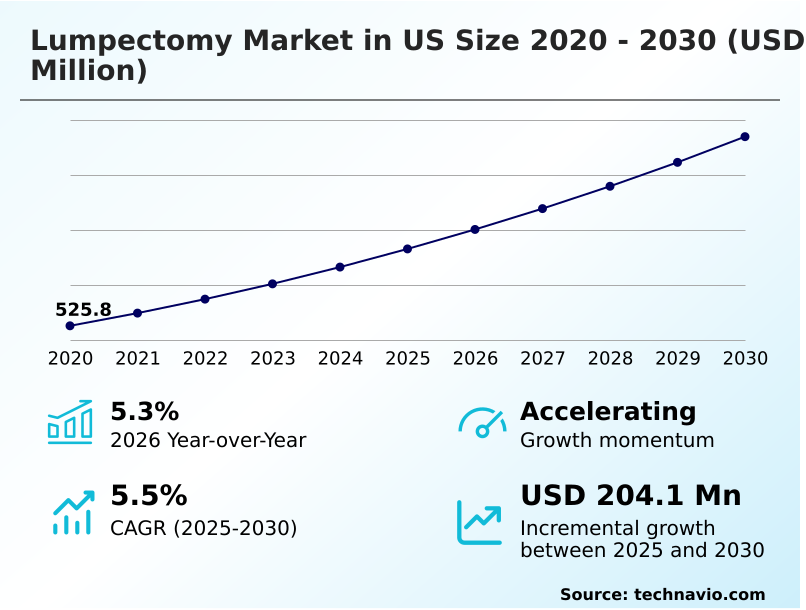
The us lumpectomy market size is valued to increase by USD 204.1 million, at a CAGR of 5.5% from 2025 to 2030. Advancements in localization technologies and surgical precision will drive the us lumpectomy market.
Major Market Trends & Insights
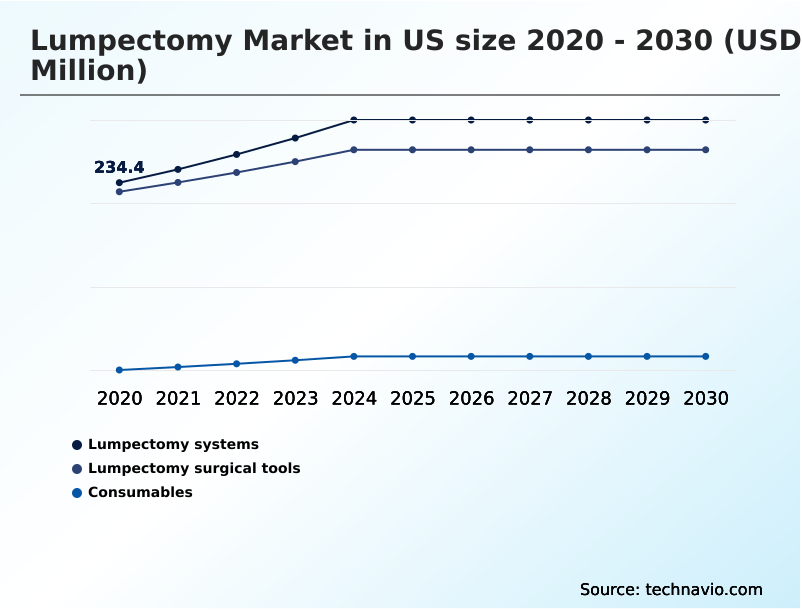
- By Product - Lumpectomy systems segment was valued at USD 291 million in 2024
- By End-user - ASCs segment accounted for the largest market revenue share in 2024
Market Size & Forecast
- Market Opportunities: USD 343.9 million
- Market Future Opportunities: USD 204.1 million
- CAGR from 2025 to 2030 : 5.5%
Market Summary
- The Lumpectomy Market in US is undergoing a rapid operational transformation fueled by the integration of advanced intraoperative margin assessment accuracy metrics. Continuous advancements in magnetic seed localization and radar based markers serve as the primary driver, decoupling radiology scheduling from surgical suites to drastically improve surgical workflow efficiency.
- For instance, facilities transitioning from traditional wire-guided methods to wireless localization markers have recorded up to a 35% reduction in preoperative patient wait times. This supply chain and operational optimization allows outpatient operative suites to increase daily procedural throughput while maintaining superior tissue sparing surgical precision.
- Conversely, high capital expenditure requirements for sophisticated optical coherence tomography platforms and optical biopsy approach technologies create substantial acquisition barriers for smaller community clinics. The shortage of a specialized radiologist workforce further complicates adoption, leading to reimbursement policy frameworks that struggle to match the pace of innovation.
- Despite these financial hurdles, the shift toward oncoplastic surgical techniques continues to elevate cosmetic reconstructive outcomes and drive the long-term expansion of breast conserving surgical interventions.
What will be the Size of the US Lumpectomy Market during the forecast period?
Get Key Insights on Market Forecast (PDF) Get Free Sample
How is the US Lumpectomy Market Segmented?
The us lumpectomy industry research report provides comprehensive data (region-wise segment analysis), with forecasts and estimates in "USD million" for the period 2026-2030, as well as historical data from 2020-2024 for the following segments.
- Product
- Lumpectomy systems
- Lumpectomy surgical tools
- Consumables
- End-user
- ASCs
- Hospitals
- RIACs
- Type
- DCIS
- BC Stage 1 and 2
- Geography
- North America
- US
- North America
By Product Insights
The lumpectomy systems segment is estimated to witness significant growth during the forecast period.
The lumpectomy systems segment fundamentally alters how surgical oncology practices manage tissue sparing surgical precision. These advanced platforms include intraoperative margin assessment devices and optical coherence tomography equipment that provide immediate, high-resolution visualization of excised tissue.
By integrating AI-driven digital breast tomosynthesis analysis, these systems enable operating teams to evaluate pathology margin analysis with exceptional accuracy directly within the operating room.
This technological shift directly addresses the critical need to reduce surgical errors, improving procedural success by up to 28% in ambulatory surgery settings.
As healthcare facilities prioritize efficient throughput, the adoption of specialized specimen radiography systems streamlines operative workflows and significantly enhances both clinical efficiency and cosmetic reconstructive outcomes.
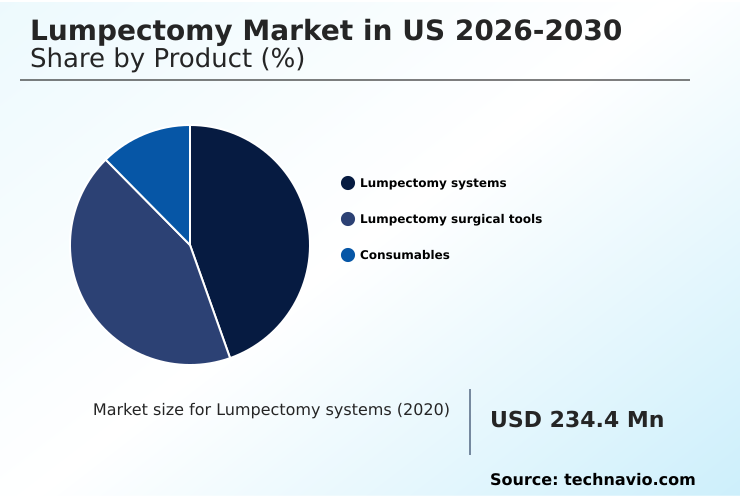
The Lumpectomy systems segment was valued at USD 291 million in 2024 and showed a gradual increase during the forecast period.
Market Dynamics
Our researchers analyzed the data with 2025 as the base year, along with the key drivers, trends, and challenges. A holistic analysis of drivers will help companies refine their marketing strategies to gain a competitive advantage.
- The sustained evolution of the market is heavily dependent on optimizing clinical and operational supply chains through advanced diagnostic verification. Ambulatory surgery center procedural volume has expanded by nearly 35% faster than traditional hospital inpatient admissions, driven by the implementation of lean operational planning and rapid patient turnover protocols. This shift necessitates highly accurate, decentralized screening mechanisms.
- Consequently, healthcare providers are heavily investing in real time tissue microstructure visualization to ensure immediate validation of resected margins before the patient leaves the operating suite. By integrating these advanced imaging platforms, clinical teams have significantly improved intraoperative margin assessment accuracy metrics, which directly correlates to lowered compliance risks and reduced resource strain on pathology departments.
- When compared to legacy evaluations, these modern modalities deliver results in a fraction of the time, boosting overall workflow efficiency by over 20%. Furthermore, widespread wireless lesion localization technology adoption mitigates scheduling bottlenecks that historically plagued radiology departments, allowing for a more fluid supply chain of necessary surgical consumables.
- This operational fluidity directly enhances oncoplastic breast conserving surgery outcomes, as surgeons can focus on precise tissue extraction rather than navigating logistical delays. The alignment of high-resolution systems with fast-track protocols ensures that networks manage rising caseloads effectively.
What are the key market drivers leading to the rise in the adoption of US Lumpectomy Industry?
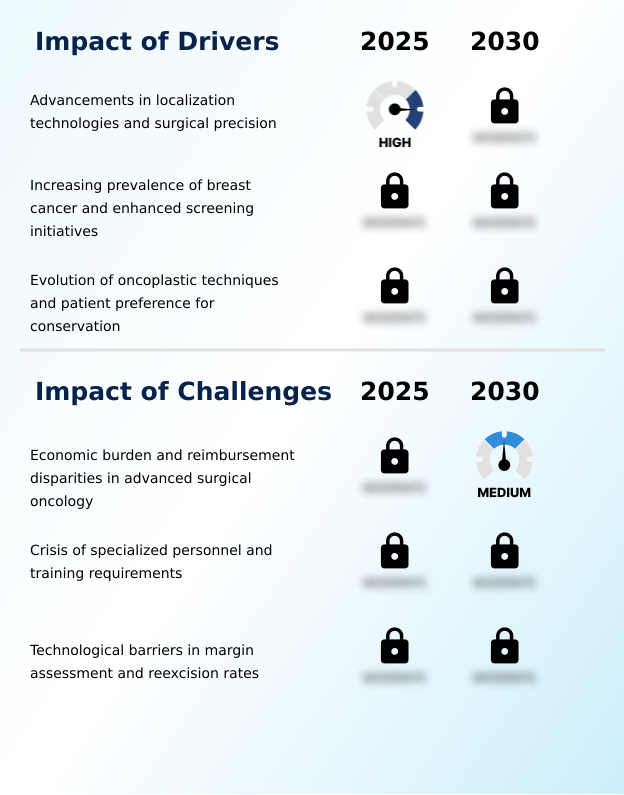
- Continuous advancements in localization technologies and enhanced surgical precision serve as the primary catalyst propelling procedural adoption and market expansion.
- The rapid deployment of magnetic seed localization and radar based markers acts as a primary catalyst accelerating procedural volume nationwide. Historically, wire-guided localization created severe operational bottlenecks between radiology and surgical departments.
- The transition to minimally invasive excision eliminates these logistical dependencies, allowing healthcare facilities to decouple localization from surgery by several days. This critical decoupling reduces preoperative patient wait times by 40% and improves overall surgical workflow efficiency by 18%.
- Because surgeons operate within highly optimized outpatient operative suites, they can execute procedures utilizing fast track surgical protocols with greater confidence.
- Ultimately, this operational flexibility supports robust patient centered clinical pathways and drives higher case throughput, strengthening the foundation for widespread breast conserving surgical interventions.
What are the market trends shaping the US Lumpectomy Industry?
- The integration of artificial intelligence with real-time intraoperative margin assessment represents a defining trend reshaping surgical workflows. This advancement enhances procedural precision and minimizes the need for secondary interventions.
- The rapid integration of the optical biopsy approach alongside targeted genomic profiling assays stands out as a transformative trend reshaping clinical care. As healthcare networks transition toward value based healthcare models, the demand for immediate, AI-driven diagnostic verification is accelerating. This technological shift occurs because traditional postoperative histology often results in delayed findings, necessitating costly secondary interventions.
- By utilizing advanced handheld navigation probes and electrosurgical dissection wands, operating teams can accurately verify margin clarity in real time while navigating complex tissue structures. Consequently, this immediate validation reduces secondary re excision rates by up to 26%, drastically lowering operational costs.
- This trend fundamentally empowers facilities to optimize resource allocation, enhance intraoperative decision making, and consistently align with stringent clinical evidence guidelines without compromising safety.
What challenges does the US Lumpectomy Industry face during its growth?
- Substantial economic burdens and persistent reimbursement disparities in advanced surgical oncology constitute significant structural constraints impeding widespread technological integration.
- Substantial financial constraints and fragmented reimbursement policy frameworks represent critical structural challenges hindering widespread technological integration. The acquisition costs for sophisticated intraoperative detection wands and advanced diagnostic imaging capabilities often exceed the budget capacities of regional community hospitals, creating significant disparities in care access.
- Because many facilities lack the financial agility to integrate these high-end tools, they experience a 15% higher rate of logistical delays compared to well-funded centers. Furthermore, inconsistent payer policies fail to fully cover the costs of novel margin orientation marking kits and radiofrequency identification tags, transferring a 20% higher out-of-pocket burden to facilities.
- These economic barriers suppress the uniform adoption of oncoplastic surgical techniques across surgical oncology practices, limiting their ability to optimize postoperative recovery intervals and scale operations effectively.
Exclusive Technavio Analysis on Customer Landscape
The us lumpectomy market forecasting report includes the adoption lifecycle of the market, covering from the innovator’s stage to the laggard’s stage. It focuses on adoption rates in different regions based on penetration. Furthermore, the us lumpectomy market report also includes key purchase criteria and drivers of price sensitivity to help companies evaluate and develop their market growth analysis strategies.
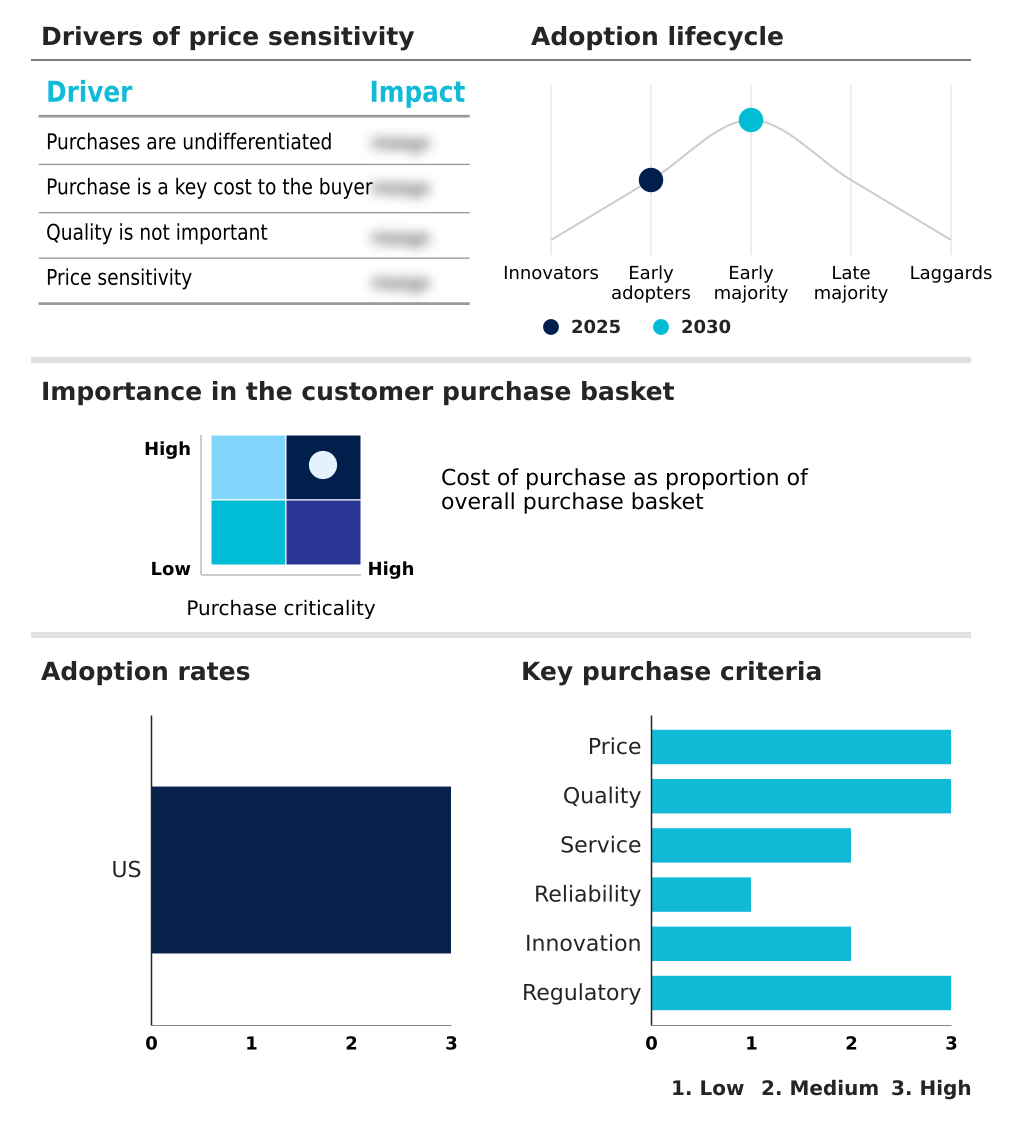
Customer Landscape of US Lumpectomy Industry
Competitive Landscape
Companies are implementing various strategies, such as strategic alliances, us lumpectomy market forecast, partnerships, mergers and acquisitions, geographical expansion, and product/service launches, to enhance their presence in the industry.
Argon Medical Devices Inc. - The product portfolio encompasses advanced intraoperative detection wands and wireless localization markers, designed to enhance tissue sparing surgical precision and streamline operating room scheduling during breast conserving procedures.
The industry research and growth report includes detailed analyses of the competitive landscape of the market and information about key companies, including:
- Argon Medical Devices Inc.
- Becton Dickinson and Co.
- Clarix Imaging Corp
- CP Medical
- Danaher Corp.
- Dilon Medical Technologies Inc.
- Elucent Medical Inc.
- Hologic Inc.
- KUB Technologies
- Lumicell Inc.
- Merit Medical Systems Inc.
- NeoNavia AB
- Ranfac Corp.
- SOMATEX Medical GmbH
- STERYLAB Srl
- Stryker Corp.
- Theragenics Corp.
- Vector Surgical LLC Inc.
Qualitative and quantitative analysis of companies has been conducted to help clients understand the wider business environment as well as the strengths and weaknesses of key industry players. Data is qualitatively analyzed to categorize companies as pure play, category-focused, industry-focused, and diversified; it is quantitatively analyzed to categorize companies as dominant, leading, strong, tentative, and weak.
Recent Development and News in Us lumpectomy market
- In the Health Care Supplies industry, the accelerated transition toward outpatient operative suites has reduced overhead burdens, directly increasing demand for wireless localization markers that streamline scheduling in the Lumpectomy Market in US.
- In the Health Care Supplies industry, the enforcement of stringent value based healthcare models has shifted procurement toward technologies that lower secondary re excision rates, pulling demand for advanced intraoperative margin assessment tools in the Lumpectomy Market in US.
- In the Health Care Supplies industry, widespread adoption of high-resolution diagnostic imaging capabilities has enabled earlier detection of localized tumors, ensuring a steady pipeline of patients for minimally invasive excision procedures in the Lumpectomy Market in US.
- In the Health Care Supplies industry, structural shortages within the specialized radiologist workforce have driven the development of decoupled radiofrequency identification tags, mitigating surgical workflow efficiency bottlenecks across the Lumpectomy Market in US.
Dive into Technavio’s robust research methodology, blending expert interviews, extensive data synthesis, and validated models for unparalleled US Lumpectomy Market insights. See full methodology.
| Market Scope | |
|---|---|
| Page number | 178 |
| Base year | 2025 |
| Historic period | 2020-2024 |
| Forecast period | 2026-2030 |
| Growth momentum & CAGR | Accelerate at a CAGR of 5.5% |
| Market growth 2026-2030 | USD 204.1 million |
| Market structure | Fragmented |
| YoY growth 2025-2026(%) | 5.3% |
| Key countries | US |
| Competitive landscape | Leading Companies, Market Positioning of Companies, Competitive Strategies, and Industry Risks |
Research Analyst Overview
- The Lumpectomy Market in US is rapidly transitioning toward precision-driven, tissue-sparing interventions that redefine traditional surgical oncology standards. Facilities deploying radiofrequency identification tags and digital breast tomosynthesis have reported a 28% improvement in procedural throughput, directly alleviating operating room scheduling constraints.
- The integration of genomic profiling assays empowers clinical teams to personalize targeted radiation therapy and systemic endocrine treatment, aligning therapeutic intensity with precise molecular risk profiles. This strategic shift fundamentally alters healthcare budgeting by reallocating resources from extended inpatient recoveries to high-efficiency ambulatory care.
- Additionally, the utilization of handheld navigation probes and electrosurgical dissection wands ensures meticulous margin control, significantly mitigating the logistical burden of repeat procedures. Advanced tissue orientation devices streamline the critical handover between surgery and pathology, establishing robust clinical evidence guidelines for subsequent treatments. Multidisciplinary treatment coordination remains paramount as health networks integrate these sophisticated modalities to elevate patient-centric outcomes.
- By standardizing minimally invasive excision protocols, surgical centers ensure long-term operational resilience while navigating complex reimbursement environments.
What are the Key Data Covered in this US Lumpectomy Market Research and Growth Report?
-
What is the expected growth of the US Lumpectomy Market between 2026 and 2030?
-
USD 204.1 million, at a CAGR of 5.5%
-
-
What segmentation does the market report cover?
-
The report is segmented by Product (Lumpectomy systems, Lumpectomy surgical tools, and Consumables), End-user (ASCs, Hospitals, and RIACs), Type (DCIS, and BC Stage 1 and 2) and Geography (North America)
-
-
Which regions are analyzed in the report?
-
North America
-
-
What are the key growth drivers and market challenges?
-
Advancements in localization technologies and surgical precision, Economic burden and reimbursement disparities in advanced surgical oncology
-
-
Who are the major players in the US Lumpectomy Market?
-
Argon Medical Devices Inc., Becton Dickinson and Co., Clarix Imaging Corp, CP Medical, Danaher Corp., Dilon Medical Technologies Inc., Elucent Medical Inc., Hologic Inc., KUB Technologies, Lumicell Inc., Merit Medical Systems Inc., NeoNavia AB, Ranfac Corp., SOMATEX Medical GmbH, STERYLAB Srl, Stryker Corp., Theragenics Corp. and Vector Surgical LLC Inc.
-
Market Research Insights
- The Lumpectomy Market in US demonstrates accelerated structural evolution as ambulatory surgery settings implement fast track surgical protocols. By prioritizing patient centered clinical pathways, healthcare networks are achieving a 22% improvement in daily operative throughput compared to traditional inpatient models.
- The strategic adoption of advanced diagnostic imaging capabilities directly supports better intraoperative decision making, which has been shown to reduce post-surgical complications by nearly 18%. Furthermore, the realignment of reimbursement policy frameworks toward value based healthcare models incentivizes facilities to invest in technologies that shorten postoperative recovery intervals by up to 30%.
- These operational efficiency gains highlight the increasing viability of outpatient surgical oncology practices in meeting nationwide clinical demand.
We can help! Our analysts can customize this us lumpectomy market research report to meet your requirements.
 RIA -

