Instant Water Heater Market Analysis, Size, and Forecast 2026-2030: Europe (Germany, UK, and France), North America (US, Canada, and Mexico), APAC (China, Japan, and India), South America (Brazil, Argentina, and Chile), Middle East and Africa (Saudi Arabia, UAE, and South Africa), and Rest of World (ROW)

Instant Water Heater Market Analysis, Size, and Forecast 2026-2030:
Europe (Germany, UK, and France), North America (US, Canada, and Mexico), APAC (China, Japan, and India), South America (Brazil, Argentina, and Chile), Middle East and Africa (Saudi Arabia, UAE, and South Africa), and Rest of World (ROW)

Published: Nov 2026 283 Pages SKU: IRTNTR74594

Market Overview at a Glance

$1.90 B
Market Opportunity
4.9%
CAGR 2025 - 2030
43.2%
Europe Growth
$4.33 B
Commercial segment 2024

Instant Water Heater Market Size 2026-2030

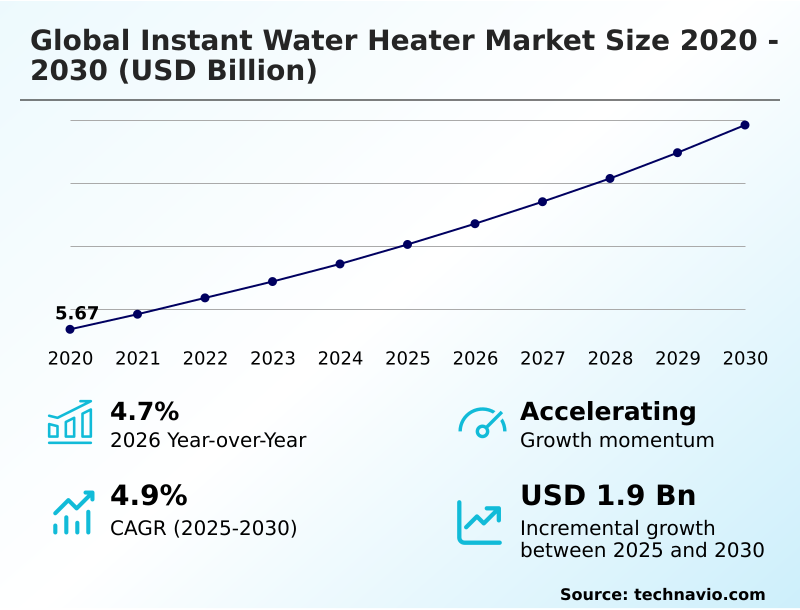
The instant water heater market size is valued to increase by USD 1.90 billion, at a CAGR of 4.9% from 2025 to 2030. Accelerating global urbanization and high-density housing development will drive the instant water heater market.

Major Market Trends & Insights

  • Europe dominated the market and accounted for a 43.2% growth during the forecast period.
  • By End-user - Commercial segment was valued at USD 4.33 billion in 2024
  • By Product Type - Gas instant water heaters segment accounted for the largest market revenue share in 2024

Market Size & Forecast

  • Market Opportunities: USD 3.25 billion
  • Market Future Opportunities: USD 1.90 billion
  • CAGR from 2025 to 2030 : 4.9%

Market Summary

  • The Instant Water Heater Market experiences accelerated expansion as residential and commercial developers increasingly prioritize continuous flow thermal architectures over traditional storage systems. In modern multi-family housing developments, transitioning to tankless delivery modules optimizes utility closet space, effectively reducing mechanical footprint requirements by up to 35% compared to conventional bulky cylinder setups.
  • This space optimization design acts as a fundamental driver, catering directly to the spatial constraints of high-density urban infrastructure while simultaneously lowering standby thermal losses. However, the adoption curve encounters friction from significant structural barriers, as upgrading legacy electrical panel capacity to accommodate the high kilowatt electrical draw of instantaneous units creates steep upfront installation burdens.
  • Supply chain managers are actively mitigating these bottlenecks by sourcing modular, low-amperage components that align with existing retrofitting installation protocol standards. Through ongoing digital thermostat calibration and advanced heat transfer efficiency innovations, these decentralized hot water supply systems are reshaping energy consumption profiles, ensuring strict compliance with evolving energy labeling directive benchmarks across commercial hygiene standard applications.

What will be the Size of the Instant Water Heater Market during the forecast period?
Get Key Insights on Market Forecast (PDF) Get Free Sample

How is the Instant Water Heater Market Segmented?

The instant water heater industry research report provides comprehensive data (region-wise segment analysis), with forecasts and estimates in "USD million" for the period 2026-2030, as well as historical data from 2020-2024 for the following segments.

  • End-user
    • Commercial
    • Residential
  • Product type
    • Gas instant water heaters
    • Electric instant water heaters
  • Distribution channel
    • Offline
    • Online
  • Geography
    • Europe
      • Germany
      • UK
      • France
      • Italy
      • Spain
      • The Netherlands
    • North America
      • US
      • Canada
      • Mexico
    • APAC
      • China
      • Japan
      • India
      • South Korea
      • Australia
      • Indonesia
    • South America
      • Brazil
      • Argentina
      • Chile
    • Middle East and Africa
      • Saudi Arabia
      • UAE
      • South Africa
      • Israel
      • Turkey

By End-user Insights

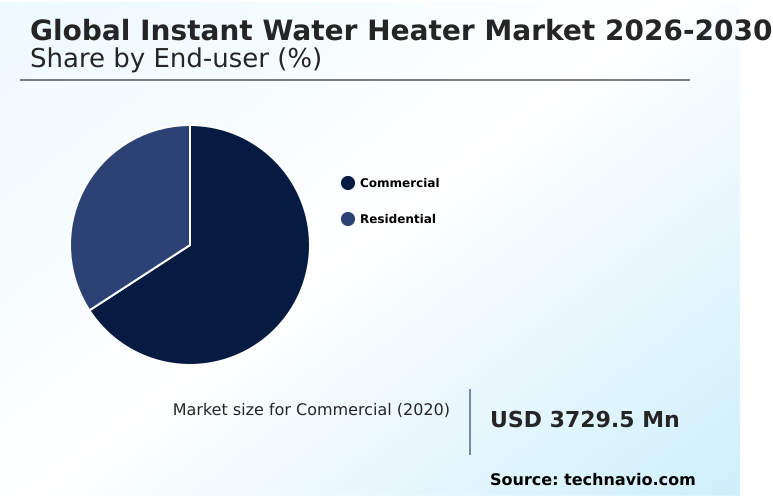
The commercial segment is estimated to witness significant growth during the forecast period.

The commercial sector increasingly mandates continuous flow heating cycle deployments to satisfy hotel sanitation requirement metrics and optimize facility footprints.

Integrating advanced condensing heat exchanger units alongside a durable copper heating element dramatically alters resource consumption profiles in high-volume hospitality and healthcare environments.

Unlike traditional storage tanks, these decentralized systems minimize thermal waste, driving heat transfer efficiency improvements by nearly 25% across newly retrofitted corporate infrastructures. Facilities managers emphasize microprocessor temperature regulation and digital thermostat calibration to maintain strict compliance with health codes.

By adopting point-of-use architectures equipped with reliable gas combustion chamber designs and specialized exhaust venting framework layouts, institutions eliminate bulky boiler rooms.

Furthermore, the inclusion of recirculation pump integration and plug and play modularity accelerates installation, fundamentally upgrading operational throughput and reducing utility overhead for commercial real estate developers.
Get Free Sample

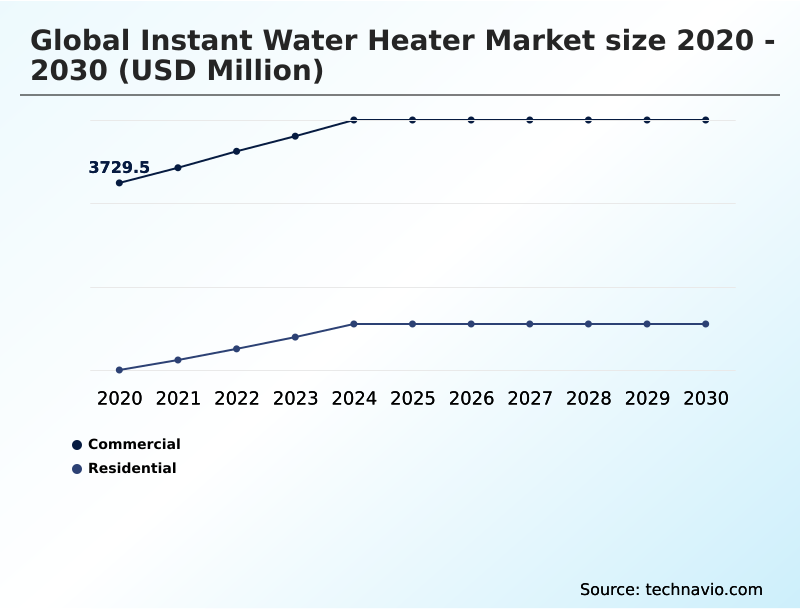
The Commercial segment was valued at USD 4.33 billion in 2024 and showed a gradual increase during the forecast period.
Get Free Sample

Regional Analysis

Europe is estimated to contribute 43.2% to the growth of the global market during the forecast period.Technavio’s analysts have elaborately explained the regional trends and drivers that shape the market during the forecast period.
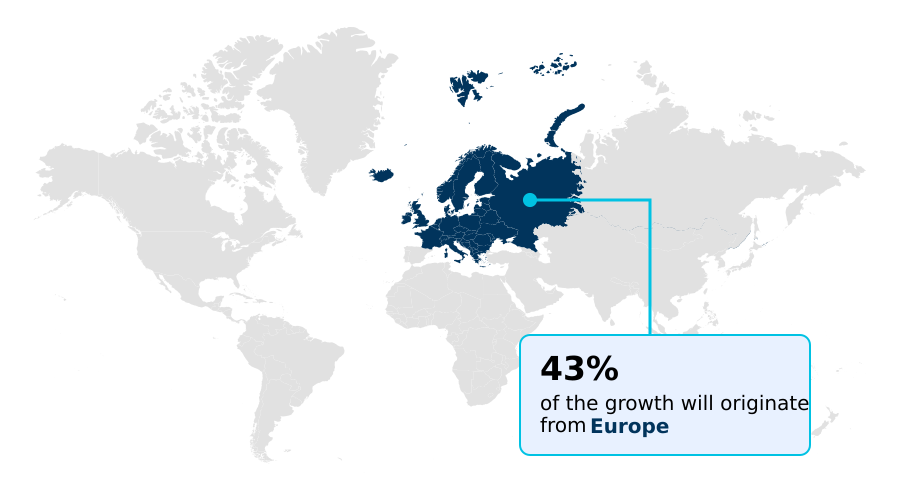
See How Instant Water Heater Market Demand is Rising in Europe Get Free Sample

Regional dynamics within the Instant Water Heater Market reveal stark contrasts between European and APAC deployment strategies.

European adoption is heavily propelled by stringent thermal performance mandate frameworks, resulting in a 30% higher penetration of low emission combustion technology compared to APAC markets.

Facility managers in Germany and France actively pursue hybrid heat pump integration and solar photovoltaic integration, reducing decentralized heating energy expenditures by nearly 25%.

Conversely, rapid urbanization across APAC drives high-density infrastructure investments, where developers utilize smart grid demand response enabled units to circumvent grid instability.

APAC installations reflect a 40% faster integration of green building certification compliant modular systems to satisfy surging residential demands.

Across both regions, the alignment with strict decarbonization target alignment protocols accelerates the transition toward advanced tankless systems, ensuring localized compliance while simultaneously lowering long-term energy labeling directive associated operational overhead.

Market Dynamics

Our researchers analyzed the data with 2025 as the base year, along with the key drivers, trends, and challenges. A holistic analysis of drivers will help companies refine their marketing strategies to gain a competitive advantage.

  • The continuous evolution of thermal appliances heavily relies on strategic hardware improvements to address both operational durability and spatial constraints. In high-volume environments, facility managers are increasingly prioritizing anti scaling technology integration to mitigate hard water mineral buildup, effectively extending heat exchanger lifespans by nearly 40% compared to standard unprotected models.
  • This proactive maintenance strategy significantly reduces procurement cycles and supply chain replacement costs. However, contractors frequently encounter substantial tankless unit retrofitting challenges when upgrading older infrastructure, primarily due to inadequate electrical panel capacities and complex gas ventilation pathway modifications.
  • To circumvent these bottlenecks, developers are shifting toward decentralized point of use commercial installation frameworks, which eliminate long pipe runs and cut thermal distribution losses by approximately 15% across expansive corporate campuses. Furthermore, modern regulatory compliance demands exceptional thermal consistency, pushing manufacturers to enhance electronic temperature control precision to meet strict hygiene and sanitation protocols.
  • For large-scale multi-family dwellings requiring robust volumetric output, the deployment of a high efficiency gas condensing unit provides an optimal balance, leveraging secondary heat recovery to maximize fuel utilization. By integrating these advanced continuous flow architectures, property managers ensure sustainable facility operations, align with stringent environmental building codes, and optimize long-term utility expenditure planning without compromising hot water availability.
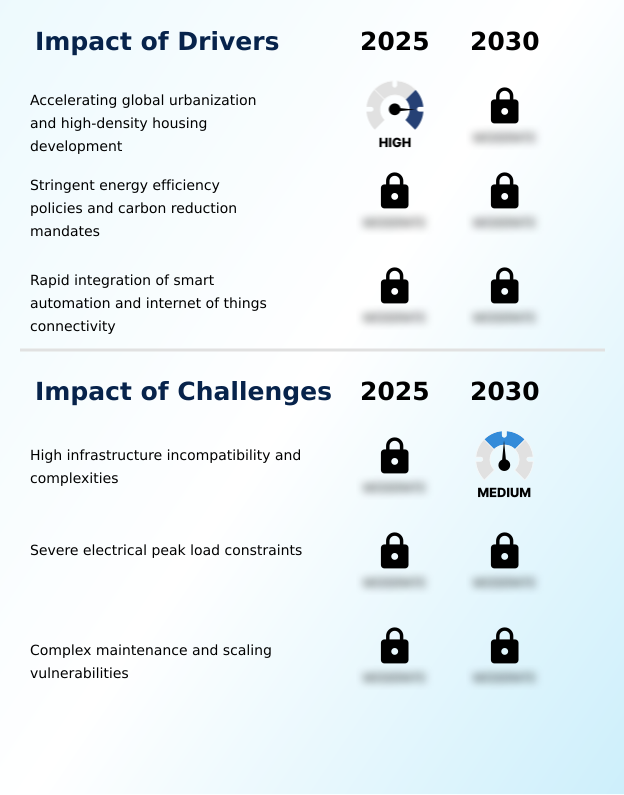
What are the key market drivers leading to the rise in the adoption of Instant Water Heater Industry?

  • Accelerating urbanization and the rapid expansion of high-density housing developments serve as the primary drivers propelling market growth.

  • The aggressive expansion of high density residential infrastructure acts as a primary catalyst accelerating the transition toward decentralized continuous flow thermal systems.
  • Urban architects increasingly mandate space optimization design principles, replacing bulky mechanical rooms with compact wall-mounted heating modules to increase usable tenant square footage by up to 15%.
  • This structural modification simultaneously achieves absolute standby heat loss elimination, drastically improving overall baseline energy efficiency across multi family dwelling application frameworks.
  • As municipal regulators enforce stricter environmental performance standards, the inherent ability of instantaneous electric and gas units to secure immediate building energy code compliance makes them indispensable for commercial real estate developers.
  • This shift effectively lowers long-term property conditioning costs while fulfilling the rigorous on-demand sanitation requirements expected by modern urban demographics.

What are the market trends shaping the Instant Water Heater Industry?

  • The integration of advanced anti-scaling technologies represents a prominent market trend. This innovation significantly enhances operational longevity and efficiency within continuous flow heating applications.

  • The continuous shift toward intelligent domestic thermal management has accelerated the adoption of advanced internal componentry designed to withstand aggressive water chemistries. By integrating a highly durable ceramic heating chamber with an automated self cleaning fluid path, modern tankless systems proactively combat calcium buildup and hard water mineral precipitation, driving mineral concentration mitigation across regions with problematic municipal supplies.
  • This material innovation results in a 30% improvement in heat transfer consistency over extended operational cycles compared to legacy copper element alternatives. For property management firms, this translates directly to substantial appliance lifespan extension and a noticeable reduction in routine maintenance overhead.
  • Furthermore, the inclusion of programmable eco mode functionality allows end-users to dynamically optimize energy consumption during off-peak hours, generating immediate utility cost reductions while preserving strict thermal performance parameters in high-density residential and commercial infrastructure.

What challenges does the Instant Water Heater Industry face during its growth?

  • High infrastructure incompatibility and the complex structural modifications required for system retrofitting present significant challenges to widespread industry growth.

  • Upgrading established building stock to accommodate instantaneous thermal systems presents severe structural hurdles that frequently inflate initial capital expenditures. Strict adherence to modern retrofitting installation protocol often clashes with outdated residential plumbing architecture, requiring extensive and costly pipe reconfiguration.
  • The most significant friction point involves legacy electrical panel capacity, which rarely supports the sudden high kilowatt electrical draw demanded by electric tankless units. Consequently, property owners face a 40% increase in baseline installation costs to fund essential amperage requirement configuration upgrades, replace outdated ignition module components, or perform complex gas ventilation pathway modifications.
  • These ancillary infrastructure modifications disrupt project timelines and deter cost-conscious facility managers from replacing functional, albeit inefficient, storage cylinders, thereby slowing the transition toward lower-emission water heating topologies across older urban municipalities.

Exclusive Technavio Analysis on Customer Landscape

The instant water heater market forecasting report includes the adoption lifecycle of the market, covering from the innovator’s stage to the laggard’s stage. It focuses on adoption rates in different regions based on penetration. Furthermore, the instant water heater market report also includes key purchase criteria and drivers of price sensitivity to help companies evaluate and develop their market growth analysis strategies.
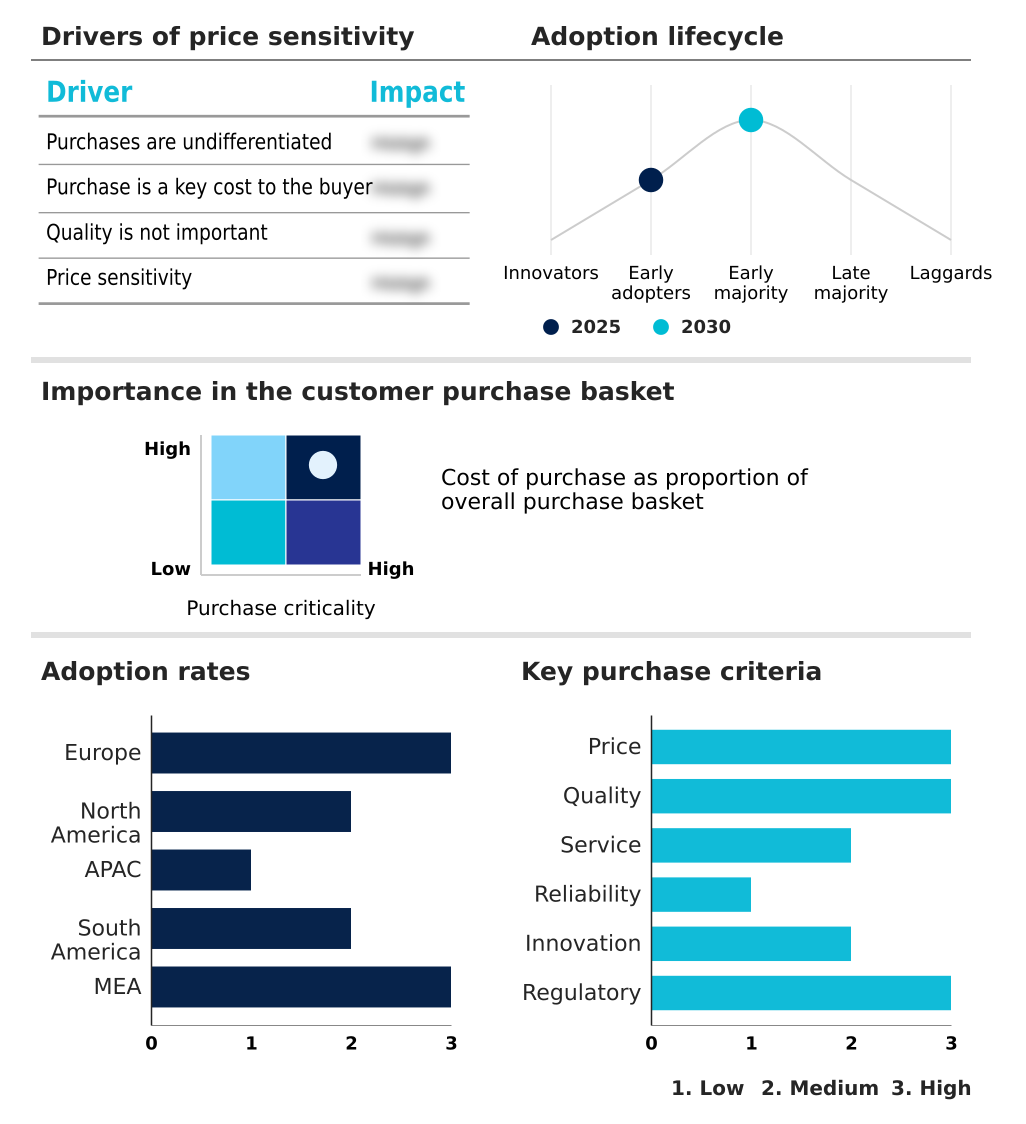
Customer Landscape of Instant Water Heater Industry

Competitive Landscape

Companies are implementing various strategies, such as strategic alliances, instant water heater market forecast, partnerships, mergers and acquisitions, geographical expansion, and product/service launches, to enhance their presence in the industry.

A. O. Smith Corp. - Delivers advanced electric and gas instantaneous thermal solutions equipped with proprietary scale prevention mechanics to enhance product longevity, reduce routine maintenance, and ensure reliable on-demand domestic water heating performance.

The industry research and growth report includes detailed analyses of the competitive landscape of the market and information about key companies, including:

  • A. O. Smith Corp.
  • Ariston Holding NV
  • ATMOR Industries Ltd.
  • Bajaj Electricals Ltd.
  • BDR Thermea Group
  • Bosch Thermotechnik GmbH
  • Bradford White Corp.
  • CLAGE GmbH
  • EcoSmart
  • Eemax Inc.
  • Ferroli Spa
  • Haier Smart Home Co. Ltd.
  • Havells India Ltd.
  • Hubbell Heaters
  • Marey
  • Midea Group Co. Ltd.
  • Noritz America Corp
  • Panasonic Holdings Corp.
  • Rinnai Corp.
  • STIEBEL ELTRON GmbH
  • Vaillant Group
  • Viessmann Generations GmbH

Qualitative and quantitative analysis of companies has been conducted to help clients understand the wider business environment as well as the strengths and weaknesses of key industry players. Data is qualitatively analyzed to categorize companies as pure play, category-focused, industry-focused, and diversified; it is quantitatively analyzed to categorize companies as dominant, leading, strong, tentative, and weak.

Recent Development and News in Instant water heater market

  • In the Household Appliances industry, the rapid transition toward decarbonization target alignment has accelerated the deployment of thermal performance mandate compliant systems, directly impacting Instant Water Heater demand by driving a 40% substitution rate from legacy storage units to space optimization design layouts.
  • Stringent energy labeling directive protocols have forced manufacturers to improve utility load management, enabling a 15% efficiency gain and expanding the application scope for instantaneous heating solutions across modern multi family dwelling application architectures.
  • The widespread adoption of decentralized hot water supply infrastructure has facilitated plug and play modularity, which optimizes commercial hygiene standard compliance and subsequently boosts the installation of point-of-use heating systems by 22%.
  • Shifts in residential plumbing architecture favoring high density residential infrastructure developments have reduced mechanical room footprints by over 30%, inherently propelling the specification of retrofitting installation protocol compliant rapid recovery thermal appliances over traditional cylinders.

Dive into Technavio’s robust research methodology, blending expert interviews, extensive data synthesis, and validated models for unparalleled Instant Water Heater Market insights. See full methodology.

Market Scope
Page number 283
Base year 2025
Historic period 2020-2024
Forecast period 2026-2030
Growth momentum & CAGR Accelerate at a CAGR of 4.9%
Market growth 2026-2030 USD 1900.9 million
Market structure Fragmented
YoY growth 2025-2026(%) 4.7%
Key countries Germany, UK, France, Italy, Spain, The Netherlands, US, Canada, Mexico, China, Japan, India, South Korea, Australia, Indonesia, Brazil, Argentina, Chile, Saudi Arabia, UAE, South Africa, Israel and Turkey
Competitive landscape Leading Companies, Market Positioning of Companies, Competitive Strategies, and Industry Risks

Request Free Sample

Research Analyst Overview

  • The structural transition toward advanced tankless heating architecture fundamentally optimizes utility expenditure and resource allocation across high-density real estate developments. By decentralizing thermal generation through strategic point of use delivery, facility operators eliminate systemic standby heat losses, achieving a 22% reduction in baseline energy consumption compared to centralized storage configurations.
  • This operational shift directly aligns with corporate budgeting mandates requiring stricter utility load management and lower operating overhead. Precision engineering advancements, notably the integration of an electronic modulation valve paired with a highly responsive flow rate sensor, ensure immediate thermal calibration under fluctuating demand cycles.
  • To combat hardware degradation in hard water regions, the implementation of a durable anti scaling polymer within the heat exchanger core significantly extends equipment longevity and minimizes disruptive maintenance intervals.
  • Consequently, these continuous flow heating systems maintain a superior thermal efficiency rating throughout their operational lifecycle, enabling property developers to navigate rigorous environmental compliance frameworks seamlessly while maximizing rentable square footage through compact, wall mounted compact chassis designs.

What are the Key Data Covered in this Instant Water Heater Market Research and Growth Report?

  • What is the expected growth of the Instant Water Heater Market between 2026 and 2030?

    • USD 1.90 billion, at a CAGR of 4.9%

  • What segmentation does the market report cover?

    • The report is segmented by End-user (Commercial, and Residential), Product Type (Gas instant water heaters, and Electric instant water heaters), Distribution Channel (Offline, and Online) and Geography (Europe, North America, APAC, South America, Middle East and Africa)

  • Which regions are analyzed in the report?

    • Europe, North America, APAC, South America and Middle East and Africa

  • What are the key growth drivers and market challenges?

    • Accelerating global urbanization and high-density housing development, High infrastructure incompatibility and complexities

  • Who are the major players in the Instant Water Heater Market?

    • A. O. Smith Corp., Ariston Holding NV, ATMOR Industries Ltd., Bajaj Electricals Ltd., BDR Thermea Group, Bosch Thermotechnik GmbH, Bradford White Corp., CLAGE GmbH, EcoSmart, Eemax Inc., Ferroli Spa, Haier Smart Home Co. Ltd., Havells India Ltd., Hubbell Heaters, Marey, Midea Group Co. Ltd., Noritz America Corp, Panasonic Holdings Corp., Rinnai Corp., STIEBEL ELTRON GmbH, Vaillant Group and Viessmann Generations GmbH

Market Research Insights

  • The Instant Water Heater Market demonstrates significant operational evolution as building operators transition toward decentralized hot water supply architectures to satisfy rigorous green building certification requirements. By implementing rapid-recovery tankless units, facility managers have reduced standby energy waste, achieving a 20% improvement in overall utility load management compared to legacy storage cylinders.
  • Furthermore, advancements in space optimization design allow multi family dwelling application developers to decrease mechanical room footprints by 35%, freeing valuable square footage for revenue-generating tenant amenities.
  • Upgrading to systems with strict thermal performance mandate compliance also enhances equipment lifespan by 15%, fundamentally lowering routine maintenance overhead and ensuring uninterrupted adherence to stringent commercial hygiene standard regulations across high-volume hospitality environments.

We can help! Our analysts can customize this instant water heater market research report to meet your requirements.

Get in touch

1. Executive Summary

1.1 Market overview

Executive Summary - Chart on Market Overview
Executive Summary - Data Table on Market Overview
Executive Summary - Chart on Global Market Characteristics
Executive Summary - Chart on Market by Geography
Executive Summary - Chart on Market Segmentation by End-user
Executive Summary - Chart on Market Segmentation by Product Type
Executive Summary - Chart on Market Segmentation by Distribution Channel
Executive Summary - Chart on Incremental Growth
Executive Summary - Data Table on Incremental Growth
Executive Summary - Chart on Company Market Positioning

2. Technavio Analysis

2.1 Analysis of price sensitivity, lifecycle, customer purchase basket, adoption rates, and purchase criteria

2.2 Criticality of inputs and Factors of differentiation

Chart on Overview on criticality of inputs and factors of differentiation

2.3 Factors of disruption

Chart on Overview on factors of disruption

2.4 Impact of drivers and challenges

Chart on Impact of drivers and challenges in 2025 and 2030

3. Market Landscape

3.1 Market ecosystem

Chart on Parent Market
Data Table on - Parent Market

3.2 Market characteristics

Chart on Market characteristics analysis

3.3 Value chain analysis

Chart on Value chain analysis

4. Market Sizing

4.1 Market definition

Data Table on Offerings of companies included in the market definition

4.2 Market segment analysis

Market segments

4.3 Market size 2025

4.4 Market outlook: Forecast for 2025-2030

Chart on Global - Market size and forecast 2025-2030 ($ million)
Data Table on Global - Market size and forecast 2025-2030 ($ million)
Chart on Global Market: Year-over-year growth 2025-2030 (%)
Data Table on Global Market: Year-over-year growth 2025-2030 (%)

5. Historic Market Size

5.1 Global Instant Water Heater Market 2020 - 2024

Historic Market Size - Data Table on Global Instant Water Heater Market 2020 - 2024 ($ million)

5.2 End-user segment analysis 2020 - 2024

Historic Market Size - End-user Segment 2020 - 2024 ($ million)

5.3 Product Type segment analysis 2020 - 2024

Historic Market Size - Product Type Segment 2020 - 2024 ($ million)

5.4 Distribution Channel segment analysis 2020 - 2024

Historic Market Size - Distribution Channel Segment 2020 - 2024 ($ million)

5.5 Geography segment analysis 2020 - 2024

Historic Market Size - Geography Segment 2020 - 2024 ($ million)

5.6 Country segment analysis 2020 - 2024

Historic Market Size - Country Segment 2020 - 2024 ($ million)

6. Qualitative Analysis

6.1 Impact of AI on Global Instant Water Heater Market

6.2 Impact of geopolitical conflicts on Global Instant Water Heater Market

7. Five Forces Analysis

7.1 Five forces summary

Five forces analysis - Comparison between 2025 and 2030

7.2 Bargaining power of buyers

Bargaining power of buyers - Impact of key factors 2025 and 2030

7.3 Bargaining power of suppliers

Bargaining power of suppliers - Impact of key factors in 2025 and 2030

7.4 Threat of new entrants

Threat of new entrants - Impact of key factors in 2025 and 2030

7.5 Threat of substitutes

Threat of substitutes - Impact of key factors in 2025 and 2030

7.6 Threat of rivalry

Threat of rivalry - Impact of key factors in 2025 and 2030

7.7 Market condition

Chart on Market condition - Five forces 2025 and 2030

8. Market Segmentation by End-user

8.1 Market segments

Chart on End-user - Market share 2025-2030 (%)
Data Table on End-user - Market share 2025-2030 (%)

8.2 Comparison by End-user

Chart on Comparison by End-user
Data Table on Comparison by End-user

8.3 Commercial - Market size and forecast 2025-2030

Chart on Commercial - Market size and forecast 2025-2030 ($ million)
Data Table on Commercial - Market size and forecast 2025-2030 ($ million)
Chart on Commercial - Year-over-year growth 2025-2030 (%)
Data Table on Commercial - Year-over-year growth 2025-2030 (%)

8.4 Residential - Market size and forecast 2025-2030

Chart on Residential - Market size and forecast 2025-2030 ($ million)
Data Table on Residential - Market size and forecast 2025-2030 ($ million)
Chart on Residential - Year-over-year growth 2025-2030 (%)
Data Table on Residential - Year-over-year growth 2025-2030 (%)

8.5 Market opportunity by End-user

Market opportunity by End-user ($ million)
Data Table on Market opportunity by End-user ($ million)

9. Market Segmentation by Product Type

9.1 Market segments

Chart on Product Type - Market share 2025-2030 (%)
Data Table on Product Type - Market share 2025-2030 (%)

9.2 Comparison by Product Type

Chart on Comparison by Product Type
Data Table on Comparison by Product Type

9.3 Gas instant water heaters - Market size and forecast 2025-2030

Chart on Gas instant water heaters - Market size and forecast 2025-2030 ($ million)
Data Table on Gas instant water heaters - Market size and forecast 2025-2030 ($ million)
Chart on Gas instant water heaters - Year-over-year growth 2025-2030 (%)
Data Table on Gas instant water heaters - Year-over-year growth 2025-2030 (%)

9.4 Electric instant water heaters - Market size and forecast 2025-2030

Chart on Electric instant water heaters - Market size and forecast 2025-2030 ($ million)
Data Table on Electric instant water heaters - Market size and forecast 2025-2030 ($ million)
Chart on Electric instant water heaters - Year-over-year growth 2025-2030 (%)
Data Table on Electric instant water heaters - Year-over-year growth 2025-2030 (%)

9.5 Market opportunity by Product Type

Market opportunity by Product Type ($ million)
Data Table on Market opportunity by Product Type ($ million)

10. Market Segmentation by Distribution Channel

10.1 Market segments

Chart on Distribution Channel - Market share 2025-2030 (%)
Data Table on Distribution Channel - Market share 2025-2030 (%)

10.2 Comparison by Distribution Channel

Chart on Comparison by Distribution Channel
Data Table on Comparison by Distribution Channel

10.3 Offline - Market size and forecast 2025-2030

Chart on Offline - Market size and forecast 2025-2030 ($ million)
Data Table on Offline - Market size and forecast 2025-2030 ($ million)
Chart on Offline - Year-over-year growth 2025-2030 (%)
Data Table on Offline - Year-over-year growth 2025-2030 (%)

10.4 Online - Market size and forecast 2025-2030

Chart on Online - Market size and forecast 2025-2030 ($ million)
Data Table on Online - Market size and forecast 2025-2030 ($ million)
Chart on Online - Year-over-year growth 2025-2030 (%)
Data Table on Online - Year-over-year growth 2025-2030 (%)

10.5 Market opportunity by Distribution Channel

Market opportunity by Distribution Channel ($ million)
Data Table on Market opportunity by Distribution Channel ($ million)

11. Customer Landscape

11.1 Customer landscape overview

Analysis of price sensitivity, lifecycle, customer purchase basket, adoption rates, and purchase criteria

12. Geographic Landscape

12.1 Geographic segmentation

Chart on Market share by geography 2025-2030 (%)
Data Table on Market share by geography 2025-2030 (%)

12.2 Geographic comparison

Chart on Geographic comparison
Data Table on Geographic comparison

12.3 Europe - Market size and forecast 2025-2030

Chart on Europe - Market size and forecast 2025-2030 ($ million)
Data Table on Europe - Market size and forecast 2025-2030 ($ million)
Chart on Europe - Year-over-year growth 2025-2030 (%)
Data Table on Europe - Year-over-year growth 2025-2030 (%)
Chart on Regional Comparison - Europe
Data Table on Regional Comparison - Europe

12.3.1 Germany - Market size and forecast 2025-2030

Chart on Germany - Market size and forecast 2025-2030 ($ million)
Data Table on Germany - Market size and forecast 2025-2030 ($ million)
Chart on Germany - Year-over-year growth 2025-2030 (%)
Data Table on Germany - Year-over-year growth 2025-2030 (%)

12.3.2 UK - Market size and forecast 2025-2030

Chart on UK - Market size and forecast 2025-2030 ($ million)
Data Table on UK - Market size and forecast 2025-2030 ($ million)
Chart on UK - Year-over-year growth 2025-2030 (%)
Data Table on UK - Year-over-year growth 2025-2030 (%)

12.3.3 France - Market size and forecast 2025-2030

Chart on France - Market size and forecast 2025-2030 ($ million)
Data Table on France - Market size and forecast 2025-2030 ($ million)
Chart on France - Year-over-year growth 2025-2030 (%)
Data Table on France - Year-over-year growth 2025-2030 (%)

12.3.4 Italy - Market size and forecast 2025-2030

Chart on Italy - Market size and forecast 2025-2030 ($ million)
Data Table on Italy - Market size and forecast 2025-2030 ($ million)
Chart on Italy - Year-over-year growth 2025-2030 (%)
Data Table on Italy - Year-over-year growth 2025-2030 (%)

12.3.5 Spain - Market size and forecast 2025-2030

Chart on Spain - Market size and forecast 2025-2030 ($ million)
Data Table on Spain - Market size and forecast 2025-2030 ($ million)
Chart on Spain - Year-over-year growth 2025-2030 (%)
Data Table on Spain - Year-over-year growth 2025-2030 (%)

12.3.6 The Netherlands - Market size and forecast 2025-2030

Chart on The Netherlands - Market size and forecast 2025-2030 ($ million)
Data Table on The Netherlands - Market size and forecast 2025-2030 ($ million)
Chart on The Netherlands - Year-over-year growth 2025-2030 (%)
Data Table on The Netherlands - Year-over-year growth 2025-2030 (%)

12.4 North America - Market size and forecast 2025-2030

Chart on North America - Market size and forecast 2025-2030 ($ million)
Data Table on North America - Market size and forecast 2025-2030 ($ million)
Chart on North America - Year-over-year growth 2025-2030 (%)
Data Table on North America - Year-over-year growth 2025-2030 (%)
Chart on Regional Comparison - North America
Data Table on Regional Comparison - North America

12.4.1 US - Market size and forecast 2025-2030

Chart on US - Market size and forecast 2025-2030 ($ million)
Data Table on US - Market size and forecast 2025-2030 ($ million)
Chart on US - Year-over-year growth 2025-2030 (%)
Data Table on US - Year-over-year growth 2025-2030 (%)

12.4.2 Canada - Market size and forecast 2025-2030

Chart on Canada - Market size and forecast 2025-2030 ($ million)
Data Table on Canada - Market size and forecast 2025-2030 ($ million)
Chart on Canada - Year-over-year growth 2025-2030 (%)
Data Table on Canada - Year-over-year growth 2025-2030 (%)

12.4.3 Mexico - Market size and forecast 2025-2030

Chart on Mexico - Market size and forecast 2025-2030 ($ million)
Data Table on Mexico - Market size and forecast 2025-2030 ($ million)
Chart on Mexico - Year-over-year growth 2025-2030 (%)
Data Table on Mexico - Year-over-year growth 2025-2030 (%)

12.5 APAC - Market size and forecast 2025-2030

Chart on APAC - Market size and forecast 2025-2030 ($ million)
Data Table on APAC - Market size and forecast 2025-2030 ($ million)
Chart on APAC - Year-over-year growth 2025-2030 (%)
Data Table on APAC - Year-over-year growth 2025-2030 (%)
Chart on Regional Comparison - APAC
Data Table on Regional Comparison - APAC

12.5.1 China - Market size and forecast 2025-2030

Chart on China - Market size and forecast 2025-2030 ($ million)
Data Table on China - Market size and forecast 2025-2030 ($ million)
Chart on China - Year-over-year growth 2025-2030 (%)
Data Table on China - Year-over-year growth 2025-2030 (%)

12.5.2 Japan - Market size and forecast 2025-2030

Chart on Japan - Market size and forecast 2025-2030 ($ million)
Data Table on Japan - Market size and forecast 2025-2030 ($ million)
Chart on Japan - Year-over-year growth 2025-2030 (%)
Data Table on Japan - Year-over-year growth 2025-2030 (%)

12.5.3 India - Market size and forecast 2025-2030

Chart on India - Market size and forecast 2025-2030 ($ million)
Data Table on India - Market size and forecast 2025-2030 ($ million)
Chart on India - Year-over-year growth 2025-2030 (%)
Data Table on India - Year-over-year growth 2025-2030 (%)

12.5.4 South Korea - Market size and forecast 2025-2030

Chart on South Korea - Market size and forecast 2025-2030 ($ million)
Data Table on South Korea - Market size and forecast 2025-2030 ($ million)
Chart on South Korea - Year-over-year growth 2025-2030 (%)
Data Table on South Korea - Year-over-year growth 2025-2030 (%)

12.5.5 Australia - Market size and forecast 2025-2030

Chart on Australia - Market size and forecast 2025-2030 ($ million)
Data Table on Australia - Market size and forecast 2025-2030 ($ million)
Chart on Australia - Year-over-year growth 2025-2030 (%)
Data Table on Australia - Year-over-year growth 2025-2030 (%)

12.5.6 Indonesia - Market size and forecast 2025-2030

Chart on Indonesia - Market size and forecast 2025-2030 ($ million)
Data Table on Indonesia - Market size and forecast 2025-2030 ($ million)
Chart on Indonesia - Year-over-year growth 2025-2030 (%)
Data Table on Indonesia - Year-over-year growth 2025-2030 (%)

12.6 South America - Market size and forecast 2025-2030

Chart on South America - Market size and forecast 2025-2030 ($ million)
Data Table on South America - Market size and forecast 2025-2030 ($ million)
Chart on South America - Year-over-year growth 2025-2030 (%)
Data Table on South America - Year-over-year growth 2025-2030 (%)
Chart on Regional Comparison - South America
Data Table on Regional Comparison - South America

12.6.1 Brazil - Market size and forecast 2025-2030

Chart on Brazil - Market size and forecast 2025-2030 ($ million)
Data Table on Brazil - Market size and forecast 2025-2030 ($ million)
Chart on Brazil - Year-over-year growth 2025-2030 (%)
Data Table on Brazil - Year-over-year growth 2025-2030 (%)

12.6.2 Argentina - Market size and forecast 2025-2030

Chart on Argentina - Market size and forecast 2025-2030 ($ million)
Data Table on Argentina - Market size and forecast 2025-2030 ($ million)
Chart on Argentina - Year-over-year growth 2025-2030 (%)
Data Table on Argentina - Year-over-year growth 2025-2030 (%)

12.6.3 Chile - Market size and forecast 2025-2030

Chart on Chile - Market size and forecast 2025-2030 ($ million)
Data Table on Chile - Market size and forecast 2025-2030 ($ million)
Chart on Chile - Year-over-year growth 2025-2030 (%)
Data Table on Chile - Year-over-year growth 2025-2030 (%)

12.7 Middle East and Africa - Market size and forecast 2025-2030

Chart on Middle East and Africa - Market size and forecast 2025-2030 ($ million)
Data Table on Middle East and Africa - Market size and forecast 2025-2030 ($ million)
Chart on Middle East and Africa - Year-over-year growth 2025-2030 (%)
Data Table on Middle East and Africa - Year-over-year growth 2025-2030 (%)
Chart on Regional Comparison - Middle East and Africa
Data Table on Regional Comparison - Middle East and Africa

12.7.1 Saudi Arabia - Market size and forecast 2025-2030

Chart on Saudi Arabia - Market size and forecast 2025-2030 ($ million)
Data Table on Saudi Arabia - Market size and forecast 2025-2030 ($ million)
Chart on Saudi Arabia - Year-over-year growth 2025-2030 (%)
Data Table on Saudi Arabia - Year-over-year growth 2025-2030 (%)

12.7.2 UAE - Market size and forecast 2025-2030

Chart on UAE - Market size and forecast 2025-2030 ($ million)
Data Table on UAE - Market size and forecast 2025-2030 ($ million)
Chart on UAE - Year-over-year growth 2025-2030 (%)
Data Table on UAE - Year-over-year growth 2025-2030 (%)

12.7.3 South Africa - Market size and forecast 2025-2030

Chart on South Africa - Market size and forecast 2025-2030 ($ million)
Data Table on South Africa - Market size and forecast 2025-2030 ($ million)
Chart on South Africa - Year-over-year growth 2025-2030 (%)
Data Table on South Africa - Year-over-year growth 2025-2030 (%)

12.7.4 Israel - Market size and forecast 2025-2030

Chart on Israel - Market size and forecast 2025-2030 ($ million)
Data Table on Israel - Market size and forecast 2025-2030 ($ million)
Chart on Israel - Year-over-year growth 2025-2030 (%)
Data Table on Israel - Year-over-year growth 2025-2030 (%)

12.7.5 Turkey - Market size and forecast 2025-2030

Chart on Turkey - Market size and forecast 2025-2030 ($ million)
Data Table on Turkey - Market size and forecast 2025-2030 ($ million)
Chart on Turkey - Year-over-year growth 2025-2030 (%)
Data Table on Turkey - Year-over-year growth 2025-2030 (%)

12.8 Market opportunity by geography

Market opportunity by geography ($ million)
Data Tables on Market opportunity by geography ($ million)

13. Drivers, Challenges, and Opportunity

13.1 Market drivers

Accelerating global urbanization and high-density housing development
Stringent energy efficiency policies and carbon reduction mandates
Rapid integration of smart automation and internet of things connectivity

13.2 Market challenges

High infrastructure incompatibility and complexities
Severe electrical peak load constraints
Complex maintenance and scaling vulnerabilities

13.3 Impact of drivers and challenges

Impact of drivers and challenges in 2025 and 2030

13.4 Market opportunities

Integration of advanced anti scaling technologies
Surge in demand for compact retrofit units
Advancements in microprocessor temperature control systems

14. Competitive Landscape

14.1 Overview

14.2

Overview on criticality of inputs and factors of differentiation

14.3 Landscape disruption

Overview on factors of disruption

14.4 Industry risks

Impact of key risks on business

15. Competitive Analysis

15.1 Companies profiled

Companies covered

15.2 Company ranking index

15.3 Market positioning of companies

Matrix on companies position and classification

15.4 A. O. Smith Corp.

A. O. Smith Corp. - Overview
A. O. Smith Corp. - Business segments
A. O. Smith Corp. - Key news
A. O. Smith Corp. - Key offerings
A. O. Smith Corp. - Segment focus
SWOT

15.5 Ariston Holding NV

Ariston Holding NV - Overview
Ariston Holding NV - Business segments
Ariston Holding NV - Key offerings
Ariston Holding NV - Segment focus
SWOT

15.6 Bajaj Electricals Ltd.

Bajaj Electricals Ltd. - Overview
Bajaj Electricals Ltd. - Business segments
Bajaj Electricals Ltd. - Key offerings
Bajaj Electricals Ltd. - Segment focus
SWOT

15.7 Bosch Thermotechnik GmbH

Bosch Thermotechnik GmbH - Overview
Bosch Thermotechnik GmbH - Product / Service
Bosch Thermotechnik GmbH - Key offerings
SWOT

15.8 Bradford White Corp.

Bradford White Corp. - Overview
Bradford White Corp. - Product / Service
Bradford White Corp. - Key offerings
SWOT

15.9 Ferroli Spa

Ferroli Spa - Overview
Ferroli Spa - Product / Service
Ferroli Spa - Key offerings
SWOT

15.10 Haier Smart Home Co. Ltd.

Haier Smart Home Co. Ltd. - Overview
Haier Smart Home Co. Ltd. - Business segments
Haier Smart Home Co. Ltd. - Key offerings
Haier Smart Home Co. Ltd. - Segment focus
SWOT

15.11 Havells India Ltd.

Havells India Ltd. - Overview
Havells India Ltd. - Business segments
Havells India Ltd. - Key offerings
Havells India Ltd. - Segment focus
SWOT

15.12 Hubbell Heaters

Hubbell Heaters - Overview
Hubbell Heaters - Product / Service
Hubbell Heaters - Key offerings
SWOT

15.13 Midea Group Co. Ltd.

Midea Group Co. Ltd. - Overview
Midea Group Co. Ltd. - Business segments
Midea Group Co. Ltd. - Key news
Midea Group Co. Ltd. - Key offerings
Midea Group Co. Ltd. - Segment focus
SWOT

15.14 Noritz America Corp

Noritz America Corp - Overview
Noritz America Corp - Product / Service
Noritz America Corp - Key offerings
SWOT

15.15 Panasonic Holdings Corp.

Panasonic Holdings Corp. - Overview
Panasonic Holdings Corp. - Business segments
Panasonic Holdings Corp. - Key news
Panasonic Holdings Corp. - Key offerings
Panasonic Holdings Corp. - Segment focus
SWOT

15.16 Rinnai Corp.

Rinnai Corp. - Overview
Rinnai Corp. - Business segments
Rinnai Corp. - Key offerings
Rinnai Corp. - Segment focus
SWOT

15.17 STIEBEL ELTRON GmbH

STIEBEL ELTRON GmbH - Overview
STIEBEL ELTRON GmbH - Product / Service
STIEBEL ELTRON GmbH - Key offerings
SWOT

15.18 Viessmann Generations GmbH

Viessmann Generations GmbH - Overview
Viessmann Generations GmbH - Product / Service
Viessmann Generations GmbH - Key offerings
SWOT

16. Appendix

16.1 Scope of the report

Market definition
Objectives
Notes and caveats

16.2 Inclusions and exclusions checklist

Inclusions checklist
Exclusions checklist

16.3 Currency conversion rates for US$

16.4 Research methodology

16.5 Data procurement

Information sources

16.6 Data validation

16.7 Validation techniques employed for market sizing

16.8 Data synthesis

16.9 360 degree market analysis

16.10 List of abbreviations

Research Methodology

Technavio presents a detailed picture of the market by way of study, synthesis, and summation of data from multiple sources. The analysts have presented the various facets of the market with a particular focus on identifying the key industry influencers. The data thus presented is comprehensive, reliable, and the result of extensive research, both primary and secondary.

INFORMATION SOURCES

Primary sources

  • Manufacturers and suppliers
  • Channel partners
  • Industry experts
  • Strategic decision makers

Secondary sources

  • Industry journals and periodicals
  • Government data
  • Financial reports of key industry players
  • Historical data
  • Press releases

DATA ANALYSIS

Data Synthesis

  • Collation of data
  • Estimation of key figures
  • Analysis of derived insights

Data Validation

  • Triangulation with data models
  • Reference against proprietary databases
  • Corroboration with industry experts

REPORT WRITING

Qualitative

  • Market drivers
  • Market challenges
  • Market trends
  • Five forces analysis

Quantitative

  • Market size and forecast
  • Market segmentation
  • Geographical insights
  • Competitive landscape

Interested in this report?

Get your sample now to see our research methodology and insights!

Download Now

Frequently Asked Questions

Instant Water Heater market growth will increase by USD 1900.9 million during 2026-2030.

The Instant Water Heater market is expected to grow at a CAGR of 4.9% during 2026-2030.

Instant Water Heater market is segmented by End-user (Commercial, Residential) Product type (Gas instant water heaters, Electric instant water heaters) Distribution channel (Offline, Online)

A. O. Smith Corp., Ariston Holding NV, ATMOR Industries Ltd., Bajaj Electricals Ltd., BDR Thermea Group, Bosch Thermotechnik GmbH, Bradford White Corp., CLAGE GmbH, EcoSmart, Eemax Inc., Ferroli Spa, Haier Smart Home Co. Ltd., Havells India Ltd., Hubbell Heaters, Marey, Midea Group Co. Ltd., Noritz America Corp, Panasonic Holdings Corp., Rinnai Corp., STIEBEL ELTRON GmbH, Vaillant Group, Viessmann Generations GmbH are a few of the key vendors in the Instant Water Heater market.

Europe will register the highest growth rate of 43.2% among the other regions. Therefore, the Instant Water Heater market in Europe is expected to garner significant business opportunities for the vendors during the forecast period.

Germany, UK, France, Italy, Spain, The Netherlands, US, Canada, Mexico, China, Japan, India, South Korea, Australia, Indonesia, Brazil, Argentina, Chile, Saudi Arabia, UAE, South Africa, Israel, Turkey

  • Accelerating global urbanization and high-density housing development is the driving factor this market.

The Instant Water Heater market vendors should focus on grabbing business opportunities from the End-user segment as it accounted for the largest market share in the base year.
RIA - Research AI Assistant
Ask RIA