


Industrial Gear Oil Market Size 2026-2030
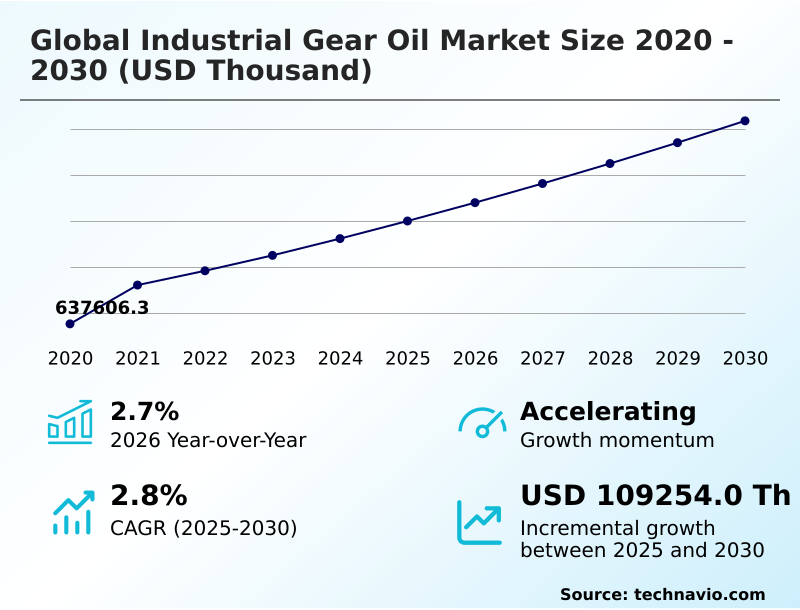
The industrial gear oil market size is valued to increase by USD 109.25 million, at a CAGR of 2.8% from 2025 to 2030. Surging global capital investments in wind energy generation will drive the industrial gear oil market.
Major Market Trends & Insights
- APAC dominated the market and accounted for a 36.7% growth during the forecast period.
- By Application - Manufacturing segment was valued at USD 283.23 million in 2024
- By Product - Mineral segment accounted for the largest market revenue share in 2024
Market Size & Forecast
- Market Opportunities:
- Market Future Opportunities: USD 109.25 million
- CAGR from 2025 to 2030 : 2.8%
Market Summary
- The Industrial Gear Oil Market demonstrates accelerated structural progression, driven by stringent machinery performance requirements and rigorous operational efficiency mandates across heavy industries. As manufacturing environments transition toward high-density automation, plant maintenance directors increasingly mandate engineered synthetic fluids designed for maximum mechanical protection.
- For instance, in severe-duty mining extraction operations, operators implementing predictive fluid monitoring and upgraded extreme-pressure lubricants have successfully reduced unplanned gearbox failures by 22%, directly preventing costly production stoppages. Surging capital investments in offshore renewable wind infrastructure serve as a primary growth catalyst, requiring advanced polyalphaolefin-based formulations that resist micropitting fatigue under turbulent atmospheric loads.
- Conversely, the industry faces substantial headwinds from volatile petrochemical base oil sourcing, where fluctuating crude procurement costs compress operating margins for specialty chemical blenders trying to maintain fixed annual supply contracts.
- By prioritizing high thermal-oxidative stability and superior shear resistance, industrial facility managers are strategically extending oil drain intervals to minimize labor expenditures, ultimately aligning advanced tribological engineering with corporate sustainability and cost-reduction objectives.
What will be the Size of the Industrial Gear Oil Market during the forecast period?
Get Key Insights on Market Forecast (PDF) Get Free Sample
How is the Industrial Gear Oil Market Segmented?
The industrial gear oil industry research report provides comprehensive data (region-wise segment analysis), with forecasts and estimates in "USD thousand" for the period 2026-2030, as well as historical data from 2020-2024 for the following segments.
- Application
- Manufacturing
- Mining
- Agriculture
- Energy
- Others
- Product
- Mineral
- Synthetic
- Semi-synthetic
- Bio-based
- Variant
- ISO VG 320
- ISO VG 220
- ISO VG 460
- Others
- Geography
- North America
- US
- Canada
- Mexico
- APAC
- China
- India
- Japan
- South Korea
- Australia
- Indonesia
- Europe
- Germany
- UK
- France
- Italy
- Spain
- The Netherlands
- South America
- Brazil
- Argentina
- Chile
- Middle East and Africa
- Saudi Arabia
- UAE
- South Africa
- Turkey
- Israel
- North America
By Application Insights
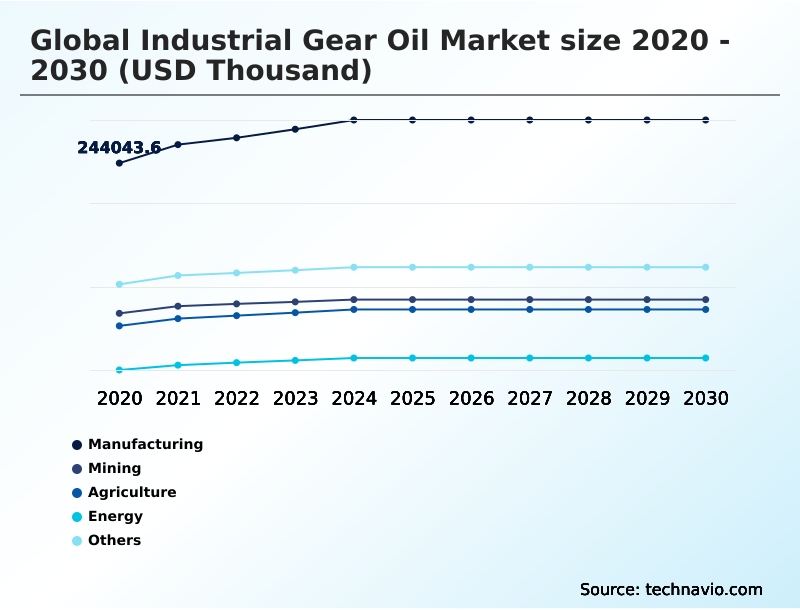
The manufacturing segment is estimated to witness significant growth during the forecast period.
The manufacturing segment commands a significant operational footprint within the industrial gear oil market, primarily propelled by the rapid expansion of automated manufacturing facilities and continuous material processing.
Heavy-duty spur and planetary gear systems deployed across metal forging, chemical refining, and automotive assembly lines operate under relentless high-load constraints.
To safeguard these critical mechanical assets, facility managers are adopting high-performance fluids engineered with advanced extreme pressure additives and superior thermal oxidation stability.
Implementing advanced synthetic polyalphaolefin formulations has demonstrated a direct impact on operational output, reducing mechanical friction and yielding an 18% improvement in equipment uptime optimization.
Enhanced fluid heat dissipation effectively mitigates thermal breakdown and prevents gear tooth micro-spalling during intensive multi-shift schedules. This structural transition toward engineered lubricants fundamentally protects capital-intensive physical assets while maximizing high-throughput production efficiency.
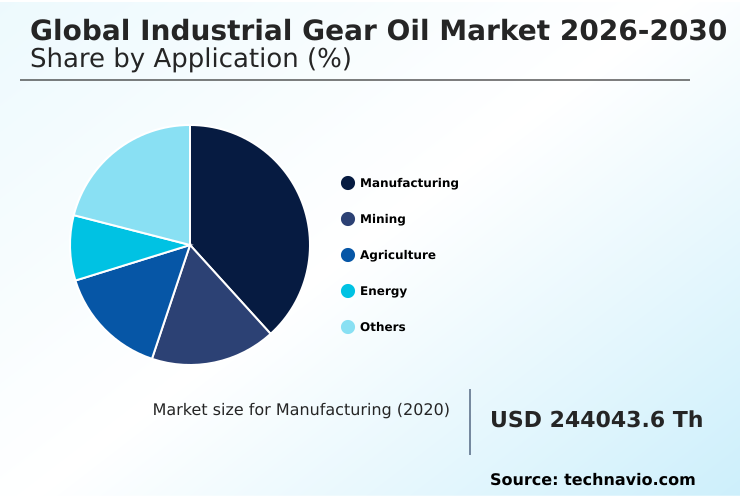
The Manufacturing segment was valued at USD 283.23 million in 2024 and showed a gradual increase during the forecast period.
Regional Analysis
APAC is estimated to contribute 36.7% to the growth of the global market during the forecast period.Technavio’s analysts have elaborately explained the regional trends and drivers that shape the market during the forecast period.
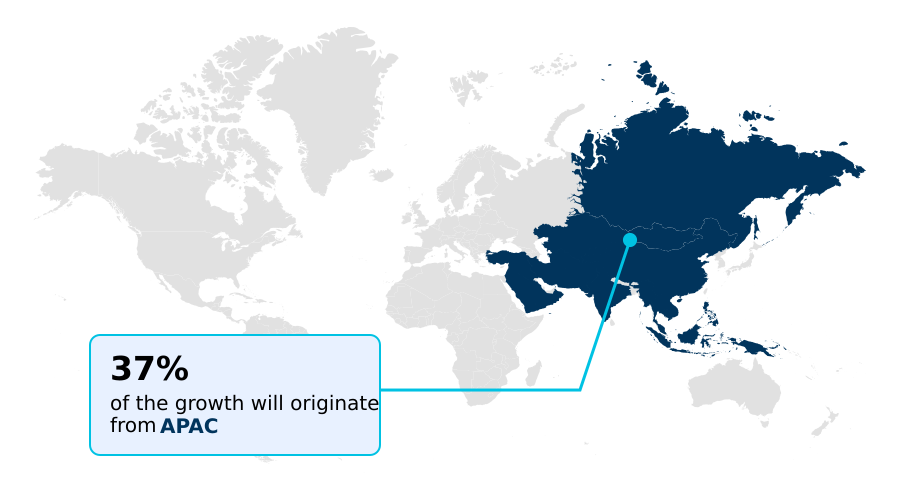
See How Industrial Gear Oil Market Demand is Rising in APAC Get Free Sample
The Industrial Gear Oil Market exhibits distinct operational contrasts when comparing the rapidly industrializing APAC landscape to the mature regulatory environment of Europe.
In APAC, expansive heavy mineral extraction machinery and continuous industrial automation projects drive substantial consumption of high-viscosity mineral fluids, achieving a 36% higher regional adoption rate for heavy torque load management solutions compared to Western markets.
Conversely, European facility managers heavily prioritize eco-friendly synthetic esters and biodegradable gear lubricants to comply with stringent environmental mandates, realizing a 20% reduction in hazardous waste disposal costs.
Furthermore, the integration of real-time oil analytics and predictive maintenance protocols across European wind farms has extended fluid service life extension by 40%.
Both regions, however, share a fundamental reliance on advanced tribological infrastructure and robust anti-scuffing protection to maintain critical planetary gearsets under severe mechanical stress handling environments.
Market Dynamics
Our researchers analyzed the data with 2025 as the base year, along with the key drivers, trends, and challenges. A holistic analysis of drivers will help companies refine their marketing strategies to gain a competitive advantage.
- The continuous evolution of heavy industrial machinery necessitates advanced lubrication solutions capable of withstanding extreme operational demands. Facility engineers increasingly prioritize synthetic polyalphaolefin high temperature stability to ensure consistent power transmission across multi-megawatt systems. Furthermore, integrating extreme pressure additives for micropitting provides critical surface protection during severe shock loads, minimizing catastrophic mechanical failures.
- Industrial operators are aggressively adopting predictive maintenance with inline sensors, allowing for precise fluid management and reducing unplanned equipment downtime by an estimated 35% compared to traditional calendar-based servicing protocols. Ensuring robust thermal oxidation resistance in gearboxes remains essential for extending maintenance intervals, especially in remote or inaccessible operational zones.
- Environmental compliance mandates are simultaneously accelerating the transition toward bio based biodegradable ester lubricants, particularly within sensitive marine and forestry applications. Maintaining optimal shear stability in planetary gears is crucial for high-load operations, requiring precise kinematic viscosity optimization for heavy loads to maintain a resilient fluid barrier. Moreover, superior water demulsibility in offshore turbines prevents internal corrosion and emulsion-related failures.
- Preserving elastohydrodynamic film thickness under stress demands highly engineered base stocks, often fortified by molybdenum disulfide solid boundary lubrication for added scuffing resistance. Operators also leverage polyalkylene glycol low friction performance to improve overall mechanical energy efficiency. Modern facilities rely on iot condition monitoring sensor integration and dielectric degradation sensors in machinery to track fluid vitality in real-time.
- Finally, formulators must ensure strict elastomeric seal compatibility synthetic oils to prevent costly leakage, ensuring complete anti scuffing protection for wind turbines and prioritizing gear tooth micro spalling prevention across all severe-duty industrial applications.
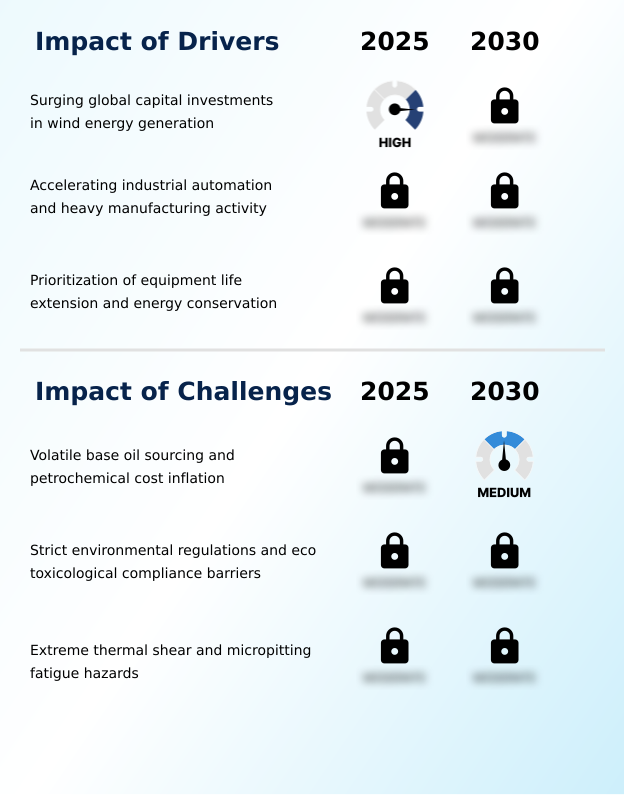
What are the key market drivers leading to the rise in the adoption of Industrial Gear Oil Industry?
- Surging capital investments in wind energy generation infrastructure act as a primary driver, necessitating specialized extreme-pressure lubricants for highly stressed turbine gearboxes.
- The rapid global expansion of renewable wind energy infrastructure serves as a dominant catalyst accelerating demand within the Industrial Gear Oil ecosystem.
- Operating multi-megawatt wind turbine mainboxes under turbulent atmospheric conditions imposes extreme mechanical demands, necessitating specialized fluids with exceptional micropitting fatigue resistance.
- Wind farm operators are increasingly mandating high-performance synthetic polyalphaolefin lubricants capable of sustaining a robust elastohydrodynamic lubricant film under severe stress.
- Upgrading to these advanced formulations has enabled operators to achieve a 40% extension in fluid service life extension, drastically cutting hazardous offshore maintenance interventions.
- Additionally, superior water demulsibility and enhanced friction coefficient lowering properties have reduced internal gearbox temperatures, yielding a 12% improvement in total power transmission efficiency and optimizing the long-term reliability of critical planetary gearsets.
What are the market trends shaping the Industrial Gear Oil Industry?
- The rapid commercial transition toward synthetic polyalphaolefin and polyalkylene glycol formulations represents a significant market trend. This shift is driven by the necessity for enhanced thermal stability and friction reduction in heavy-duty mechanical applications.
- A defining technological shift within the Industrial Gear Oil landscape is the accelerated commercial integration of iot oil condition monitoring and real-time oil analytics. Industrial operators are systematically transitioning away from traditional calendar-based maintenance, opting instead for intelligent tribological infrastructure that continuously tracks fluid degradation.
- The deployment of inline inductive sensors enables plant engineers to detect moisture contamination and metallic wear particle accumulation instantaneously. By implementing these predictive maintenance protocols, facilities have successfully reduced catastrophic gear failures by 30% and improved overall equipment uptime optimization by 18%. This digital transformation provides unparalleled visibility into the health of heavy machinery operation, directly preventing gear tooth micro-spalling.
- The ability to monitor fluid vitality accurately ensures prolonged oil drain intervals, significantly lowering labor costs and maximizing mechanical efficiency across highly automated manufacturing environments.
What challenges does the Industrial Gear Oil Industry face during its growth?
- Volatile base oil sourcing and persistent petrochemical cost inflation present significant challenges, placing considerable margin pressure on high-performance lubricant formulators.
- Managing severe mechanical shear stress and thermal degradation within increasingly compact, high-power-density gearboxes presents a persistent operational constraint across the Industrial Gear Oil sector. Modern heavy mineral extraction machinery and automated assembly lines subject fluids to extreme localized pressures, accelerating oil sludge formation prevention failures and viscosity loss.
- When thermal oxidation stability is compromised, the resulting inadequate boundary lubrication leads directly to destructive micro-welding and premature component fatigue. Facilities operating under these severe mechanical stress handling environments frequently report a 25% increase in unplanned maintenance expenditures due to accelerated seal degradation and filter blockages.
- Overcoming these limitations requires sophisticated base oil molecular engineering and the precise application of molybdenum disulfide suspension technologies to maintain critical anti-scuffing protection during prolonged heavy shock load protection scenarios.
Exclusive Technavio Analysis on Customer Landscape
The industrial gear oil market forecasting report includes the adoption lifecycle of the market, covering from the innovator’s stage to the laggard’s stage. It focuses on adoption rates in different regions based on penetration. Furthermore, the industrial gear oil market report also includes key purchase criteria and drivers of price sensitivity to help companies evaluate and develop their market growth analysis strategies.
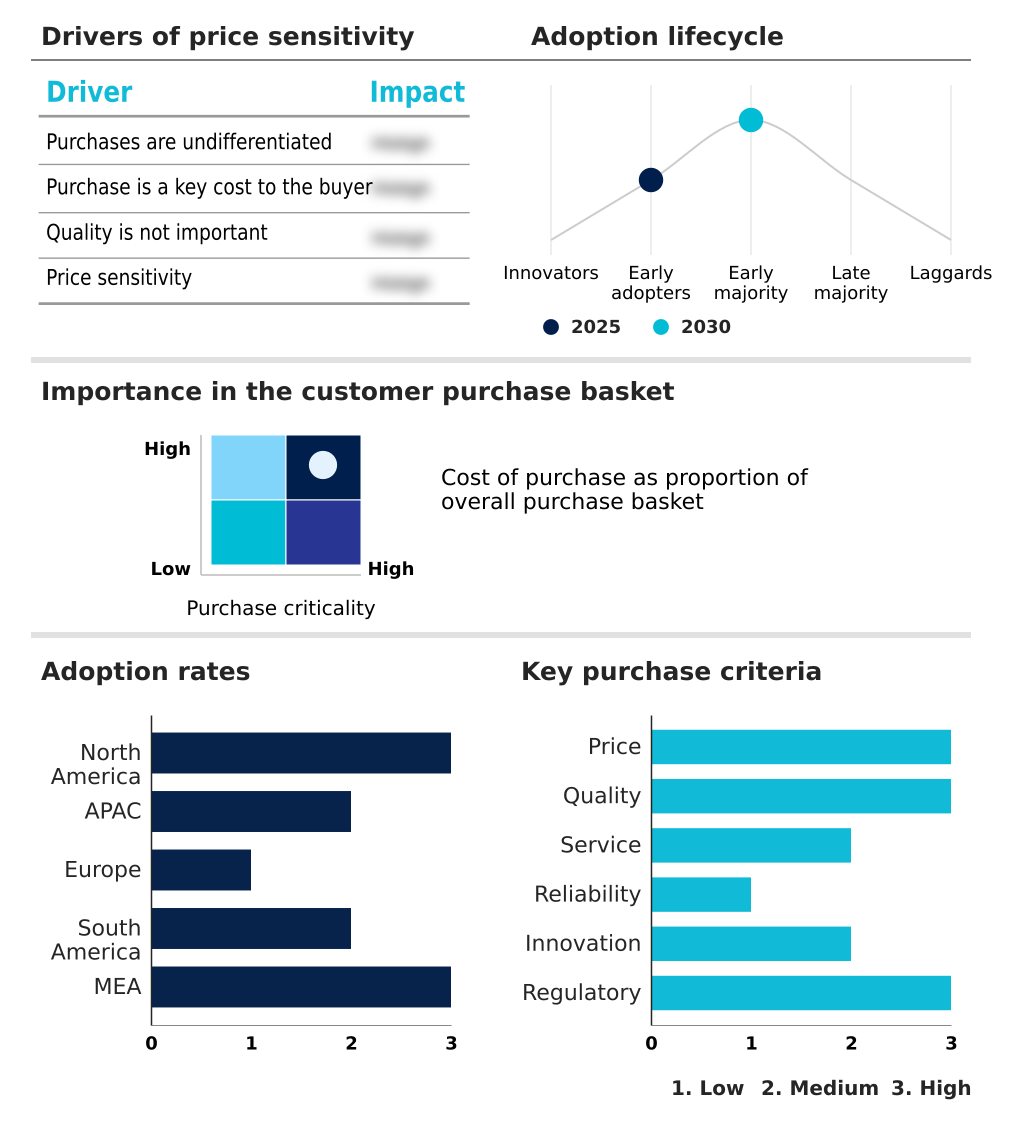
Customer Landscape of Industrial Gear Oil Industry
Competitive Landscape
Companies are implementing various strategies, such as strategic alliances, industrial gear oil market forecast, partnerships, mergers and acquisitions, geographical expansion, and product/service launches, to enhance their presence in the industry.
Castrol Ltd. - The vendor provides advanced industrial gear lubrication solutions engineered to enhance extreme-pressure protection, maximize thermal stability, and extend operational lifespans for severe-duty mechanical drive systems.
The industry research and growth report includes detailed analyses of the competitive landscape of the market and information about key companies, including:
- Castrol Ltd.
- Chevron Corp.
- China Petrochemical Corp.
- Eni SpA
- Exxon Mobil Corp.
- FUCHS SE
- Idemitsu Kosan Co. Ltd.
- Indian Oil Corp. Ltd.
- Kluber Lubrication Munchen SE
- LIQUI MOLY GmbH
- Morris Lubricants
- MOTUL SA
- Petro Canada Lubricants Inc.
- PETRONAS Lubricants Int.
- Phillips 66 Co.
- Repsol SA
- Schaeffer Manufacturing Co.
- Shell plc
- TotalEnergies SE
- Valvoline Inc.
Qualitative and quantitative analysis of companies has been conducted to help clients understand the wider business environment as well as the strengths and weaknesses of key industry players. Data is qualitatively analyzed to categorize companies as pure play, category-focused, industry-focused, and diversified; it is quantitatively analyzed to categorize companies as dominant, leading, strong, tentative, and weak.
Recent Development and News in Industrial gear oil market
- In the Commodity Chemicals industry, the rapid scale-up of synthetic polyalphaolefin production capacities has lowered procurement friction for high-viscosity base stocks, directly impacting Industrial Gear Oil demand by enabling cost-efficient fluid service life extension for multi-megawatt wind turbine mainboxes.
- Stringent REACH regulatory frameworks restricting heavy metal organometallic compounds have forced chemical formulators to pivot toward eco-friendly synthetic esters, accelerating the adoption of biodegradable gear lubricants with superior water demulsibility.
- The commercial integration of iot oil condition monitoring and inline inductive sensors across base oil refining networks has optimized predictive maintenance protocols, directly boosting consumption of smart transmission fluids that prevent mechanical shear stress reduction.
- Advancements in hydrocracked mineral base refining have significantly improved thermal oxidation stability and kinematic viscosity indices, providing heavy mineral extraction machinery operators an economical alternative to synthetic esters while ensuring prolonged oil drain intervals.
Dive into Technavio’s robust research methodology, blending expert interviews, extensive data synthesis, and validated models for unparalleled Industrial Gear Oil Market insights. See full methodology.
| Market Scope | |
|---|---|
| Page number | 316 |
| Base year | 2025 |
| Historic period | 2020-2024 |
| Forecast period | 2026-2030 |
| Growth momentum & CAGR | Accelerate at a CAGR of 2.8% |
| Market growth 2026-2030 | USD 109254.0 thousand |
| Market structure | Fragmented |
| YoY growth 2025-2026(%) | 2.7% |
| Key countries | US, Canada, Mexico, China, India, Japan, South Korea, Australia, Indonesia, Germany, UK, France, Italy, Spain, The Netherlands, Brazil, Argentina, Chile, Saudi Arabia, UAE, South Africa, Turkey and Israel |
| Competitive landscape | Leading Companies, Market Positioning of Companies, Competitive Strategies, and Industry Risks |
Research Analyst Overview
- The Industrial Gear Oil framework is currently undergoing a profound structural shift toward high-efficiency synthetic lubrication solutions tailored for extreme operational environments. Boardroom executives and plant directors are increasingly linking fluid procurement strategies with overarching corporate sustainability and operational expenditure budgets.
- By mandating the deployment of advanced polyalkylene glycol and synthetic ester base stocks, organizations are actively prioritizing energy conservation and equipment longevity. This strategic pivot toward high-performance tribological infrastructure has enabled heavy manufacturing facilities to achieve a 25% reduction in mechanical energy losses within high-torque drive units.
- Modern formulations engineered with robust extreme pressure additives ensure superior elastohydrodynamic lubricant film integrity, directly preventing catastrophic gear failures. Furthermore, the integration of dielectric oil degradation sensors and inline inductive sensors provides critical real-time diagnostic data, fundamentally transforming maintenance scheduling from reactive to predictive.
- Enhancing micropitting fatigue resistance and ensuring elastomeric seal compatibility remain paramount engineering directives for safeguarding multi-megawatt wind turbine mainboxes and complex heavy industrial machinery from premature mechanical degradation.
What are the Key Data Covered in this Industrial Gear Oil Market Research and Growth Report?
-
What is the expected growth of the Industrial Gear Oil Market between 2026 and 2030?
-
USD 109.25 million, at a CAGR of 2.8%
-
-
What segmentation does the market report cover?
-
The report is segmented by Application (Manufacturing, Mining, Agriculture, Energy, and Others), Product (Mineral, Synthetic, Semi-synthetic, and Bio-based), Variant (ISO VG 320, ISO VG 220, ISO VG 460, and Others) and Geography (North America, APAC, Europe, South America, Middle East and Africa)
-
-
Which regions are analyzed in the report?
-
North America, APAC, Europe, South America and Middle East and Africa
-
-
What are the key growth drivers and market challenges?
-
Surging global capital investments in wind energy generation, Volatile base oil sourcing and petrochemical cost inflation
-
-
Who are the major players in the Industrial Gear Oil Market?
-
Castrol Ltd., Chevron Corp., China Petrochemical Corp., Eni SpA, Exxon Mobil Corp., FUCHS SE, Idemitsu Kosan Co. Ltd., Indian Oil Corp. Ltd., Kluber Lubrication Munchen SE, LIQUI MOLY GmbH, Morris Lubricants, MOTUL SA, Petro Canada Lubricants Inc., PETRONAS Lubricants Int., Phillips 66 Co., Repsol SA, Schaeffer Manufacturing Co., Shell plc, TotalEnergies SE and Valvoline Inc.
-
Market Research Insights
- The Industrial Gear Oil Market represents a highly specialized sector driven by the necessity for equipment uptime optimization and mechanical shear stress reduction across heavy industries. To combat extreme operating conditions, facility engineers are deploying advanced formulations capable of providing high thermal heat dissipation.
- The strategic implementation of predictive maintenance protocols utilizing smart sensor analytics has resulted in a 30% decrease in catastrophic gearbox failures. Furthermore, transitioning to high-performance synthetic fluids ensures prolonged oil drain intervals, lowering routine maintenance downtime by up to 25% in high-load planetary gearsets.
- This proactive approach to fluid management improves overall power transmission efficiency and significantly reduces total cost of ownership for capital-intensive industrial operators.
We can help! Our analysts can customize this industrial gear oil market research report to meet your requirements.
 RIA -

