



High Performance Fibers Market Size 2026-2030
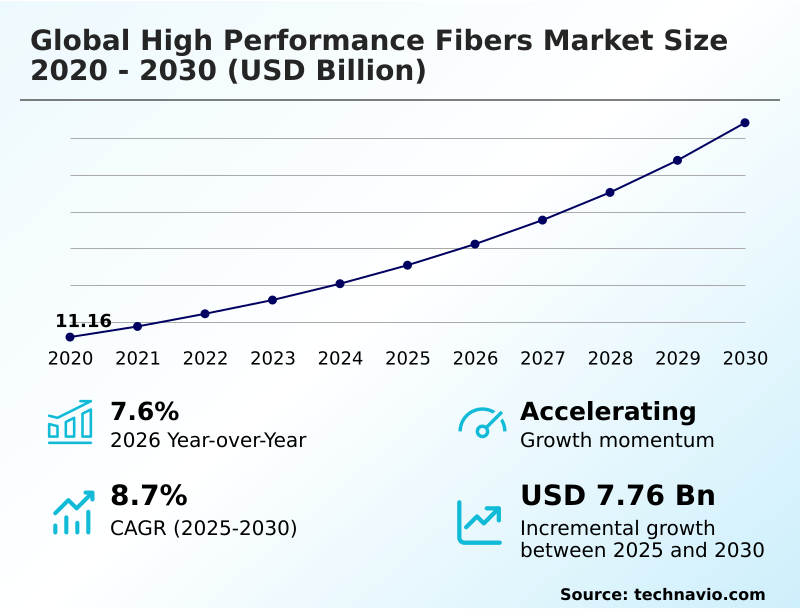
The high performance fibers market size is valued to increase by USD 7.76 billion, at a CAGR of 8.7% from 2025 to 2030. Surging procurement in aerospace and defense infrastructure will drive the high performance fibers market.
Major Market Trends & Insights
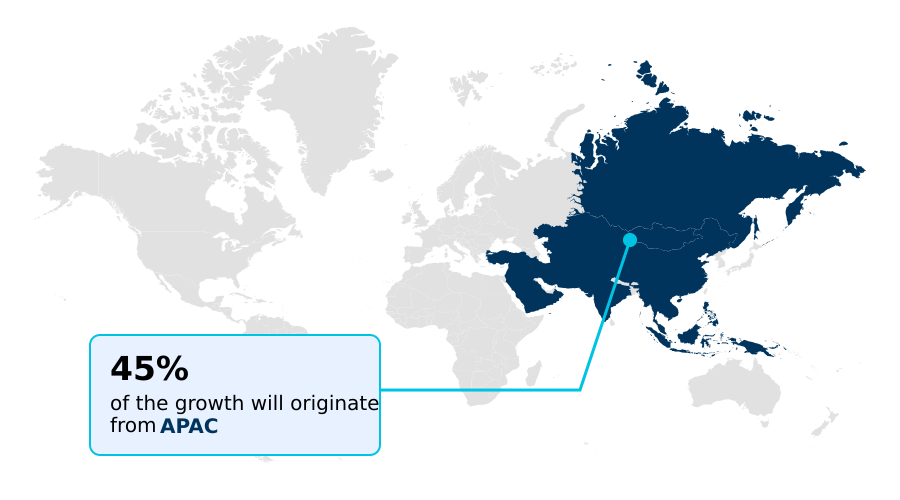
- APAC dominated the market and accounted for a 45% growth during the forecast period.
- By Type - Carbon fibers segment was valued at USD 5.38 billion in 2024
- By Application - Aerospace and defense segment accounted for the largest market revenue share in 2024
Market Size & Forecast
- Market Opportunities: USD 11.69 billion
- Market Future Opportunities: USD 7.76 billion
- CAGR from 2025 to 2030 : 8.7%
Market Summary
- The High Performance Fibers landscape demonstrates accelerated structural evolution as industries transition from traditional metallic alloys to advanced lightweight composites. In modern aerospace manufacturing operations, substituting heavy aluminum frames with carbon and aramid composites improves fuel efficiency and extends flight range.
- Airlines integrating these advanced materials achieve a 20% reduction in airframe weight compared to conventional metals, directly lowering operational carbon emissions. Expanding procurement in aerospace and defense infrastructure serves as a primary driver, compelling material scientists to engineer extreme heat-resistant and high-modulus textiles for jet engine casings and ballistic armor.
- Conversely, high capital expenditures and intricate processing requirements create significant operational challenges. Establishing specialized high-temperature furnaces and managing volatile organic compound emissions demands intensive initial investments, limiting rapid capacity expansion for regional chemical processors. Despite these manufacturing hurdles, continuous advancements in automated fiber placement and continuous filament winding ensure resilient demand across renewable energy and electric mobility sectors.
What will be the Size of the High Performance Fibers Market during the forecast period?
Get Key Insights on Market Forecast (PDF) Get Free Sample
How is the High Performance Fibers Market Segmented?
The high performance fibers industry research report provides comprehensive data (region-wise segment analysis), with forecasts and estimates in "USD million" for the period 2026-2030, as well as historical data from 2020-2024 for the following segments.
- Type
- Carbon fibers
- Aramid fibers
- Polyethylene fibers
- Glass fibers
- Others
- Application
- Aerospace and defense
- Automotive
- Electronics and electrical
- Construction
- Others
- Product type
- Yarn
- Fabric
- Roving
- Prepreg
- Nonwoven
- Geography
- APAC
- China
- Japan
- South Korea
- India
- Australia
- Indonesia
- North America
- US
- Canada
- Mexico
- Europe
- Germany
- UK
- France
- Italy
- Spain
- The Netherlands
- Middle East and Africa
- Saudi Arabia
- Turkey
- UAE
- South Africa
- Israel
- South America
- Brazil
- Argentina
- Chile
- APAC
By Type Insights
The carbon fibers segment is estimated to witness significant growth during the forecast period.
The carbon fibers segment within the High Performance Fibers framework dictates structural engineering across heavy industries by substituting metallic alloys with lighter alternatives.
Advanced polyacrylonitrile precursor spinning and intermediate-modulus prepregs enable manufacturers to fabricate aerospace primary airframe structures and commercial aircraft fuselage panels with extraordinary tensile strength. Carbon fiber continuous filament winding provides vital burst-pressure resistance for high-pressure hydrogen storage tanks.
In the automotive sector, advanced molecular alignment techniques reduce vehicle curb weight, directly driving structural improvements in electric vehicle battery enclosures and automotive chassis components. Facilities leveraging these materials report structural defect rates dropping by 14%, streamlining mass assembly.
Furthermore, integrating post-industrial carbon fiber weaving scrap into non-structural parts optimizes material utilization and minimizes raw material expenditures.
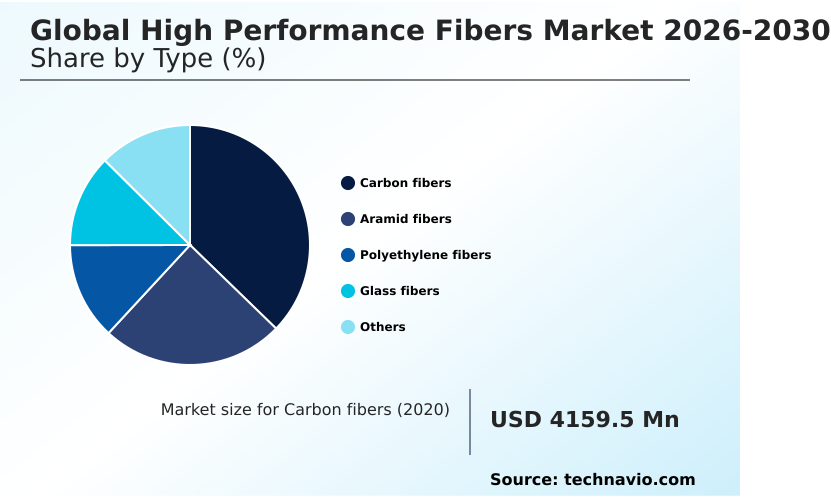
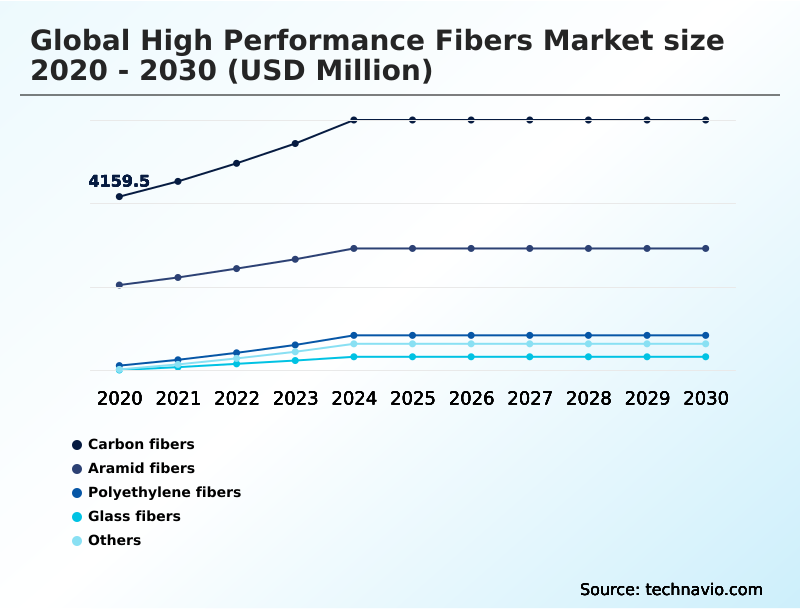
The Carbon fibers segment was valued at USD 5.38 billion in 2024 and showed a gradual increase during the forecast period.
Regional Analysis
APAC is estimated to contribute 45% to the growth of the global market during the forecast period.Technavio’s analysts have elaborately explained the regional trends and drivers that shape the market during the forecast period.
See How High Performance Fibers Market Demand is Rising in APAC Get Free Sample
The geographic distribution of the High Performance Fibers landscape reveals distinct procurement strategies driven by localized industrial demands. APAC accelerates infrastructure modernization, utilizing dielectric aramid strength members and ultra-high-molecular-weight polyethylene to reinforce industrial baghouse filtration systems and high-tensile mooring lines.
Facilities in APAC report a 22% increase in production throughput for subsea deep-water drilling equipment due to expanded localized precursor manufacturing.
Conversely, North America prioritizes defense and aerospace upgrades, deploying alkali-resistant glass fibers and advanced textiles in aerospace interior fire-retardant fabrics. North American aviation manufacturers achieve a 15% reduction in assembly time compared to APAC by standardizing automated composite layup processes.
Furthermore, strict occupational safety mandates in North America drive the adoption of industrial metalworking cut-resistant gloves, lowering workplace injury related downtime by 18%.
This regional divergence highlights how varying regulatory frameworks and offshore oil extraction mooring requirements dictate localized material deployment and operational efficiency.
Market Dynamics
Our researchers analyzed the data with 2025 as the base year, along with the key drivers, trends, and challenges. A holistic analysis of drivers will help companies refine their marketing strategies to gain a competitive advantage.
- The integration of advanced synthetic materials fundamentally alters industrial engineering, requiring sophisticated approaches to lightweight structural component manufacturing. Modern supply chains increasingly prioritize high tensile strength composite reinforcements to replace traditional heavy metals, streamlining logistics and reducing freight burdens.
- Defense procurement strategies heavily favor impact energy absorption protective gear, shifting away from rigid metallic plates to enhance mobility without compromising safety. Engineers designing continuous filament wound pressure vessels demand materials that deliver extreme burst pressure resistance applications to safely contain compressed hydrogen and natural gas.
- Simultaneously, the industry embraces a bio based precursor circular economy, transitioning from petroleum-derived feedstocks to sustainable alternatives that align with stringent environmental compliance mandates. To mitigate waste, manufacturers adopt thermoplastic composite remelting and recycling protocols, reducing raw material procurement expenditures by nearly a third compared to conventional thermoset disposal methods.
- Aerospace original equipment manufacturers specify ultra high modulus structural components to minimize airframe fatigue, while civil engineers utilize corrosion immune concrete reinforcement bars to double the lifespan of coastal infrastructure. The adoption of the automated fiber placement manufacturing process enhances precision in fabricating high temperature ceramic matrix composites for jet engine turbines.
- In the telecommunications sector, integrating dielectric insulation optical cable reinforcement protects delicate networks, while electromagnetic interference shielding electronic components ensures signal integrity. Furthermore, hazardous particulate matter gas filtration systems rely on robust textiles, and thermal stability lithium ion battery separators prevent thermal runaway, collectively elevating operational reliability across highly regulated commercial sectors.
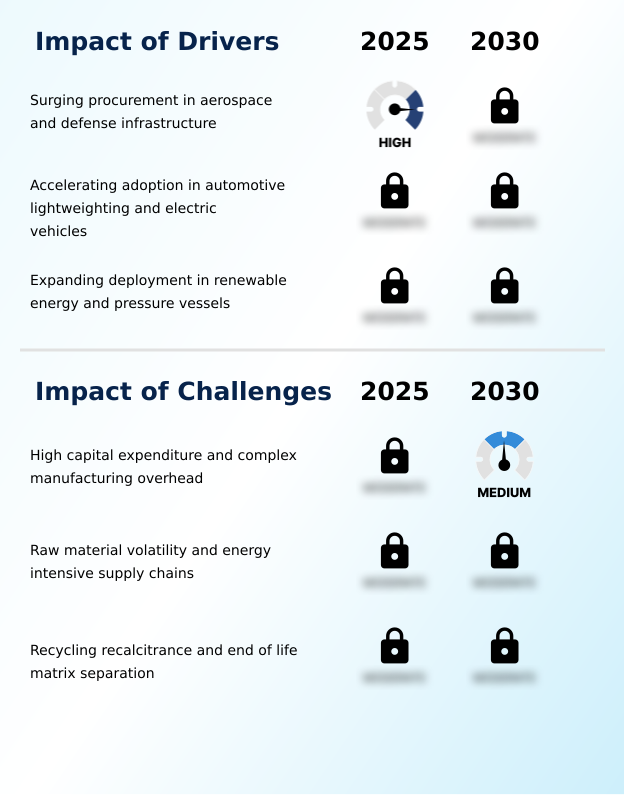
What are the key market drivers leading to the rise in the adoption of High Performance Fibers Industry?
- Surging procurement in aerospace and defense infrastructure serves as a primary macroeconomic driver, propelling continuous demand for lightweight structural components.
- Accelerating demand for structural lightweighting acts as a powerful catalyst for High Performance Fibers adoption across commercial and military sectors.
- Integrating melt-blown ceramic fiber matrixes and polybenzimidazole strands significantly enhances the thermal endurance of tactical missile casings and ballistic body armor.
- Engineers deploy silicon carbide ceramic matrix composites and high-temperature engineering polymers to reinforce wind turbine rotor blades, reducing drivetrain fatigue and improving aerodynamic energy conversion efficiency by 14%.
- Furthermore, incorporating fluoropolymer coated woven membranes into heavy-duty industrial lifting slings decreases material degradation, lowering equipment replacement costs by 22%.
- This shift toward advanced composites directly impacts military personal protective gear, offering a 30% weight reduction compared to conventional steel, thereby enhancing troop mobility and operational endurance in extreme combat environments.
What are the market trends shaping the High Performance Fibers Industry?
- The commercialization of bio-based and recycled materials has emerged as a defining trend shaping modern manufacturing. This transition supports circular economy directives while maintaining structural integrity in advanced industrial applications.
- The rapid commercial transition toward thermoplastic matrix prepregs and closed-loop aramid fiber recycling defines modern material innovation within the High Performance Fibers space. Driven by corporate sustainability commitments, manufacturers utilize bio-based resin composite interfaces and thermal pyrolysis reclamation to extract maximum value from end-of-life composites. These solvolysis recycling technologies effectively separate structural filaments without degrading tensile properties.
- Transitioning to these sustainable frameworks reduces raw material procurement waste by 25% and lowers continuous manufacturing energy consumption by 18%. This strategic shift directly impacts offshore renewable energy infrastructure, deep-space exploration probes, and hypersonic aircraft leading edges, where engineers demand lightweight, eco-friendly materials that withstand extreme mechanical stress.
- Implementing these advanced recycling loops improves supply chain circularity, enabling high-temperature flue gas filtration systems and lithium-ion battery separators to meet stringent European environmental directives while improving overall production efficiency by 15%.
What challenges does the High Performance Fibers Industry face during its growth?
- High initial capital expenditures and intricate processing requirements present substantial barriers to entry and constrain broader industrial expansion.
- High initial capital expenditures and intricate processing requirements create substantial operational barriers within the High Performance Fibers manufacturing landscape. Perfecting the automated gel-spinning process and ensuring precise para-aramid crystal orientation require massive energy consumption and continuous quality validation. Operating specialized high-temperature graphitization furnaces increases facility energy overheads by up to 40%, directly exposing chemical processors to industrial tariff volatility.
- Additionally, developing specialized sizing formulations for multi-axial non-crimp fabrics demands extensive research investments, elevating production costs by 25% compared to commodity textiles.
- These technical complexities delay the deployment of high-voltage power transmission cores, printed circuit board substrates, and telecommunication optical fiber cables, forcing risk-averse contractors to rely on heavier, traditional alternatives for marine concrete structures and seismic retrofit engineering until economies of scale lower advanced material pricing.
Exclusive Technavio Analysis on Customer Landscape
The high performance fibers market forecasting report includes the adoption lifecycle of the market, covering from the innovator’s stage to the laggard’s stage. It focuses on adoption rates in different regions based on penetration. Furthermore, the high performance fibers market report also includes key purchase criteria and drivers of price sensitivity to help companies evaluate and develop their market growth analysis strategies.
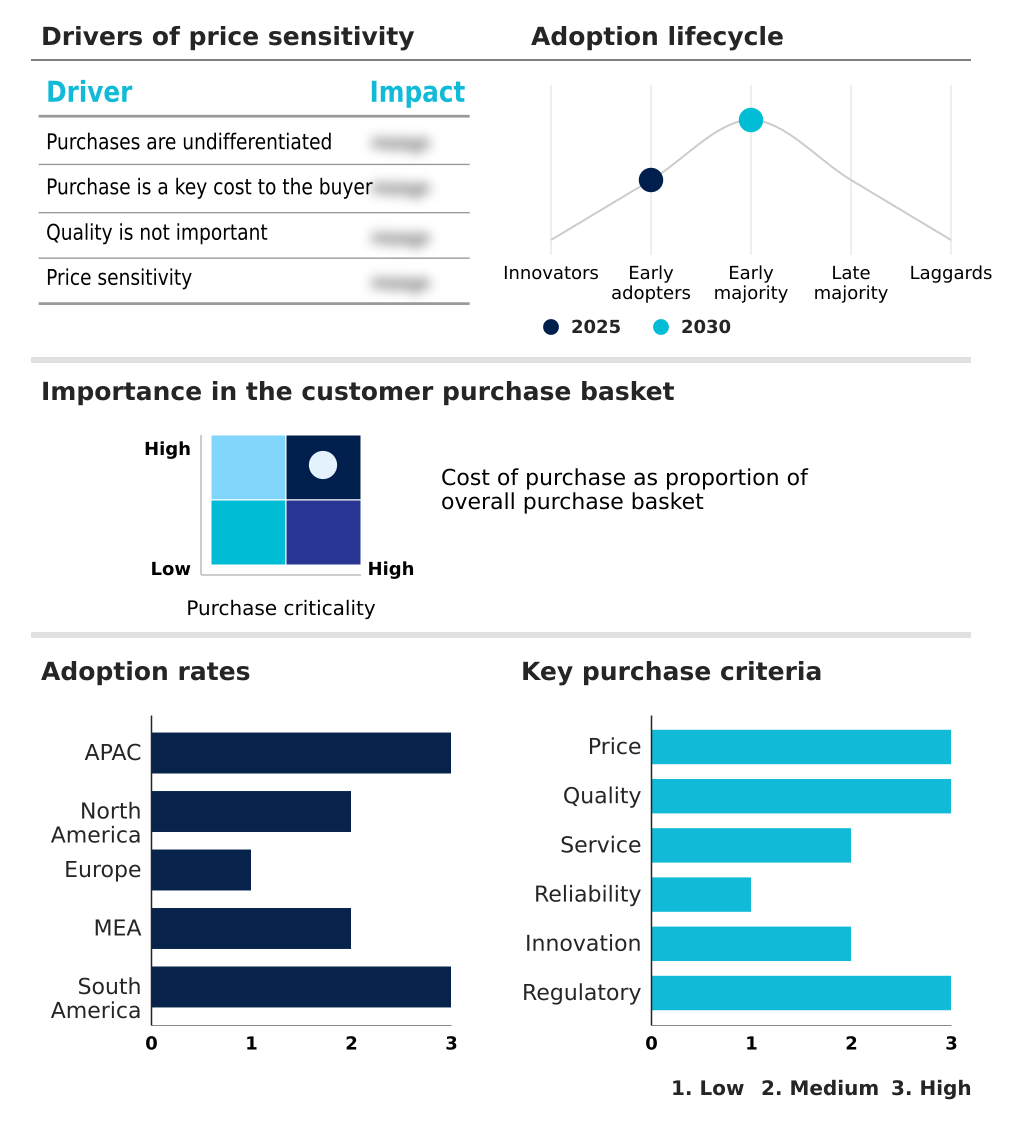
Customer Landscape of High Performance Fibers Industry
Competitive Landscape
Companies are implementing various strategies, such as strategic alliances, high performance fibers market forecast, partnerships, mergers and acquisitions, geographical expansion, and product/service launches, to enhance their presence in the industry.
3M Co. - The company delivers advanced structural materials and specialized textile composites, engineered to enhance tensile strength and thermal resistance for demanding industrial, automotive, and defense manufacturing applications.
The industry research and growth report includes detailed analyses of the competitive landscape of the market and information about key companies, including:
- 3M Co.
- Avient Corp.
- Hexcel Corp.
- Honeywell International Inc.
- Huvis Corp.
- Hyosung Advanced Materials
- Kolon Industries Inc.
- KURARAY Co. Ltd.
- Kureha Corp.
- Nippon Carbon Co. Ltd
- Owens Corning
- SGL Carbon SE
- Syensqo SA
- Taekwang Industrial Co. Ltd.
- Teijin Ltd.
- The Mitsubishi Chemical Group
- Toray Industries Inc.
- Toyobo Co. Ltd.
- Yantai Tayho Advanced Materials
- Zhongfu Shenying Carbon Fiber
Qualitative and quantitative analysis of companies has been conducted to help clients understand the wider business environment as well as the strengths and weaknesses of key industry players. Data is qualitatively analyzed to categorize companies as pure play, category-focused, industry-focused, and diversified; it is quantitatively analyzed to categorize companies as dominant, leading, strong, tentative, and weak.
Recent Development and News in High performance fibers market
- In the Specialty Chemicals industry, stringent environmental regulations governing hazardous solvent recovery and volatile organic compound emissions mandated closed-loop production architectures, directly impacting High Performance Fibers demand by accelerating the adoption of bio-based precursor materials.
- The rapid industrial shift toward continuous fiber-reinforced thermoplastic matrix systems reduced autoclave curing cycle times by 40%, directly increasing High Performance Fibers adoption across high-volume automotive assembly lines and commercial aerostructures.
- Advancements in mechanical and thermochemical reclamation technologies enabled the efficient conversion of post-industrial weaving scrap into high-value nonwoven mats, effectively lowering raw material procurement costs for non-structural High Performance Fibers applications.
- Accelerated supply chain investments in specialized high-temperature graphitization furnaces expanded production capacities for ultra-high-modulus grades, resolving critical material bottlenecks and supporting High Performance Fibers integration into extreme operational environments.
Dive into Technavio’s robust research methodology, blending expert interviews, extensive data synthesis, and validated models for unparalleled High Performance Fibers Market insights. See full methodology.
| Market Scope | |
|---|---|
| Page number | 326 |
| Base year | 2025 |
| Historic period | 2020-2024 |
| Forecast period | 2026-2030 |
| Growth momentum & CAGR | Accelerate at a CAGR of 8.7% |
| Market growth 2026-2030 | USD 7764.1 million |
| Market structure | Fragmented |
| YoY growth 2025-2026(%) | 7.6% |
| Key countries | China, Japan, South Korea, India, Australia, Indonesia, US, Canada, Mexico, Germany, UK, France, Italy, Spain, The Netherlands, Saudi Arabia, Turkey, UAE, South Africa, Israel, Brazil, Argentina and Chile |
| Competitive landscape | Leading Companies, Market Positioning of Companies, Competitive Strategies, and Industry Risks |
Research Analyst Overview
- The High Performance Fibers sector undergoes rapid transformation as corporate boardrooms prioritize structural lightweighting and environmental compliance in long-term product strategies. The commercial transition toward closed-loop aramid fiber recycling and bio-based resin composite interfaces fundamentally reshapes material procurement, enabling companies to align with stringent net-zero emission mandates.
- Chemical processors are investing heavily in solvolysis recycling technologies and thermal pyrolysis reclamation to recover high-value filaments from end-of-life components. Implementing these advanced reclamation frameworks allows composite molders to achieve a 30% reduction in raw material processing costs compared to relying exclusively on virgin petrochemical feedstocks.
- Furthermore, integrating multi-axial non-crimp fabrics into structural designs eliminates stress concentrations, directly enhancing fatigue resistance in extreme operational environments. As aerospace and automotive manufacturers demand thermoplastic matrix prepregs for rapid stamping cycles, the industry shifts away from lengthy autoclave curing.
- Developing specialized sizing formulations ensures optimal interfacial adhesion, empowering engineers to construct highly resilient components that lower lifecycle maintenance expenses and elevate overall structural reliability.
What are the Key Data Covered in this High Performance Fibers Market Research and Growth Report?
-
What is the expected growth of the High Performance Fibers Market between 2026 and 2030?
-
USD 7.76 billion, at a CAGR of 8.7%
-
-
What segmentation does the market report cover?
-
The report is segmented by Type (Carbon fibers, Aramid fibers, Polyethylene fibers, Glass fibers, and Others), Application (Aerospace and defense, Automotive, Electronics and electrical, Construction, and Others), Product Type (Yarn, Fabric, Roving, Prepreg, and Nonwoven) and Geography (APAC, North America, Europe, Middle East and Africa, South America)
-
-
Which regions are analyzed in the report?
-
APAC, North America, Europe, Middle East and Africa and South America
-
-
What are the key growth drivers and market challenges?
-
Surging procurement in aerospace and defense infrastructure, High capital expenditure and complex manufacturing overhead
-
-
Who are the major players in the High Performance Fibers Market?
-
3M Co., Avient Corp., Hexcel Corp., Honeywell International Inc., Huvis Corp., Hyosung Advanced Materials, Kolon Industries Inc., KURARAY Co. Ltd., Kureha Corp., Nippon Carbon Co. Ltd, Owens Corning, SGL Carbon SE, Syensqo SA, Taekwang Industrial Co. Ltd., Teijin Ltd., The Mitsubishi Chemical Group, Toray Industries Inc., Toyobo Co. Ltd., Yantai Tayho Advanced Materials and Zhongfu Shenying Carbon Fiber
-
Market Research Insights
- The High Performance Fibers ecosystem relies on advanced material science to redefine operational limits in extreme environments. Defense contractors deploy tactical missile casings and military personal protective gear, observing a 35% improvement in kinetic energy absorption compared to legacy steel plating.
- Meanwhile, automotive engineers utilize these reinforcements for electric vehicle battery enclosures, achieving a 25% decrease in chassis mass that directly extends driving range. In the renewable sector, integrating high-modulus composites into wind turbine rotor blades enhances flexural rigidity by 18%, reducing turbine drivetrain strain during turbulent weather.
- These strategic implementations across aerospace primary airframe structures and heavy-duty industrial lifting slings optimize supply chain resilience, lower lifecycle maintenance costs, and ensure strict compliance with modern industrial safety mandates.
We can help! Our analysts can customize this high performance fibers market research report to meet your requirements.
 RIA -

