


Greenhouse Horticulture Market Size 2026-2030
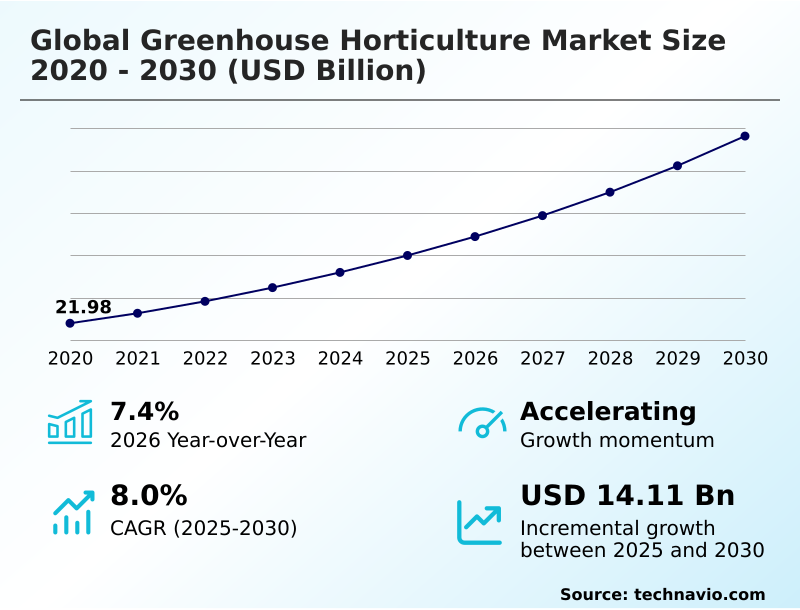
The greenhouse horticulture market size is valued to increase by USD 14.11 billion, at a CAGR of 8% from 2025 to 2030. Surging global consumer demand for year round local produce will drive the greenhouse horticulture market.
Major Market Trends & Insights
- Europe dominated the market and accounted for a 55.3% growth during the forecast period.
- By Product - Plastic segment was valued at USD 23.33 billion in 2024
- By Crop Type - Fruits and vegetables segment accounted for the largest market revenue share in 2024
Market Size & Forecast
- Market Opportunities: USD 22.12 billion
- Market Future Opportunities: USD 14.11 billion
- CAGR from 2025 to 2030 : 8%
Market Summary
- The Greenhouse Horticulture Market demonstrates robust structural expansion as agricultural enterprises transition toward controlled environment agriculture to secure continuous food production. Driven by surging retail mandates for year-round pesticide free cultivation, commercial operators rapidly integrate automated microclimate computer networks and hydroponic fertigation loops to guarantee predictable supply chains.
- Implementing closed loop ecosystems allows facilities to recirculate drainage water, ultimately achieving a 90% reduction in agricultural water footprints compared to traditional open-field flood techniques. A major operational driver is the rising frequency of severe weather anomalies, which compels large-scale vegetable producers to construct highly durable polycarbonate enclosures to protect vulnerable crop yields.
- However, this technological transition is significantly constrained by elevated initial capital outlays for structural framing, dynamic LED spectrum modules, and thermal energy retention systems. Navigating volatile global energy tariffs further squeezes facility operating margins during high-demand winter seasons.
- Consequently, major growers must balance massive upfront investments with the necessity of deploying smart shading screens and automated nutrient dosing systems to maximize long-term spatial efficiency and crop profitability.
What will be the Size of the Greenhouse Horticulture Market during the forecast period?
Get Key Insights on Market Forecast (PDF) Get Free Sample
How is the Greenhouse Horticulture Market Segmented?
The greenhouse horticulture industry research report provides comprehensive data (region-wise segment analysis), with forecasts and estimates in "USD million" for the period 2026-2030, as well as historical data from 2020-2024 for the following segments.
- Product
- Plastic
- Glass
- Crop type
- Fruits and vegetables
- Nursery crops
- Flowers and ornamentals
- Others
- Technology
- Hydroponics
- Aeroponics
- Aquaponics
- Vertical farming
- Others
- Geography
- Europe
- The Netherlands
- Spain
- Italy
- Germany
- France
- UK
- North America
- US
- Canada
- Mexico
- APAC
- China
- India
- South Korea
- Japan
- Indonesia
- Australia
- Middle East and Africa
- Turkey
- Saudi Arabia
- UAE
- Israel
- South Africa
- South America
- Brazil
- Argentina
- Chile
- Europe
By Product Insights
The plastic segment is estimated to witness significant growth during the forecast period.
The plastic segment within the Greenhouse Horticulture Market commands the leading operational volume due to its economical structural deployment and superior impact resistance.
Commercial growers increasingly transition to multi layer flexible low density polyethylene films to maintain precise microclimate uniformity across expansive cultivation zones.
These advanced covers integrate ultraviolet light stabilizers and heat activated dynamic shade coatings to reflect excess solar radiation, effectively optimizing photosynthetic active radiation for dense plant canopies.
By utilizing lightweight polycarbonate cladding panels, facilities can expand structurally without requiring heavy internal supports, thereby improving spatial efficiency by 15%. This structural flexibility facilitates rapid installation of automated microclimate computer systems and precision drip irrigation networks.
Consequently, agricultural enterprises can achieve year round crop production while maintaining strict environmental regulations and mitigating the risks associated with sudden extreme weather events.
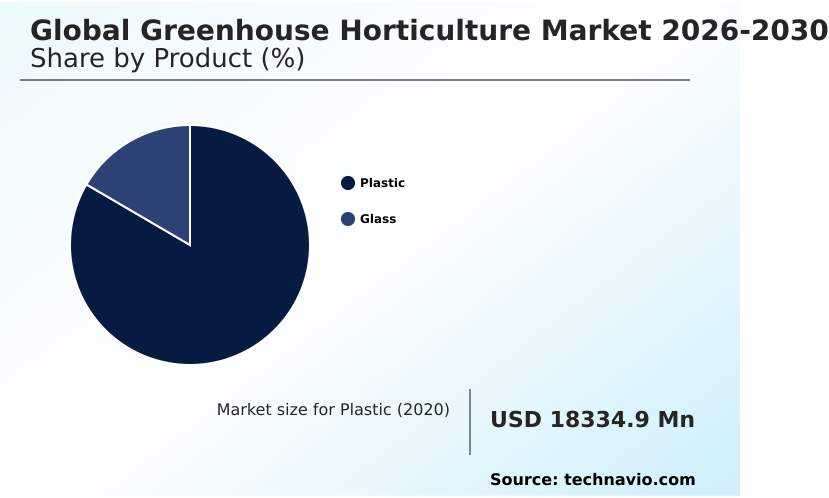
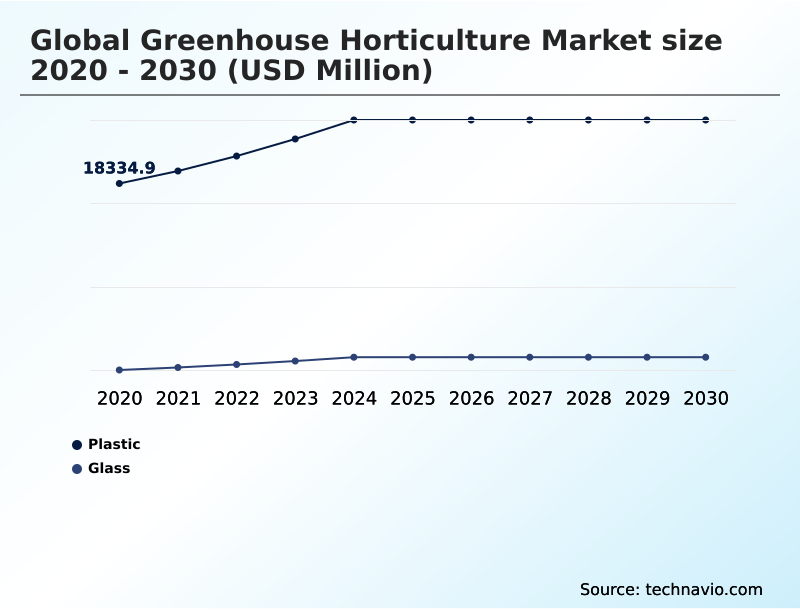
The Plastic segment was valued at USD 23.33 billion in 2024 and showed a gradual increase during the forecast period.
Regional Analysis
Europe is estimated to contribute 55.3% to the growth of the global market during the forecast period.Technavio’s analysts have elaborately explained the regional trends and drivers that shape the market during the forecast period.
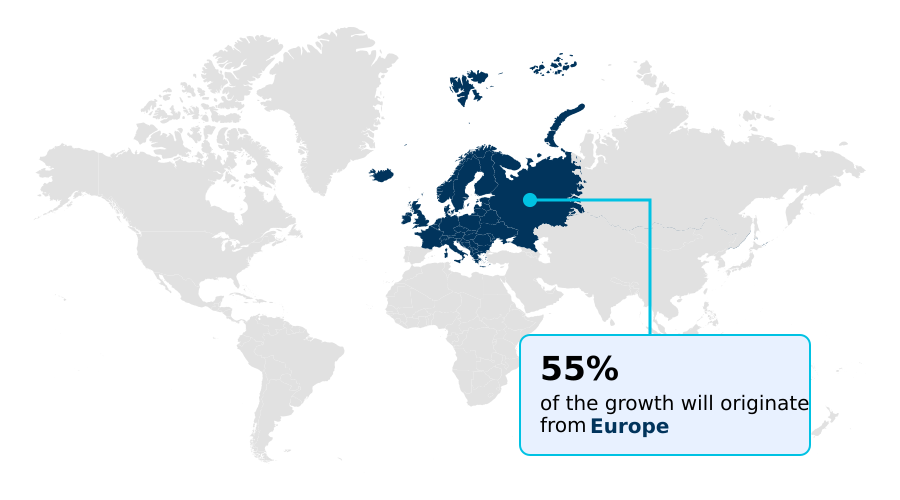
See How Greenhouse Horticulture Market Demand is Rising in Europe Get Free Sample
The geographic adoption within the Greenhouse Horticulture Market varies significantly due to diverse climate pressures, governmental sustainability mandates, and available urban space.
Europe maintains a highly mature infrastructure base where strict environmental regulations and zero microplastic waste directives compel facilities to achieve a 95% adoption rate of closed loop hydroponics and sustainable biomaterial integration.
Conversely, APAC exhibits the most rapid deployment of high density vertical setups, driven by severe arable land constraints and expanding urban populations, resulting in a 40% faster facility construction pace compared to North America.
Across North America, extreme weather protection requirements and severe drought have triggered a 35% increase in automated nutrient dosing and precision drip irrigation installations.
These regional contrasts highlight how localized resource scarcity dictates the integration of automated structural ventilation and automated data interoperability to optimize yield economics.
Market Dynamics
Our researchers analyzed the data with 2025 as the base year, along with the key drivers, trends, and challenges. A holistic analysis of drivers will help companies refine their marketing strategies to gain a competitive advantage.
- The commercial development of the Greenhouse Horticulture Market heavily relies on integrating sophisticated infrastructure to stabilize volatile agricultural supply chains and meet rigorous retailer compliance standards. High tech venlo glasshouse structures form the architectural foundation for large-scale operations, utilizing high transmittance double glazed glasshouses and extreme weather resilient greenhouse panels to shield crops from catastrophic environmental damage.
- Within these robust enclosures, automated AI driven climate control systems and advanced microclimate humidity management software orchestrate daily environmental adjustments. This dynamic capability improves supply chain predictability by ensuring continuous yield generation regardless of external weather patterns.
- To maximize resource utilization, facilities deploy closed loop hydroponic irrigation loops alongside precision root zone EC monitoring, which collectively execute sustainable agricultural water conservation methods that vastly outperform conventional open-field watering techniques. Modern operations also mandate energy efficient thermal screen deployment and heat activated dynamic shade coatings to regulate internal temperatures without excessive utility expenditure.
- Furthermore, the integration of UV stabilized agricultural plastic film offers cost-effective microclimate protection for mid-tier growers transitioning into controlled environment sectors. To mitigate chronic labor shortages, top-tier producers implement autonomous harvesting robotic gantry systems and AI powered canopy monitoring sensors.
- Meanwhile, structural material sustainability is addressed through the adoption of compostable greenhouse crop support components and recirculating aquaponic bio filtration systems. The continuous expansion of automated greenhouse vertical farming racks allows urban producers to achieve unmatched spatial efficiency, ensuring consistent multi-seasonal output for demanding retail buyers.
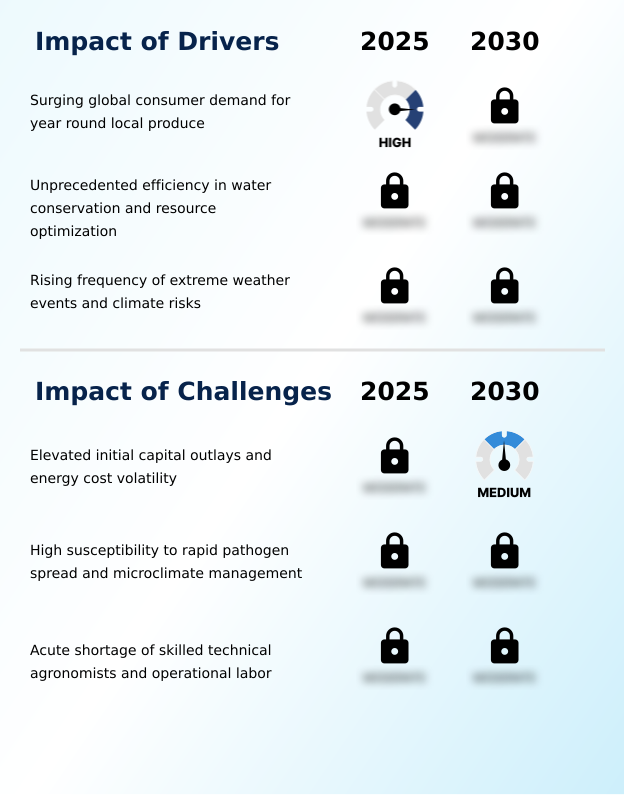
What are the key market drivers leading to the rise in the adoption of Greenhouse Horticulture Industry?
- Surging consumer demand for reliable, year-round local produce serves as the primary driver propelling continuous market expansion.
- Surging retail demand for reliable, pesticide free cultivation fundamentally drives structural expansion within the Greenhouse Horticulture Market.
- Because open-field supply chains suffer frequent disruptions, major distributors mandate consistent agricultural deliveries, compelling commercial producers to adopt advanced micro irrigation and nutrient film technique networks.
- Operating within protected environments utilizing rockwool growing media entirely eliminates soil-borne pathogens, enabling growers to reduce chemical intervention costs by 40%.
- The necessity to conserve rapidly depleting groundwater reserves heavily pushes facilities to install dielectric root sensors and execute closed loop hydroponic fertigation loops.
- These water-recycling frameworks elevate overall water use efficiency by nearly 85% compared to traditional farming, allowing modern producers to secure long-term purchase contracts through unparalleled operational sustainability.
What are the market trends shaping the Greenhouse Horticulture Industry?
- The rapid integration of artificial intelligence-driven autonomous climate and irrigation controls represents a defining technological trend shaping the market.
- The technological advancement of the Greenhouse Horticulture Market is defined by a rapid operational shift toward artificial intelligence crop software and automated plant telemetry. To overcome unpredictable outdoor climatic patterns, commercial agricultural facilities aggressively deploy autonomous crop steering platforms to continuously analyze and adjust the vapor pressure deficit.
- This transition toward intelligent data frameworks allows facility managers to reduce daily manual monitoring requirements by 30% while simultaneously improving overall harvest volume accuracy by 22%. The strategic integration of automated data interoperability across diverse equipment suites ensures that recirculating aquaculture filtration arrays and variable spectrum illumination systems communicate seamlessly.
- Consequently, these synchronized digital ecosystems allow modern agricultural producers to maximize biological pest suppression and ensure continuous high-yield delivery capabilities regardless of shifting external environmental variables.
What challenges does the Greenhouse Horticulture Industry face during its growth?
- Elevated initial capital outlays and continuous energy cost volatility constitute the primary operational challenges constraining industry expansion.
- Extensive financial constraints and extreme microclimate vulnerabilities pose severe operational barriers within the Greenhouse Horticulture Market. Constructing high-density facilities mandates extraordinary initial capital for structural load requirements, automated ebb and flow benches, and supplemental assimilation lights. These massive upfront expenditures frequently delay facility expansion projects by up to 18% across volatile economic environments.
- Furthermore, maintaining precise microclimate uniformity within enclosed canopies is biologically precarious. If high pressure fogging modules or root zone oxygenation systems experience mechanical failure, devastating fungal pathogens spread exponentially across dense cultivation rows.
- Managing continuous thermal energy demands and navigating sudden tariff spikes directly compresses profit margins, forcing facilities to meticulously optimize every thermochromic polymer coatings application to avoid a 15% reduction in overall operating revenue.
Exclusive Technavio Analysis on Customer Landscape
The greenhouse horticulture market forecasting report includes the adoption lifecycle of the market, covering from the innovator’s stage to the laggard’s stage. It focuses on adoption rates in different regions based on penetration. Furthermore, the greenhouse horticulture market report also includes key purchase criteria and drivers of price sensitivity to help companies evaluate and develop their market growth analysis strategies.
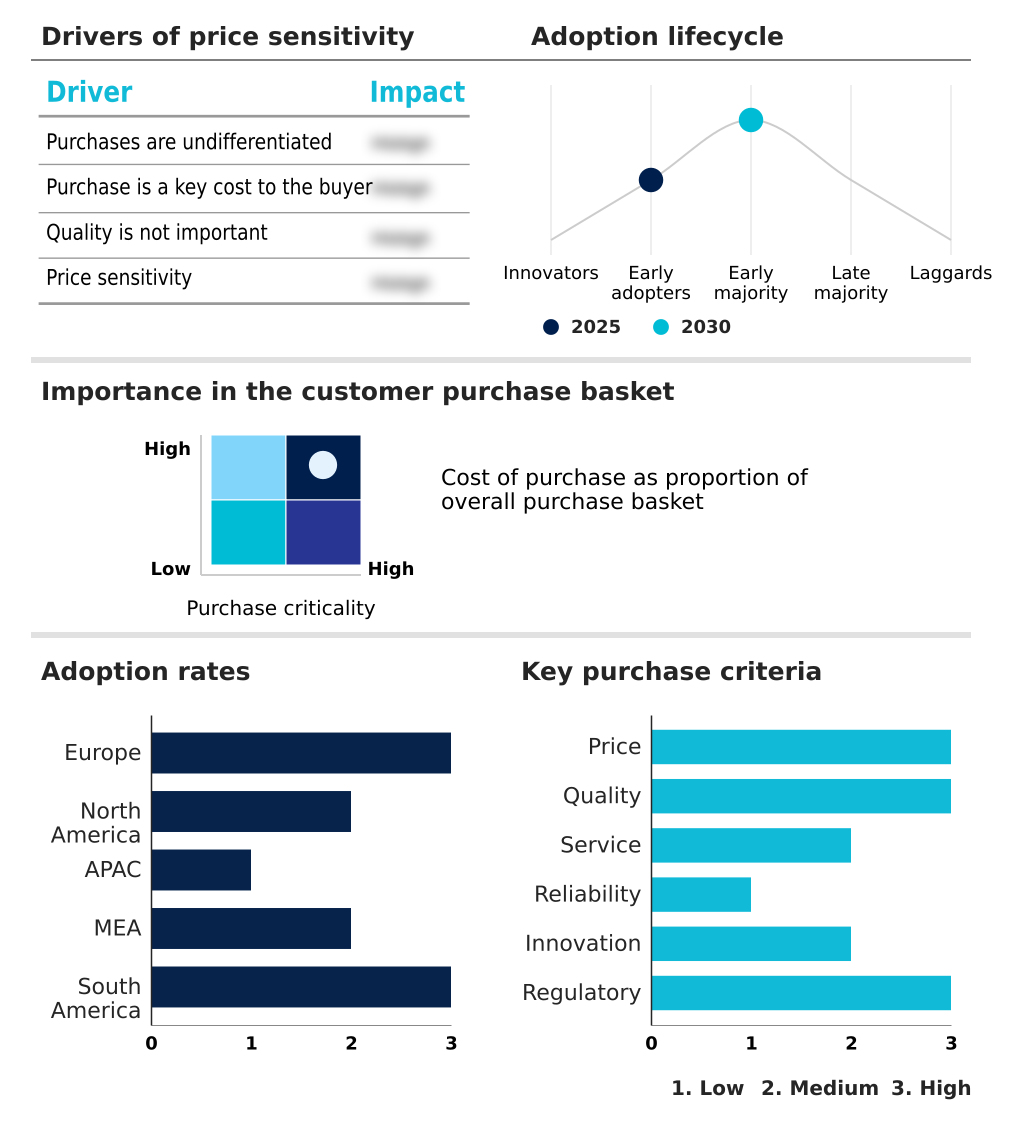
Customer Landscape of Greenhouse Horticulture Industry
Competitive Landscape
Companies are implementing various strategies, such as strategic alliances, greenhouse horticulture market forecast, partnerships, mergers and acquisitions, geographical expansion, and product/service launches, to enhance their presence in the industry.
AB Ludvig Svensson - The unified service portfolio delivers specialized climate control screens and advanced light diffusion textiles designed to optimize environmental parameters and enhance crop productivity in commercial high-tech agricultural facilities.
The industry research and growth report includes detailed analyses of the competitive landscape of the market and information about key companies, including:
- AB Ludvig Svensson
- Agrolux
- Argus Control Systems Ltd.
- Certhon Build B.V.
- Dalsem Greenhouse Projects BV
- De Gier Drive Systems
- Debets Schalke
- Fluence
- Grodan
- Hoogendoorn Growth Management
- Hortiplan BV
- KUBO Group
- LOGIQS B.V.
- Metazet
- Netafim Ltd.
- P.L. Light Systems
- Prins Group
- Ridder Drive Systems BV
- Signify NV
- Van der Hoeven
Qualitative and quantitative analysis of companies has been conducted to help clients understand the wider business environment as well as the strengths and weaknesses of key industry players. Data is qualitatively analyzed to categorize companies as pure play, category-focused, industry-focused, and diversified; it is quantitatively analyzed to categorize companies as dominant, leading, strong, tentative, and weak.
Recent Development and News in Greenhouse horticulture market
- In the Building Products industry, the widespread adoption of high transmittance double glazed glasshouses improved thermal heating networks, directly impacting Greenhouse Horticulture Market demand by reducing cold climate energy consumption by 25%.
- Stringent circular economy directives on commercial construction materials accelerated sustainable biomaterial integration, compelling the Greenhouse Horticulture Market to replace synthetic bindings with bio based compostable clips to eliminate zero microplastic waste.
- The commercial scale deployment of automated structural ventilation systems within advanced warehousing logistics enhanced precise atmospheric humidity control, which subsequently enabled the Greenhouse Horticulture Market to decrease fungal pathogen spread by 18%.
- Advancements in extreme weather protection coatings for heavy commercial roofing applications created highly durable UV stabilized agricultural plastic film variants, driving Greenhouse Horticulture Market adoption to shield valuable crops from severe hailstorm damage.
Dive into Technavio’s robust research methodology, blending expert interviews, extensive data synthesis, and validated models for unparalleled Greenhouse Horticulture Market insights. See full methodology.
| Market Scope | |
|---|---|
| Page number | 298 |
| Base year | 2025 |
| Historic period | 2020-2024 |
| Forecast period | 2026-2030 |
| Growth momentum & CAGR | Accelerate at a CAGR of 8% |
| Market growth 2026-2030 | USD 14110.8 million |
| Market structure | Fragmented |
| YoY growth 2025-2026(%) | 7.4% |
| Key countries | The Netherlands, Spain, Italy, Germany, France, UK, US, Canada, Mexico, China, India, South Korea, Japan, Indonesia, Australia, Turkey, Saudi Arabia, UAE, Israel, South Africa, Brazil, Argentina and Chile |
| Competitive landscape | Leading Companies, Market Positioning of Companies, Competitive Strategies, and Industry Risks |
Research Analyst Overview
- The Greenhouse Horticulture Market continuously evolves as agricultural operators adopt highly specialized closed loop hydroponics to combat systemic resource scarcity. To stabilize fragile supply chains, facility managers heavily invest in automated microclimate computer technology and dynamic LED spectrum arrays to perfectly orchestrate plant growth cycles.
- Strategic deployment of smart glass coatings and thermal energy retention systems allows operators to lower massive utility expenditures and align facility infrastructure with rigorous international sustainability standards. Transitioning to these autonomous frameworks yields immediate operational benefits, as early adopters record a 25% decrease in overall resource wastage.
- The integration of automated harvesting robotics directly addresses chronic labor deficits, ensuring precise and uninterrupted crop collection. Furthermore, utilizing deep water culture and evaporative cooling pads maintains an optimal vapor pressure deficit, minimizing the risk of localized biological pathogen outbreaks.
- These synchronized technological upgrades empower commercial farming enterprises to decouple their financial performance from unpredictable external climate patterns, guaranteeing reliable delivery volumes for high-value agricultural commodities across urban hubs.
What are the Key Data Covered in this Greenhouse Horticulture Market Research and Growth Report?
-
What is the expected growth of the Greenhouse Horticulture Market between 2026 and 2030?
-
USD 14.11 billion, at a CAGR of 8%
-
-
What segmentation does the market report cover?
-
The report is segmented by Product (Plastic, and Glass), Crop Type (Fruits and vegetables, Nursery crops, Flowers and ornamentals, and Others), Technology (Hydroponics, Aeroponics, Aquaponics, Vertical farming, and Others) and Geography (Europe, North America, APAC, Middle East and Africa, South America)
-
-
Which regions are analyzed in the report?
-
Europe, North America, APAC, Middle East and Africa and South America
-
-
What are the key growth drivers and market challenges?
-
Surging global consumer demand for year round local produce, Elevated initial capital outlays and energy cost volatility
-
-
Who are the major players in the Greenhouse Horticulture Market?
-
AB Ludvig Svensson, Agrolux, Argus Control Systems Ltd., Certhon Build B.V., Dalsem Greenhouse Projects BV, De Gier Drive Systems, Debets Schalke, Fluence, Grodan, Hoogendoorn Growth Management, Hortiplan BV, KUBO Group, LOGIQS B.V., Metazet, Netafim Ltd., P.L. Light Systems, Prins Group, Ridder Drive Systems BV, Signify NV and Van der Hoeven
-
Market Research Insights
- The Greenhouse Horticulture Market is rapidly evolving as commercial agricultural operators adopt controlled environment agriculture to stabilize volatile fresh produce supply chains. By integrating automated plant telemetry and advanced micro irrigation frameworks, high-tech facilities have successfully improved water use efficiency by 85% relative to conventional field farming.
- Furthermore, the strategic deployment of artificial intelligence crop software enhances harvest predictability and minimizes crop stress mitigation, boosting overall yield volumes by nearly 40% in densely populated urban centers. Driven by strict environmental regulations mandating sustainable agriculture initiatives, growers continuously upgrade thermal heating networks to lower energy consumption by 20%.
- These precise environmental optimizations enable reliable year round crop production while systematically reducing operational overhead across diverse climatic zones.
We can help! Our analysts can customize this greenhouse horticulture market research report to meet your requirements.
 RIA -

