



Generic Drugs Market Size 2026-2030
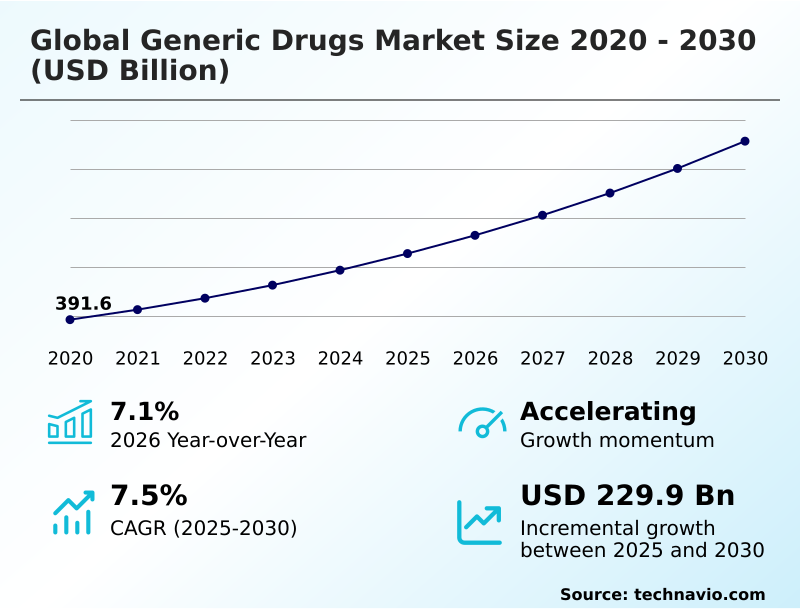
The generic drugs market size is valued to increase by USD 229.9 billion, at a CAGR of 7.5% from 2025 to 2030. Patent expirations on blockbuster pharmaceuticals will drive the generic drugs market.
Major Market Trends & Insights
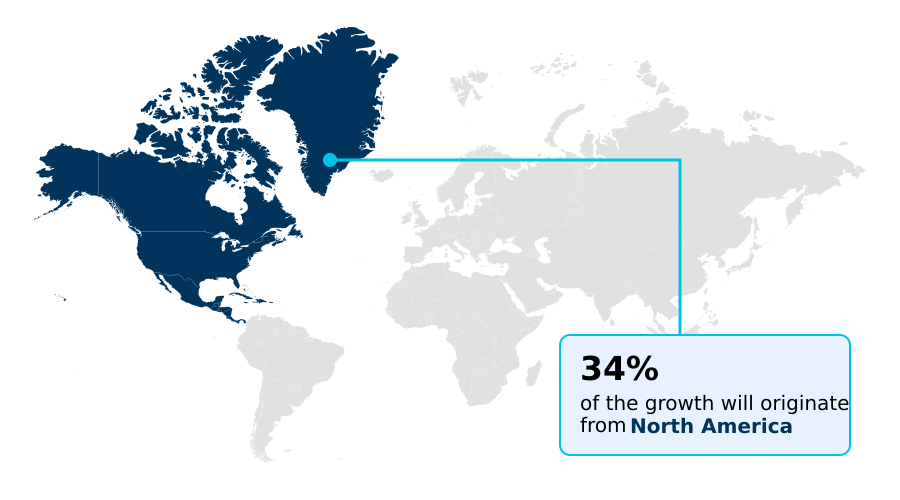
- North America dominated the market and accounted for a 33.5% growth during the forecast period.
- By Route of Administration - Oral segment was valued at USD 304.7 billion in 2024
- By Distribution Channel - Hospital pharmacies segment accounted for the largest market revenue share in 2024
Market Size & Forecast
- Market Opportunities: USD 365.1 billion
- Market Future Opportunities: USD 229.9 billion
- CAGR from 2025 to 2030 : 7.5%
Market Summary
- The Generic Drugs Market operates as the foundational pillar of modern healthcare, delivering essential therapeutic equivalency to manage escalating chronic disease burdens. Operational focus has shifted heavily toward supply chain resilience, where pharmaceutical manufacturers are establishing secondary active ingredient synthesis networks to prevent critical localized shortages.
- This supply chain optimization scenario allows agile suppliers to maintain continuous inventory flow, resulting in a 20% improvement in institutional contract fulfillment reliability compared to single-source competitors. The expiration of patents on high-revenue blockbuster pharmaceuticals acts as a powerful driver, accelerating the rapid market entry of bioequivalent formulations and dramatically lowering public healthcare expenditures.
- Conversely, the market faces intense structural limitations due to aggressive price deflation enforced by consolidated purchasing organizations. This margin compression restricts capital deployment for facility modernization, challenging producers to balance affordability with sustainable operational returns.
- By advancing continuous manufacturing frameworks and digital quality compliance, leading enterprises effectively navigate stringent regulatory oversight while capturing expanding prescription volumes across mature and emerging clinical landscapes.
What will be the Size of the Generic Drugs Market during the forecast period?
Get Key Insights on Market Forecast (PDF) Get Free Sample
How is the Generic Drugs Market Segmented?
The generic drugs industry research report provides comprehensive data (region-wise segment analysis), with forecasts and estimates in "USD billion" for the period 2026-2030, as well as historical data from 2020-2024 for the following segments.
- Route of administration
- Oral
- Injectables
- Topical
- Inhalers
- Distribution channel
- Hospital pharmacies
- Retail pharmacies
- Online
- Application
- Anti-infectives
- CNS
- Others
- Geography
- North America
- US
- Canada
- Mexico
- Europe
- Germany
- UK
- France
- Italy
- Spain
- The Netherlands
- Asia
- China
- India
- Japan
- South Korea
- Indonesia
- Thailand
- Rest of World (ROW)
- North America
By Route of Administration Insights
The oral segment is estimated to witness significant growth during the forecast period.
The oral administration segment functions as the foundational volume driver for pharmaceutical networks, driven by standardized manufacturing and broad patient compliance.
Sustained high demand requires manufacturers to execute advanced bioequivalent formulation synthesis and secure active pharmaceutical ingredient sourcing to maintain continuous supply.
Operational efficiency has improved, with tableting speed increasing by 22% due to robust quality by design frameworks and manufacturing facility retrofitting. Companies expanding their vertical integration capabilities observe a 15% reduction in production delays, significantly boosting batch production scalability.
Furthermore, developers are transitioning toward extended release matrix engineering and complex injectable platforms, augmenting traditional solid dosage lines.
Adopting aseptic fill finish automation enhances supply chain resilience optimization, allowing suppliers to offset margin erosion and secure resilient revenue streams across diverse therapeutic areas.
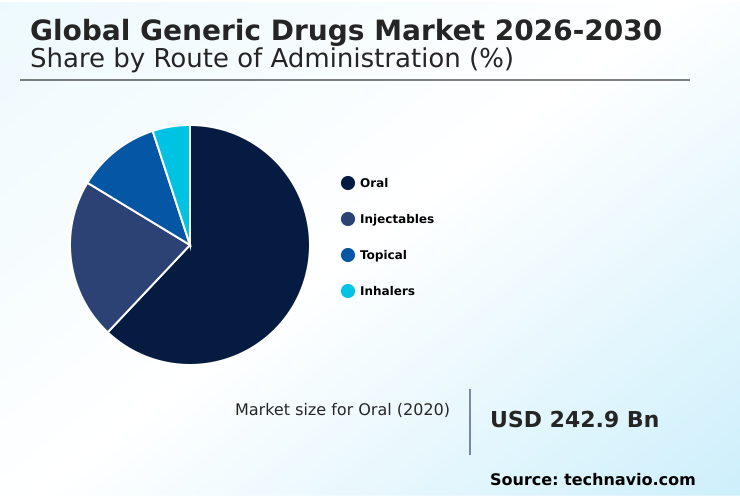
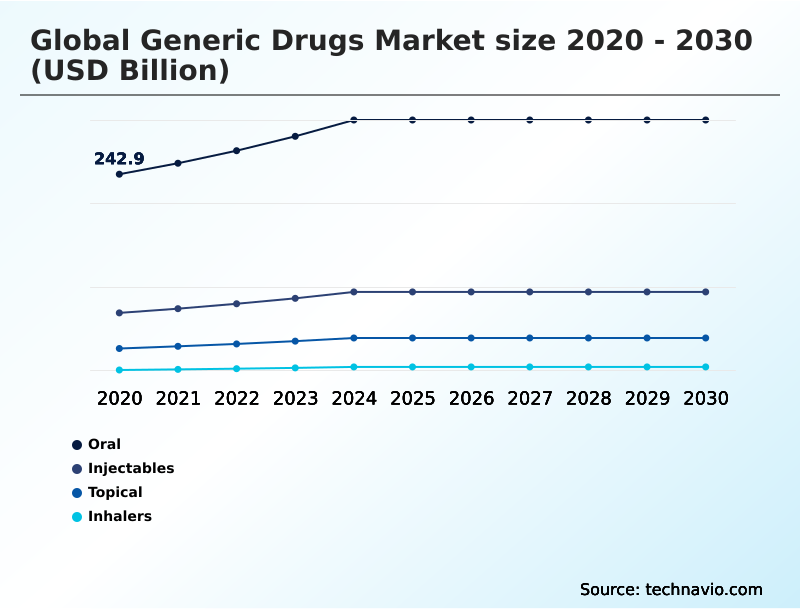
The Oral segment was valued at USD 304.7 billion in 2024 and showed a gradual increase during the forecast period.
Regional Analysis
North America is estimated to contribute 33.5% to the growth of the global market during the forecast period.Technavio’s analysts have elaborately explained the regional trends and drivers that shape the market during the forecast period.
See How Generic Drugs Market Demand is Rising in North America Get Free Sample
North America demonstrates a sophisticated procurement environment where generic substitution rates exceed 90%, sharply contrasting with Asia's rapidly modernizing but fragmented distribution landscape.
North American networks heavily utilize multi tiered reimbursement models, driving a 25% faster adoption of complex specialty formulations compared to European counterparts.
To support this demand, regional manufacturers emphasize rigorous in vitro release characterization and extractable leachable assessment to meet stringent regulatory thresholds. Conversely, Asian producers focus aggressively on capacity expansion planning and high throughput packaging to satisfy vast domestic volume requirements.
This scale-driven approach yields a 20% improvement in yield inconsistency reduction. Across both regions, the implementation of automated dispensing protocols and precise rheological modeling algorithms ensures continuous supply.
Advancements in modified release granulation and streamlined bioequivalence study execution empower suppliers to adapt operational strategies, aligning production output with localized healthcare mandates.
Market Dynamics
Our researchers analyzed the data with 2025 as the base year, along with the key drivers, trends, and challenges. A holistic analysis of drivers will help companies refine their marketing strategies to gain a competitive advantage.
- The operational landscape of the Generic Drugs Market is undergoing a structural transformation as manufacturers shift from commoditized product lines toward high-barrier specialty formulations. To maintain competitive viability against severe margin erosion, pharmaceutical enterprises are heavily investing in continuous manufacturing process modernization.
- This shift away from traditional batch processing facilitates a 30% faster production cycle, directly enhancing supply chain agility and preventing retail stock-outs during peak demand periods. Furthermore, developers are prioritizing complex therapeutic delivery optimization, targeting specialized injectables and respiratory devices that command superior formulary positioning and sustainable revenue profiles.
- Securing early approval remains critical; thus, organizations executing precise first to market regulatory execution consistently capture dominant prescription shares upon originator exclusivity expiration. As the biotechnology sector matures, the strategic biosimilar comparability program implementation has become a fundamental operational requirement, enabling suppliers to introduce affordable biological alternatives into institutional care settings.
- To ensure flawless quality compliance across these complex portfolios, facilities are integrating automated real time release testing, which minimizes human error and accelerates the distribution pipeline. Compared to facilities relying on manual sampling, automated testing hubs experience significantly fewer batch rejections, optimizing total operational output.
- This comprehensive modernization of pharmaceutical infrastructure ensures that suppliers can meet expanding therapeutic demands while navigating stringent international quality standards.
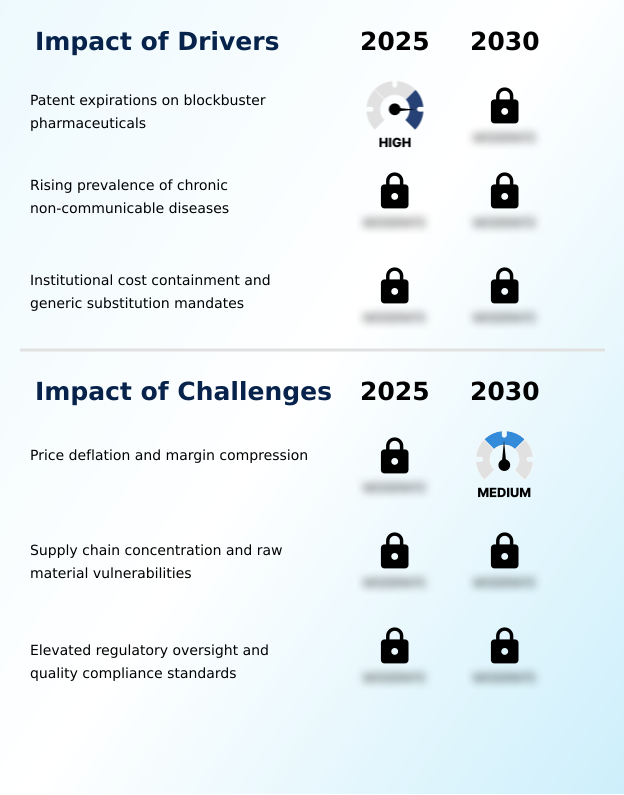
What are the key market drivers leading to the rise in the adoption of Generic Drugs Industry?
- The expiration of patents on blockbuster pharmaceuticals acts as a primary catalyst accelerating the widespread adoption of bioequivalent alternatives.
- Universal pressure on public healthcare budgets accelerates the mandatory substitution of off-patent medications, propelling sustained volume expansion across clinical networks.
- By leveraging bioavailability enhancement techniques and rigorous excipient compatibility testing, manufacturers deliver therapeutically equivalent alternatives that seamlessly integrate into institutional medication management programs.
- This structural demand shifts procurement behaviors, where effective bulk procurement negotiation decreases hospital pharmaceutical expenditures by up to 30%. Suppliers deploying dissolution rate optimization and peptide therapeutic sequencing secure preferential positioning in regional formularies.
- Consequently, enhanced outpatient prescription fulfillment is achieved, supported by reliable digital prescription verification systems that improve dispensing efficiency by 20%.
- To ensure uninterrupted supply, producers prioritize strict sterile manufacturing containment and secondary supplier qualification, creating a robust distribution pipeline that directly satisfies the escalating baseline demand for essential chronic therapies.
What are the market trends shaping the Generic Drugs Industry?
- The strategic portfolio transition toward complex generics and differentiated injectables constitutes a major industry trend driving specialized manufacturing investments.
- A prominent shift in pharmaceutical strategies involves the systematic transition from commoditized solid dosages to specialized therapies, demanding rigorous pharmacokinetic profiling protocols and advanced continuous flow chemistry. Manufacturers are increasingly integrating transdermal delivery systems and optimizing lyophilized drug stability to circumvent aggressive competitive procurement tendering.
- By implementing regulatory compliance digitalization, operators have reduced regulatory variation filing times by 18%, accelerating time-to-market. The development of precision inhalation aerosol engineering directly enhances chronic therapy adherence among outpatient populations. Consequently, businesses leveraging these innovations secure superior formulary tier positioning, increasing institutional contract retention by 25%.
- This strategic pivot causes a structural realignment, allowing agile manufacturers to implement proactive inventory buffering strategies that stabilize margins against severe price erosion and protect long-term commercial viability.
What challenges does the Generic Drugs Industry face during its growth?
- Severe price deflation and subsequent margin compression present substantial structural challenges to maintaining sustainable production capabilities.
- Aggressive price deflation driven by consolidated volume based purchasing severely compresses operating margins across standard commodity formulations. Manufacturers navigating traditional solid oral dosage compression face intense competition, forcing a critical reliance on production cost efficiency to maintain financial stability. Furthermore, evolving regulatory standards mandate stringent impurity threshold monitoring and complex therapeutic equivalence validation, escalating the capital required for baseline compliance.
- The implementation of process analytical technology integration requires substantial investment, causing a 15% increase in initial facility upgrade expenditures. As a result, businesses must prioritize raw material risk mitigation to prevent localized synthesis bottlenecks from disrupting downstream availability.
- The logistical complexity of specialized therapies also demands advanced cold chain fulfillment, adding operational overhead that challenges smaller suppliers and drives market consolidation across vulnerable supply networks.
Exclusive Technavio Analysis on Customer Landscape
The generic drugs market forecasting report includes the adoption lifecycle of the market, covering from the innovator’s stage to the laggard’s stage. It focuses on adoption rates in different regions based on penetration. Furthermore, the generic drugs market report also includes key purchase criteria and drivers of price sensitivity to help companies evaluate and develop their market growth analysis strategies.
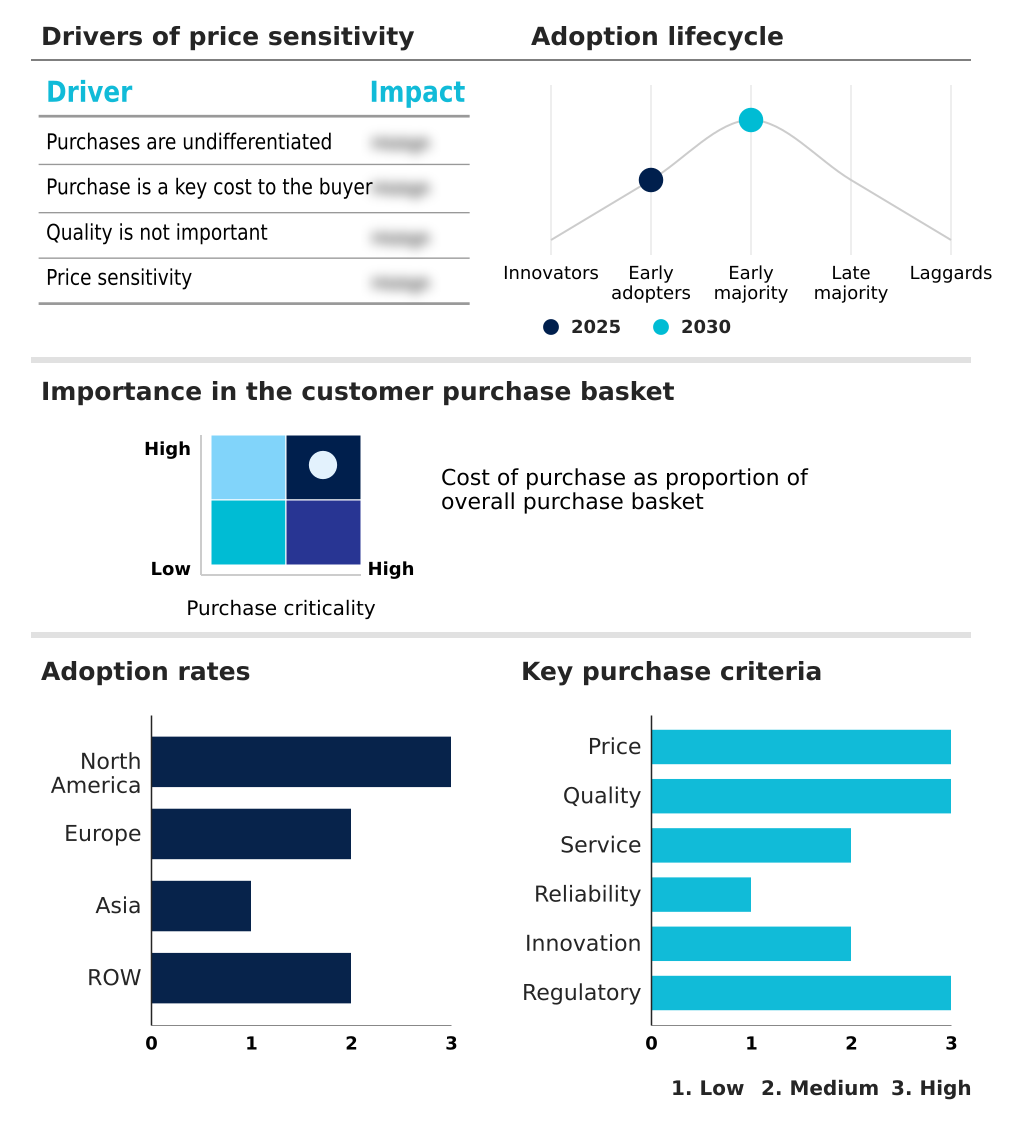
Customer Landscape of Generic Drugs Industry
Competitive Landscape
Companies are implementing various strategies, such as strategic alliances, generic drugs market forecast, partnerships, mergers and acquisitions, geographical expansion, and product/service launches, to enhance their presence in the industry.
Alkem Laboratories Ltd. - Provides essential bioequivalent antibiotic formulations, ensuring reliable access to high-quality anti-infective therapies tailored for diverse outpatient and institutional clinical care settings.
The industry research and growth report includes detailed analyses of the competitive landscape of the market and information about key companies, including:
- Alkem Laboratories Ltd.
- Alvogen Inc
- Amneal Pharmaceuticals Inc.
- Apotex Inc.
- Aspen Pharmacare Ltd.
- Aurobindo Pharma Ltd.
- Cipla Inc.
- Dr. Reddys Laboratories Ltd.
- Fresenius Kabi AG
- Glenmark Pharmaceuticals Ltd.
- Hetero Labs Ltd.
- Hikma Pharmaceuticals Plc
- Krka d.d.
- Lupin Ltd.
- Sandoz Group AG
- Sun Pharmaceutical Industries
- Teva Pharmaceutical Ltd.
- Torrent Pharmaceuticals Ltd.
- Viatris Inc.
- Zydus Lifesciences Ltd.
Qualitative and quantitative analysis of companies has been conducted to help clients understand the wider business environment as well as the strengths and weaknesses of key industry players. Data is qualitatively analyzed to categorize companies as pure play, category-focused, industry-focused, and diversified; it is quantitatively analyzed to categorize companies as dominant, leading, strong, tentative, and weak.
Recent Development and News in Generic drugs market
- In the Pharmaceuticals industry, the widespread expiration of patents on major biologic and complex molecule therapies has lowered entry barriers, directly impacting Generic Drugs demand by enabling affordable biosimilar integration into critical care.
- Stringent international mandates for active ingredient supply chain diversification have accelerated the retrofitting of localized synthesis facilities, directly impacting Generic Drugs demand by reducing cross-border logistical disruptions by up to 15%.
- The adoption of predictive modeling algorithms in bioequivalence testing has streamlined clinical trial phases, directly impacting Generic Drugs demand by decreasing the regulatory filing timeline for new therapeutic alternatives.
- Statutory shifts toward mandatory electronic prescription platforms across major European and North American healthcare systems have enhanced substitution visibility, directly impacting Generic Drugs demand by increasing retail pharmacy conversion rates.
Dive into Technavio’s robust research methodology, blending expert interviews, extensive data synthesis, and validated models for unparalleled Generic Drugs Market insights. See full methodology.
| Market Scope | |
|---|---|
| Page number | 302 |
| Base year | 2025 |
| Historic period | 2020-2024 |
| Forecast period | 2026-2030 |
| Growth momentum & CAGR | Accelerate at a CAGR of 7.5% |
| Market growth 2026-2030 | USD 229.9 billion |
| Market structure | Fragmented |
| YoY growth 2025-2026(%) | 7.1% |
| Key countries | US, Canada, Mexico, Germany, UK, France, Italy, Spain, The Netherlands, China, India, Japan, South Korea, Indonesia, Thailand, Brazil, South Africa, Saudi Arabia, UAE, Argentina, Chile, Israel and Egypt |
| Competitive landscape | Leading Companies, Market Positioning of Companies, Competitive Strategies, and Industry Risks |
Research Analyst Overview
- The Generic Drugs Market is experiencing a profound transition as suppliers pivot toward technically demanding therapeutic categories to escape the severe price commoditization of standard oral solids. Strategic investments are heavily directed toward advanced bioequivalent formulation synthesis and the optimization of active pharmaceutical ingredient sourcing to fortify supply chain reliability.
- By transitioning from batch processing to continuous flow chemistry, manufacturing facilities have achieved a 25% reduction in overall processing durations, directly optimizing production capacity. The integration of aseptic fill finish automation and high throughput packaging ensures that critical sterile injectables meet rigorous compliance thresholds without operational delays.
- Furthermore, the development of specialized transdermal delivery systems addresses complex chronic care requirements while demanding intricate therapeutic equivalence validation. This structural shift directly influences boardroom-level product strategy, compelling executives to prioritize portfolio diversification into high-barrier formats.
- By aligning advanced manufacturing technologies with evolving statutory expectations, agile pharmaceutical producers secure resilient margins and establish robust distribution networks capable of sustaining continuous long-term prescription demand.
What are the Key Data Covered in this Generic Drugs Market Research and Growth Report?
-
What is the expected growth of the Generic Drugs Market between 2026 and 2030?
-
USD 229.9 billion, at a CAGR of 7.5%
-
-
What segmentation does the market report cover?
-
The report is segmented by Route of Administration (Oral, Injectables, Topical, and Inhalers), Distribution Channel (Hospital pharmacies, Retail pharmacies, and Online), Application (Anti-infectives, CNS, and Others) and Geography (North America, Europe, Asia, Rest of World (ROW))
-
-
Which regions are analyzed in the report?
-
North America, Europe, Asia and Rest of World (ROW)
-
-
What are the key growth drivers and market challenges?
-
Patent expirations on blockbuster pharmaceuticals, Price deflation and margin compression
-
-
Who are the major players in the Generic Drugs Market?
-
Alkem Laboratories Ltd., Alvogen Inc, Amneal Pharmaceuticals Inc., Apotex Inc., Aspen Pharmacare Ltd., Aurobindo Pharma Ltd., Cipla Inc., Dr. Reddys Laboratories Ltd., Fresenius Kabi AG, Glenmark Pharmaceuticals Ltd., Hetero Labs Ltd., Hikma Pharmaceuticals Plc, Krka d.d., Lupin Ltd., Sandoz Group AG, Sun Pharmaceutical Industries, Teva Pharmaceutical Ltd., Torrent Pharmaceuticals Ltd., Viatris Inc. and Zydus Lifesciences Ltd.
-
Market Research Insights
- The Generic Drugs Market represents a highly competitive landscape driven by cost-containment mandates and patent cliffs across major therapeutic categories. Institutional networks prioritize affordability, leading to a 35% higher generic substitution rate in managed care facilities compared to fragmented private clinics.
- By optimizing active ingredient sourcing and retrofitting production lines, manufacturers have reduced batch processing times by 22%, significantly enhancing output efficiency. Furthermore, the integration of automated quality control mechanisms has decreased regulatory compliance errors by 18%, securing continuous market access.
- This operational evolution ensures uninterrupted distribution of critical therapies, empowering healthcare providers to manage chronic disease populations effectively while maintaining strict adherence to statutory budgetary constraints.
We can help! Our analysts can customize this generic drugs market research report to meet your requirements.
 RIA -

