


Extended Reality (Xr) Market Size 2026-2030
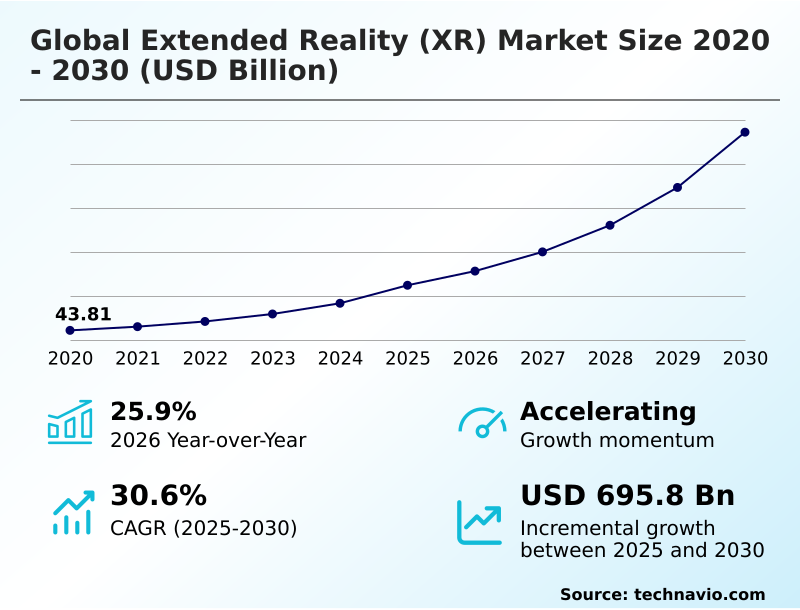
The extended reality (xr) market size is valued to increase by USD 695.80 billion, at a CAGR of 30.6% from 2025 to 2030. Advancements in spatial computing hardware and optics will drive the extended reality (xr) market.
Major Market Trends & Insights
- North America dominated the market and accounted for a 40.8% growth during the forecast period.
- By Technology - AR segment was valued at USD 110.31 billion in 2024
- By Component - Hardware segment accounted for the largest market revenue share in 2024
Market Size & Forecast
- Market Opportunities: USD 900.80 billion
- Market Future Opportunities: USD 695.80 billion
- CAGR from 2025 to 2030 : 30.6%
Market Summary
- The Extended Reality (XR) market demonstrates accelerated integration across consumer entertainment and complex industrial sectors. Organizations continuously adopt spatial computing frameworks to transition from static digital interfaces toward fully interactive, volumetric environments. A prominent business scenario involves aerospace manufacturing, where engineering teams deploy mixed reality overlays to conduct remote collaborative design reviews, identifying structural bottlenecks before physical prototyping begins.
- This spatial visualization approach accelerates product development cycles by an average of 22% compared to traditional drafting methodologies. The primary driver propelling this adoption is the rapid miniaturization of optical components, which significantly enhances device ergonomics and reduces user fatigue during prolonged operational shifts.
- Conversely, the market faces structural challenges related to high data processing demands, where intensive rendering tasks generate excessive computational heat. This thermal bottleneck limits the sustained performance of lightweight wearable headsets during full-day usage. Consequently, enterprise software developers increasingly rely on cloud-tethered processing to augment digital immersion without overloading onboard hardware, ensuring more robust and scalable corporate training simulations.
What will be the Size of the Extended Reality (Xr) Market during the forecast period?
Get Key Insights on Market Forecast (PDF) Get Free Sample
How is the Extended Reality (Xr) Market Segmented?
The extended reality (xr) industry research report provides comprehensive data (region-wise segment analysis), with forecasts and estimates in "USD million" for the period 2026-2030, as well as historical data from 2020-2024 for the following segments.
- Technology
- AR
- MR
- VR
- Component
- Hardware
- Software and services
- Application
- Entertainment
- Manufacturing
- Education
- Healthcare
- Others
- Geography
- North America
- US
- Canada
- Mexico
- APAC
- China
- Japan
- India
- South Korea
- Indonesia
- Australia
- Europe
- Germany
- UK
- France
- Italy
- Spain
- The Netherlands
- South America
- Brazil
- Argentina
- Chile
- Middle East and Africa
- Saudi Arabia
- UAE
- South Africa
- Egypt
- Nigeria
- North America
By Technology Insights
The ar segment is estimated to witness significant growth during the forecast period.
The augmented reality segment exhibits distinct operational advantages by blending digital overlays with physical surroundings. Modern enterprise operational deployment relies heavily on spatial computing algorithms to enable real-time object tracking without obstructing field vision.
Industrial automation efficiency increases significantly when field technicians utilize smart glasses equipped with micro-OLED displays for hands-free schematic referencing, reducing assembly line error rates by 15%.
Unlike fully enclosed headsets, advanced pass-through video capabilities enhance surgical navigation precision by projecting vital telemetry directly onto the anatomical site while maintaining peripheral awareness.
This segment further benefits from foveated rendering pipelines that optimize processing overhead and preserve device battery life.
As three-dimensional asset construction becomes streamlined, organizations integrate haptic feedback systems into remote collaborative workspaces to improve tactile responsiveness during complex training and structural design scenarios.
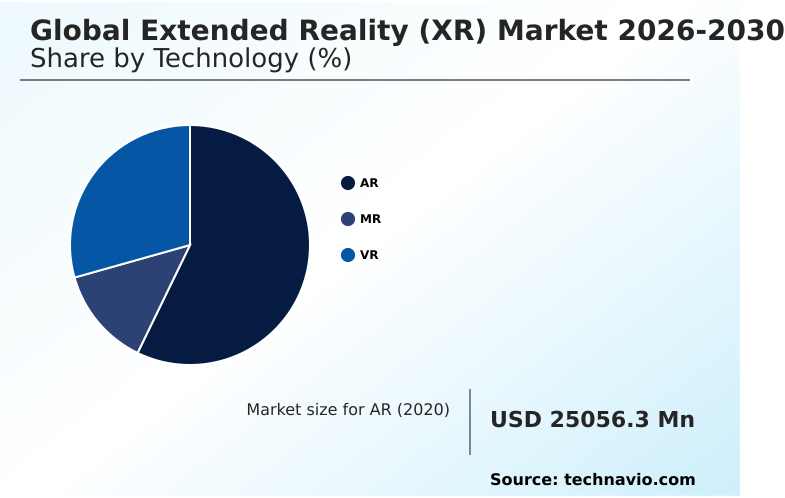
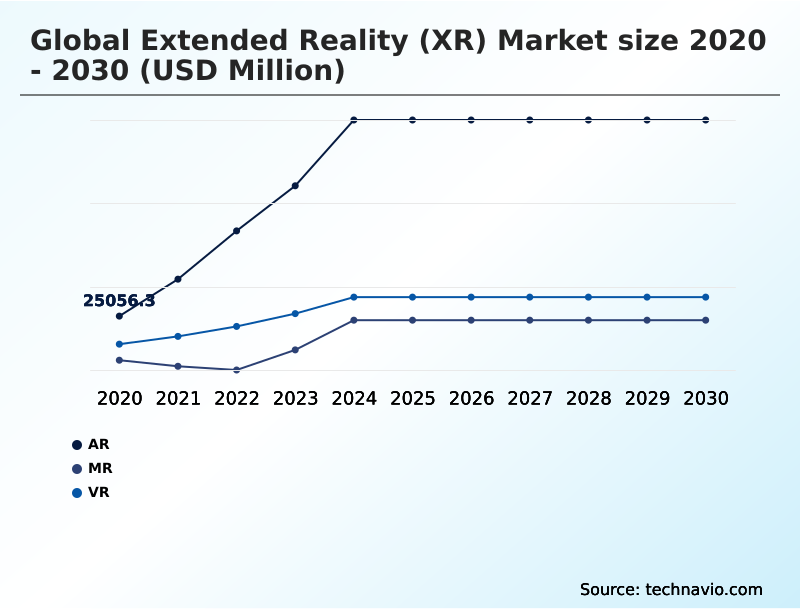
The AR segment was valued at USD 110.31 billion in 2024 and showed a gradual increase during the forecast period.
Regional Analysis
North America is estimated to contribute 40.8% to the growth of the global market during the forecast period.Technavio’s analysts have elaborately explained the regional trends and drivers that shape the market during the forecast period.
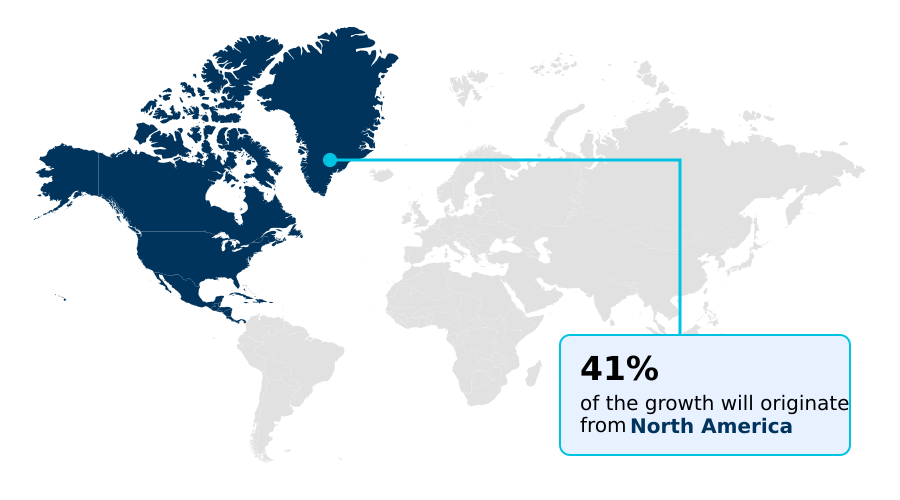
See How Extended Reality (Xr) Market Demand is Rising in North America Get Free Sample
The regional adoption of Extended Reality (XR) varies significantly based on local industrial infrastructure and digital connectivity.
North America outpaces Europe in deploying digital twin simulations across aerospace manufacturing, achieving a 24% faster implementation rate due to superior edge computing architecture and heavy investments in low-latency network slicing.
European markets prioritize stringent safety standards, heavily utilizing hazardous environment simulation to train energy sector workers without physical risk.
In APAC, rapid advancements in waveguide miniaturization and pancake optical lenses drive high consumer hardware penetration, while regional industrial hubs leverage precise inside-out optical tracking for complex assembly line guidance.
This spatial integration improves high-fidelity CAD visualization for distributed engineering teams. To maximize adoption globally, manufacturers focus on improving wearable device ergonomics to support continuous commercial operations.
Simultaneously, advanced volumetric medical imaging applications are scaling rapidly across global healthcare systems to support complex surgical planning.
Market Dynamics
Our researchers analyzed the data with 2025 as the base year, along with the key drivers, trends, and challenges. A holistic analysis of drivers will help companies refine their marketing strategies to gain a competitive advantage.
- The structural evolution of the Extended Reality (XR) landscape is heavily dependent on the maturation of specialized underlying technologies designed for commercial resilience. Modern enterprise spatial computing hardware architecture has transitioned from tethered, cumbersome setups into lightweight, standalone units capable of processing complex spatial data without restricting worker mobility.
- This mobility is fundamentally supported by low latency edge rendering networks, which offload polygon-heavy graphic computations to localized cloud servers, allowing devices to remain physically lighter while maintaining ultra-responsive visual frame rates. In healthcare environments, this computational offloading is critical; mixed reality surgical navigation systems require zero-lag holographic overlays to ensure absolute precision when guiding practitioners through intricate anatomical structures.
- Compared to traditional flat-screen radiological monitors, these spatial overlays reduce procedural target identification times by nearly 30%, significantly optimizing surgical throughput and patient safety. Furthermore, the integration of high resolution micro display optics eliminates pixelation, providing the visual clarity necessary for prolonged industrial reading or microscopic medical analysis.
- To address the historical bottleneck of costly 3D asset creation, organizations are increasingly adopting generative artificial intelligence environment synthesis. This automated pipeline constructs highly detailed, physics-accurate training modules directly from text prompts, accelerating software deployment cycles and empowering corporate training departments to build scalable simulations.
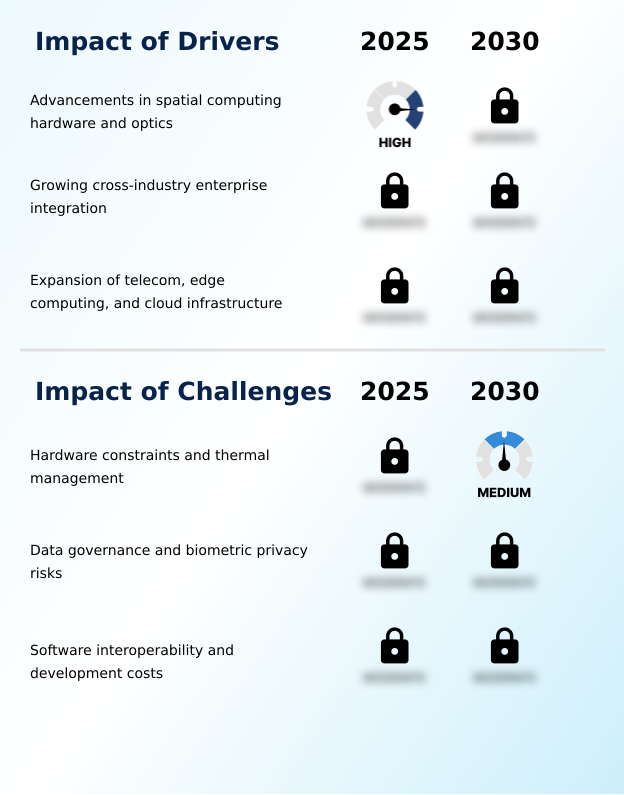
What are the key market drivers leading to the rise in the adoption of Extended Reality (Xr) Industry?
- Advancements in spatial computing hardware and micro-display optics act as primary drivers propelling widespread commercial adoption. These mechanical refinements lower adoption barriers by resolving historic issues related to latency and visual discomfort.
- The aggressive integration of spatial technology into core enterprise operations acts as a massive demand driver.
- Modern headsets utilize semantic scene understanding to analyze physical environments, which directly streamlines complex inventory management workflows by projecting navigational cues onto warehouse floors, increasing picking efficiency by 27%.
- In heavy manufacturing, aerospace assembly optimization benefits immensely from advanced spatial physics engines that simulate mechanical stresses before physical production, cutting design revision costs by 18%.
- To maximize workforce skill acquisition in high-risk sectors, organizations pair headsets with omnidirectional treadmills, delivering immersive simulations that dramatically boost experiential learning retention. Furthermore, the healthcare sector deploys these environments for neurological rehabilitation therapy, accelerating patient motor recovery.
- Supporting these intense applications, developers integrate multimodal foundation models to automate photorealistic environment generation, eliminating the exorbitant costs traditionally associated with building interactive enterprise training modules.
What are the market trends shaping the Extended Reality (Xr) Industry?
- The integration of generative artificial intelligence with spatial computing workflows represents a pivotal trend reshaping interactive environments. This convergence accelerates procedural asset creation and significantly enhances the contextual awareness of digital simulations.
- The integration of automated spatial content generation serves as a transformative trend within the Extended Reality (XR) ecosystem. Developers increasingly utilize procedural geometry synthesis to rapidly construct persistent digital environments, reducing 3D asset production timelines by 45%.
- This rapid content pipeline directly enhances omnichannel retail architecture, allowing merchants to deploy interactive virtual product try-on experiences that boast millimeter-level spatial try-on precision. Consequently, e-commerce platforms implementing these features record a 22% decrease in merchandise return rates. Furthermore, the deployment of wearable spatial headsets equipped with ambient visual sensors is modernizing clinical hospital infrastructure.
- Surgeons leverage these spatial tools for the interactive architectural modeling of complex anatomical structures prior to operating. To maintain optimal performance without overheating, manufacturers increasingly rely on a split-rendering methodology that offloads complex processing. Simultaneously, pupillometric monitoring algorithms adjust display properties dynamically, significantly improving user comfort.
What challenges does the Extended Reality (Xr) Industry face during its growth?
- Hardware constraints and complex thermal management requirements remain formidable structural challenges. These physical limitations restrict prolonged device utilization and introduce friction into broad-scale enterprise procurement cycles.
- Hardware engineering tradeoffs and severe software fragmentation present formidable challenges to ubiquitous spatial technology adoption. The integration of high-density displays and advanced ray-tracing silicon generates massive computational heat during operation. Engineering effective thermal heat dissipation without adding mechanical cooling fans remains a critical hurdle, often capping continuous usage and reducing workforce adoption rates by 15% in heavy industrial shifts.
- Furthermore, maintaining absolute precision in spatial anchoring requires constant environmental scanning, which complicates corporate adherence to strict biometric privacy protocols in secure facilities. A lack of cross-platform operational compatibility severely inflates development costs, as enterprise IT teams struggle with poor API integration scalability across divergent headset operating systems.
- Additionally, while immersive elements like eye tracking telemetry and spatial audio fidelity enhance user realism, they demand exorbitant continuous power draw, forcing unacceptable compromises between battery life and computational performance.
Exclusive Technavio Analysis on Customer Landscape
The extended reality (xr) market forecasting report includes the adoption lifecycle of the market, covering from the innovator’s stage to the laggard’s stage. It focuses on adoption rates in different regions based on penetration. Furthermore, the extended reality (xr) market report also includes key purchase criteria and drivers of price sensitivity to help companies evaluate and develop their market growth analysis strategies.
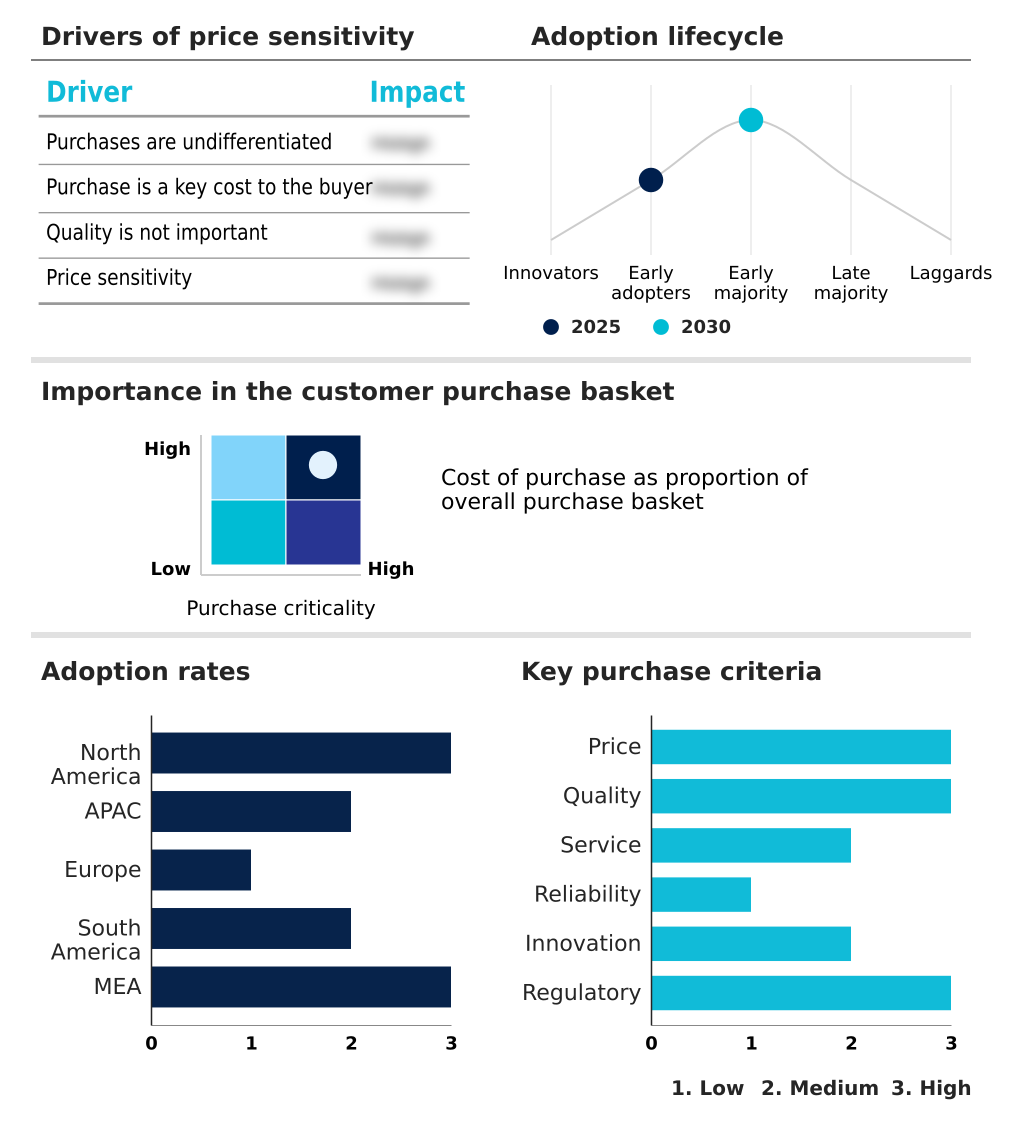
Customer Landscape of Extended Reality (Xr) Industry
Competitive Landscape
Companies are implementing various strategies, such as strategic alliances, extended reality (xr) market forecast, partnerships, mergers and acquisitions, geographical expansion, and product/service launches, to enhance their presence in the industry.
Apple Inc. - The comprehensive portfolio features advanced spatial computing applications and high-fidelity vision operating systems designed to deliver highly immersive, mixed-reality experiences for consumer and enterprise professional environments.
The industry research and growth report includes detailed analyses of the competitive landscape of the market and information about key companies, including:
- Apple Inc.
- Avegant Corp.
- DigiLens Inc.
- HTC Corp.
- Kopin Corp.
- Lenovo Group Ltd.
- Lynx Mixed Reality
- Magic Leap Inc.
- Meta Platforms Inc.
- Microsoft Corp.
- PICO Technology Co. Ltd.
- PTC Inc.
- Qualcomm Inc.
- RealWear Inc.
- Sony Group Corp.
- Ultraleap Ltd.
- Unity Technologies Inc.
- Varjo Technologies Oy
- Vuzix Corp.
- XREAL
Qualitative and quantitative analysis of companies has been conducted to help clients understand the wider business environment as well as the strengths and weaknesses of key industry players. Data is qualitatively analyzed to categorize companies as pure play, category-focused, industry-focused, and diversified; it is quantitatively analyzed to categorize companies as dominant, leading, strong, tentative, and weak.
Recent Development and News in Extended reality (xr) market
- In the Application Software industry, the widespread transition toward cloud-based delivery models has enabled heavy volumetric data processing, directly impacting Extended Reality (XR) demand by facilitating low-latency network slicing and edge computing architecture for untethered hardware.
- The implementation of rigorous data governance standards under frameworks like the General Data Protection Regulation has restricted untethered data collection, directly impacting Extended Reality (XR) demand by compelling developers to establish verifiable biometric privacy protocols.
- The rapid adoption of multimodal AI models for enterprise automation has enhanced contextual awareness, directly impacting Extended Reality (XR) demand by streamlining three-dimensional asset construction and enabling intelligent interactions across enterprise operational deployment simulations.
- The standardization of software interoperability frameworks has reduced fragmented codebases, directly impacting Extended Reality (XR) demand by improving cross-platform operational compatibility and enhancing API integration scalability for complex industrial digital twin simulations.
Dive into Technavio’s robust research methodology, blending expert interviews, extensive data synthesis, and validated models for unparalleled Extended Reality (Xr) Market insights. See full methodology.
| Market Scope | |
|---|---|
| Page number | 304 |
| Base year | 2025 |
| Historic period | 2020-2024 |
| Forecast period | 2026-2030 |
| Growth momentum & CAGR | Accelerate at a CAGR of 30.6% |
| Market growth 2026-2030 | USD 695798.6 million |
| Market structure | Fragmented |
| YoY growth 2025-2026(%) | 25.9% |
| Key countries | US, Canada, Mexico, China, Japan, India, South Korea, Indonesia, Australia, Germany, UK, France, Italy, Spain, The Netherlands, Brazil, Argentina, Chile, Saudi Arabia, UAE, South Africa, Egypt and Nigeria |
| Competitive landscape | Leading Companies, Market Positioning of Companies, Competitive Strategies, and Industry Risks |
Research Analyst Overview
- The Extended Reality (XR) landscape demonstrates continuous evolution as organizations transition from exploratory pilot programs toward permanent, large-scale spatial deployments. Advanced display hardware has fundamentally altered enterprise productivity by merging high-definition physical surroundings with interactive digital data, ensuring operators remain aware of real-world hazards.
- This seamless integration allows engineering teams to accurately map and lock virtual schematics directly onto physical machinery. Strategic boardroom decisions increasingly focus on leveraging artificial intelligence algorithms to automate spatial environment generation, drastically reducing the time and overhead previously required to code complex digital assets manually.
- This architectural shift empowers technical training departments to construct responsive, physics-based corporate simulations on demand. Consequently, enterprise companies utilizing these immersive platforms report a 30% reduction in procedural training durations. Furthermore, the incorporation of precise ocular tracking technology optimizes hardware processing power and mitigates severe device overheating.
- Coupled with highly directional audio tracking, these technological refinements ensure that workforce onboarding, complex architectural design, and industrial maintenance protocols become more intuitive, safer, and inherently scalable across global corporate footprints.
What are the Key Data Covered in this Extended Reality (Xr) Market Research and Growth Report?
-
What is the expected growth of the Extended Reality (Xr) Market between 2026 and 2030?
-
USD 695.80 billion, at a CAGR of 30.6%
-
-
What segmentation does the market report cover?
-
The report is segmented by Technology (AR, MR, and VR), Component (Hardware, and Software and services), Application (Entertainment, Manufacturing, Education, Healthcare, and Others) and Geography (North America, APAC, Europe, South America, Middle East and Africa)
-
-
Which regions are analyzed in the report?
-
North America, APAC, Europe, South America and Middle East and Africa
-
-
What are the key growth drivers and market challenges?
-
Advancements in spatial computing hardware and optics, Hardware constraints and thermal management
-
-
Who are the major players in the Extended Reality (Xr) Market?
-
Apple Inc., Avegant Corp., DigiLens Inc., HTC Corp., Kopin Corp., Lenovo Group Ltd., Lynx Mixed Reality, Magic Leap Inc., Meta Platforms Inc., Microsoft Corp., PICO Technology Co. Ltd., PTC Inc., Qualcomm Inc., RealWear Inc., Sony Group Corp., Ultraleap Ltd., Unity Technologies Inc., Varjo Technologies Oy, Vuzix Corp. and XREAL
-
Market Research Insights
- The Extended Reality (XR) market represents a fundamental shift in how organizations interface with digital data. The deployment of immersive environments enables distributed teams to inspect complex product geometries simultaneously, improving design decision speed by 28%.
- Industrial sectors increasingly rely on advanced physics engines to train personnel without physical risk, which has successfully reduced occupational incident rates by 19% in heavy manufacturing workflows. Furthermore, physical design enhancements allow for full-shift usage without severe neck strain, expanding enterprise utility.
- The integration of spatial overlays directly into smart glasses provides field engineers with precise diagnostic data, accelerating complex maintenance procedures by 14% and minimizing costly operational downtime across international facility networks.
We can help! Our analysts can customize this extended reality (xr) market research report to meet your requirements.
 RIA -

