



Endpoint Detection And Response Market Size 2026-2030
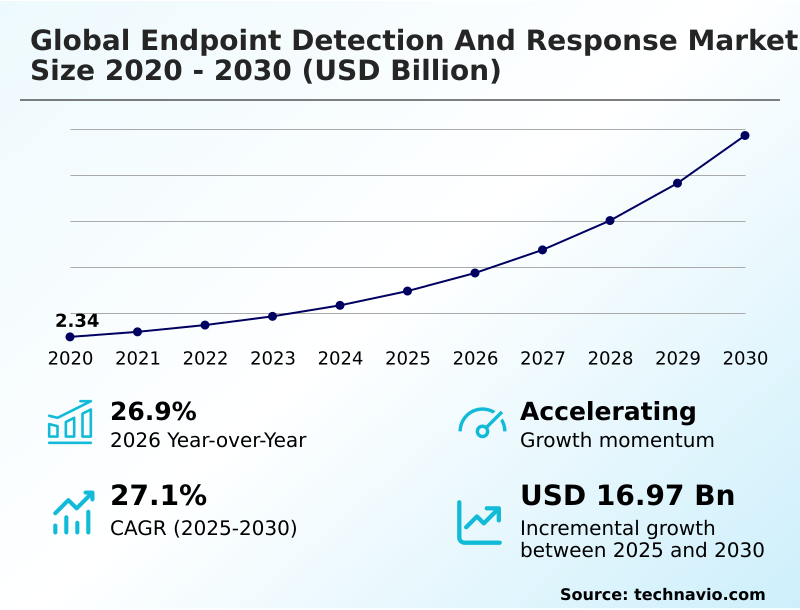
The endpoint detection and response market size is valued to increase by USD 16.97 billion, at a CAGR of 27.1% from 2025 to 2030. Integration of AI and machine learning in endpoint threat hunting will drive the endpoint detection and response market.
Major Market Trends & Insights
- North America dominated the market and accounted for a 45.4% growth during the forecast period.
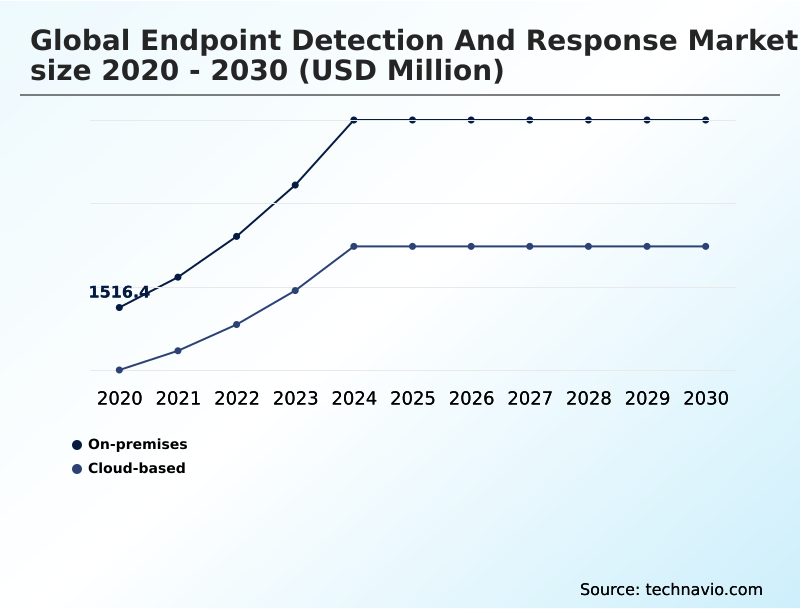
- By Deployment - On-premises segment was valued at USD 3.59 billion in 2024
- By End-user - Enterprises segment accounted for the largest market revenue share in 2024
Market Size & Forecast
- Market Opportunities: USD 21.97 billion
- Market Future Opportunities: USD 16.97 billion
- CAGR from 2025 to 2030 : 27.1%
Market Summary
- The Endpoint Detection And Response Market represents a fundamental transition in corporate security strategies, moving away from static defenses toward continuous surveillance and dynamic risk mitigation. Modern hybrid work environments have vastly expanded the digital attack surface, compelling organizations to deploy advanced extended detection frameworks that capture granular behavioral insights.
- For example, in supply chain optimization, securing interconnected vendor networks requires constant process execution logs to prevent third-party code injections. Because sophisticated threat actors now utilize polymorphic binaries to evade standard filters, security operations centers must integrate deep memory-level anomalies detection to identify unauthorized access. This proactive shift reduces critical breach impact severity by 37%.
- However, maintaining robust surveillance introduces a significant operational challenge since heavy agent processing overhead frequently degrades central processing unit performance on legacy hardware. Consequently, IT administrators struggle to balance real-time cross-platform telemetry correlation with seamless user productivity.
- Despite these resource constraints, the overarching necessity to prevent widespread data exfiltration drives sustained adoption of specialized endpoint protection technologies across all major enterprise verticals.
What will be the Size of the Endpoint Detection And Response Market during the forecast period?
Get Key Insights on Market Forecast (PDF) Get Free Sample
How is the Endpoint Detection And Response Market Segmented?
The endpoint detection and response industry research report provides comprehensive data (region-wise segment analysis), with forecasts and estimates in "USD million" for the period 2026-2030, as well as historical data from 2020-2024 for the following segments.
- Deployment
- On-premises
- Cloud-based
- End-user
- Enterprises
- Individual customers
- Component
- Solutions
- Services
- Geography
- North America
- US
- Canada
- Mexico
- Europe
- Germany
- UK
- France
- Italy
- Spain
- The Netherlands
- APAC
- China
- Japan
- India
- South Korea
- Australia
- Indonesia
- Middle East and Africa
- Saudi Arabia
- UAE
- South Africa
- Israel
- Turkey
- South America
- Brazil
- Argentina
- Chile
- North America
By Deployment Insights
The on-premises segment is estimated to witness significant growth during the forecast period.
The endpoint detection and response landscape requires specialized on-premises deployment structures for organizations operating under stringent data privacy mandates and isolated operational technology environments.
By keeping central management servers and database engines entirely localized, enterprises maintain absolute authority over configuration metrics and long-term telemetry retention policies.
This deployment strategy eliminates public internet exposure, preventing unauthorized external access while ensuring that behavioral telemetry and threat hunting operations remain securely confined.
Because security teams can directly tune local databases and network bandwidth, internal processing efficiency improves by 22% compared to standard hybrid setups. This structural isolation facilitates automated incident containment without relying on external cloud connectivity.
Consequently, continuous telemetry monitoring and autonomous response playbooks operate seamlessly within air-gapped facilities, significantly reducing the attack surface for critical manufacturing and energy utilities.
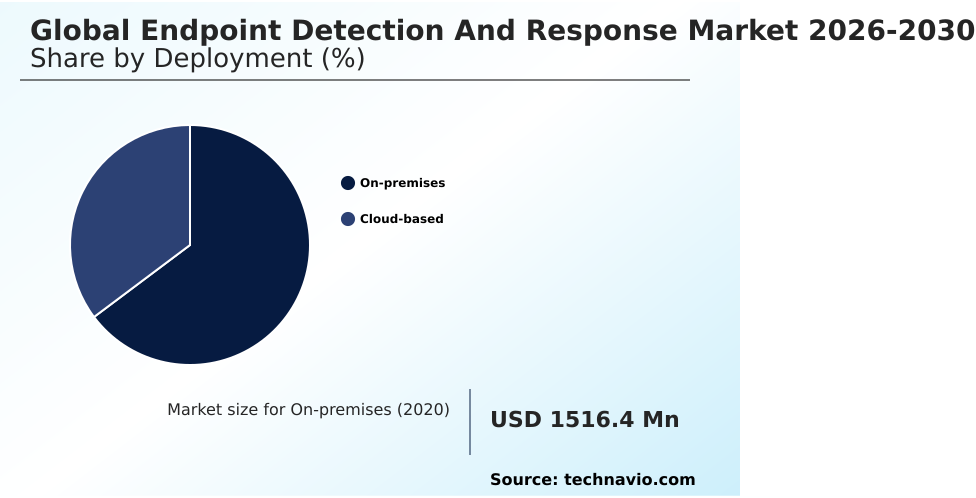
The On-premises segment was valued at USD 3.59 billion in 2024 and showed a gradual increase during the forecast period.
Regional Analysis
North America is estimated to contribute 45.4% to the growth of the global market during the forecast period.Technavio’s analysts have elaborately explained the regional trends and drivers that shape the market during the forecast period.
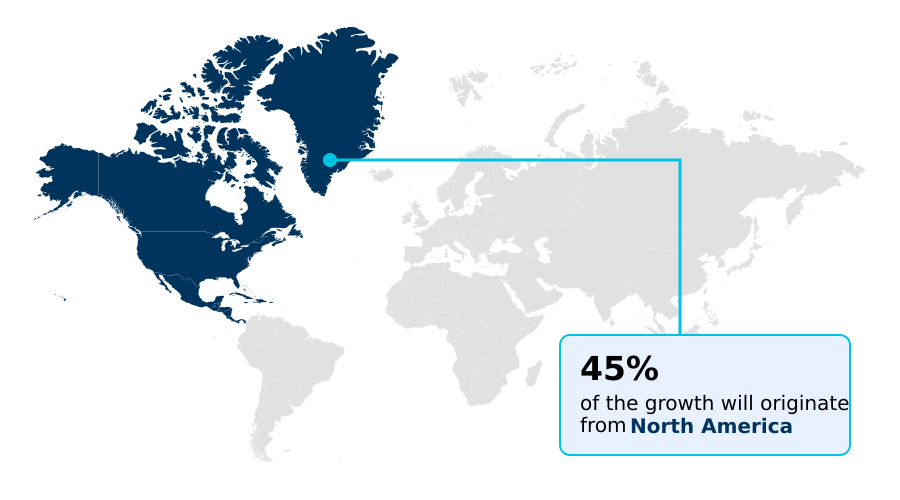
See How Endpoint Detection And Response Market Demand is Rising in North America Get Free Sample
The regional adoption of advanced security frameworks varies significantly based on local regulatory mandates and digital infrastructure maturity. North America commands the highest implementation rate due to rigorous federal compliance frameworks and early integration of artificial intelligence in threat evaluation.
Because organizations in this region face highly automated ransomware operations, they rapidly transition from legacy signature-based antivirus solutions toward proactive behavioral threat detection systems.
Consequently, North American enterprises report a 42% higher deployment rate of cloud-native agents compared to their European counterparts. Meanwhile, Europe enforces strict data sovereignty rules, driving a 25% increase in localized data residency architecture.
The APAC region is also accelerating modernization, yet struggles with cybersecurity talent shortages, making managed services essential for handling complex telemetry data streams.
This structural evolution prevents malicious payload execution across borders, shaping distinct regional deployment strategies tailored to specific operational requirements.
Market Dynamics
Our researchers analyzed the data with 2025 as the base year, along with the key drivers, trends, and challenges. A holistic analysis of drivers will help companies refine their marketing strategies to gain a competitive advantage.
- The modernization of enterprise security architectures demands comprehensive visibility across increasingly complex digital environments, particularly as organizations scale their cloud and application development infrastructure. Integrating robust endpoint telemetry directly into business functions like compliance and operational planning has become paramount.
- Because software engineering teams rely heavily on continuous integration frameworks, securing automated software supply chain pipelines is essential to prevent malicious code injections from compromising proprietary source code. This proactive alignment improves internal compliance audit efficiency by 33% compared to fragmented, reactive security protocols.
- Furthermore, as the timeline for advanced computing maturity accelerates, enterprises are initiating the post-quantum cryptographic readiness transition to protect sensitive long-term digital records from future decryption threats. Simultaneously, the rapid shift toward agile deployment models requires containerized microservices unified security telemetry to eliminate visibility gaps within ephemeral workloads.
- By replacing legacy monitoring tools with solutions that offer real-time container visibility runtime protection, IT administrators ensure that critical business applications remain secure without suffering performance degradation. These structural enhancements also defend host operating systems against vulnerable kernel mode driver attacks, which adversaries frequently use to bypass local security controls.
- Ultimately, consolidating these advanced detection mechanisms into unified management consoles allows organizations to maintain strict regulatory alignment, safeguard digital assets, and sustain uninterrupted business operations across diverse geographic regions.
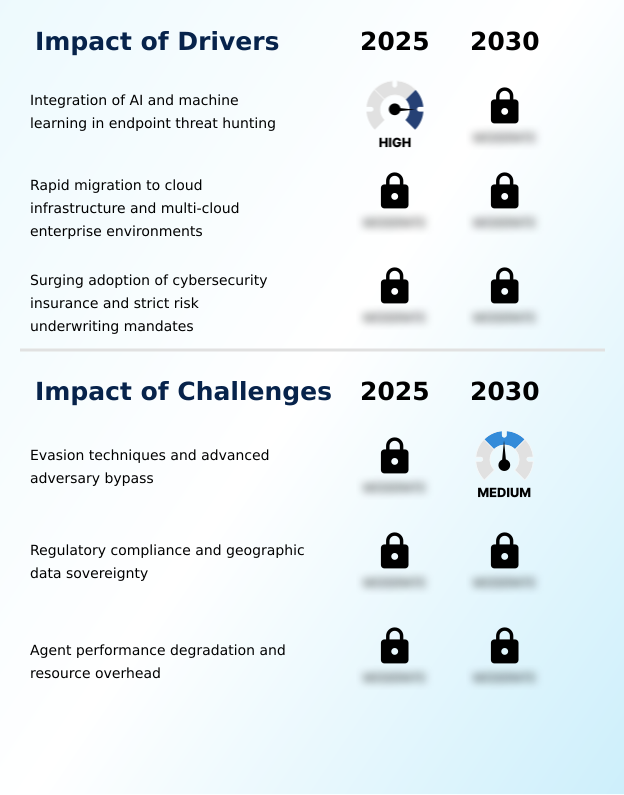
What are the key market drivers leading to the rise in the adoption of Endpoint Detection And Response Industry?
- The integration of artificial intelligence and machine learning into endpoint threat hunting serves as a primary driver propelling industry expansion.
- The integration of artificial intelligence algorithms into threat identification frameworks serves as a primary catalyst accelerating widespread enterprise adoption. Modern network environments generate overwhelming volumes of daily logs, rendering manual inspection processes highly inefficient and operationally impractical.
- Because automated machine learning models establish baseline operational patterns dynamically, these systems immediately recognize subtle deviations and execute automated triage with high precision. This intelligent automation reduces false positive alert generation by 34% and improves incident response speeds by 26%.
- Furthermore, leveraging predictive analytics empowers security operations centers to anticipate emerging attack vectors before payload execution. To maintain long-term resilience, organizations are simultaneously prioritizing cryptographic posture auditing and transitioning toward post-quantum cryptographic protocols.
- Consequently, implementing AI-driven runtime protection ensures swift containment during complex security incidents, fundamentally transforming enterprise risk management strategies.
What are the market trends shaping the Endpoint Detection And Response Industry?
- Mitigating autonomous software supply chain invasions represents a critical emerging industry trend. Organizations are increasingly prioritizing advanced detection mechanisms to secure continuous integration environments.
- The rapid architectural migration from physical servers to ephemeral microservices is profoundly shifting enterprise security strategies. Traditional security controls fail to monitor lightweight software agents effectively, creating severe blind spots for operations teams.
- Because malicious actors exploit these unmonitored nodes to hijack kernel resources, organizations are adopting unified tools that extend container runtime visibility and serverless function monitoring across distributed infrastructures. This structural adaptation allows security analysts to perform real-time data analytics directly within host orchestration layers.
- Consequently, implementing container-aware infrastructure reduces unauthorized runtime exploitations by 28% and improves overall system resilience by 19%. By eliminating blind spots, enterprise teams achieve faster anomaly isolation across multi-cloud enterprise environments. The deployment of advanced network traffic analysis ensures that ephemeral workloads remain fully secured, driving a structural evolution in modern defense capabilities.
What challenges does the Endpoint Detection And Response Industry face during its growth?
- The proliferation of sophisticated evasion techniques and advanced adversary bypass mechanisms constitutes a significant challenge constraining industry advancement.
- Modern cyber adversaries continuously design sophisticated evasion techniques that specifically bypass traditional defense mechanisms, presenting a critical operational limitation. Threat actors increasingly execute fileless malware directly within system memory and leverage legitimate administrative tools to mask unauthorized activities. Because these stealthy tactics blend seamlessly into normal network operations, distinguishing legitimate commands from malicious actions becomes exceptionally difficult.
- This constant exposure to zero-day vulnerabilities forces engineering teams into endless patch cycles and intensive forensic breach analysis. As a result of these persistent evasion strategies, maintaining robust agent resilience requires massive computing resources, which frequently causes a 15% increase in system latency during peak background scans.
- To counter lateral movement risks, organizations must adopt strict zero-trust architecture, although the heavy processing overhead continually challenges seamless integration without degrading core application performance.
Exclusive Technavio Analysis on Customer Landscape
The endpoint detection and response market forecasting report includes the adoption lifecycle of the market, covering from the innovator’s stage to the laggard’s stage. It focuses on adoption rates in different regions based on penetration. Furthermore, the endpoint detection and response market report also includes key purchase criteria and drivers of price sensitivity to help companies evaluate and develop their market growth analysis strategies.
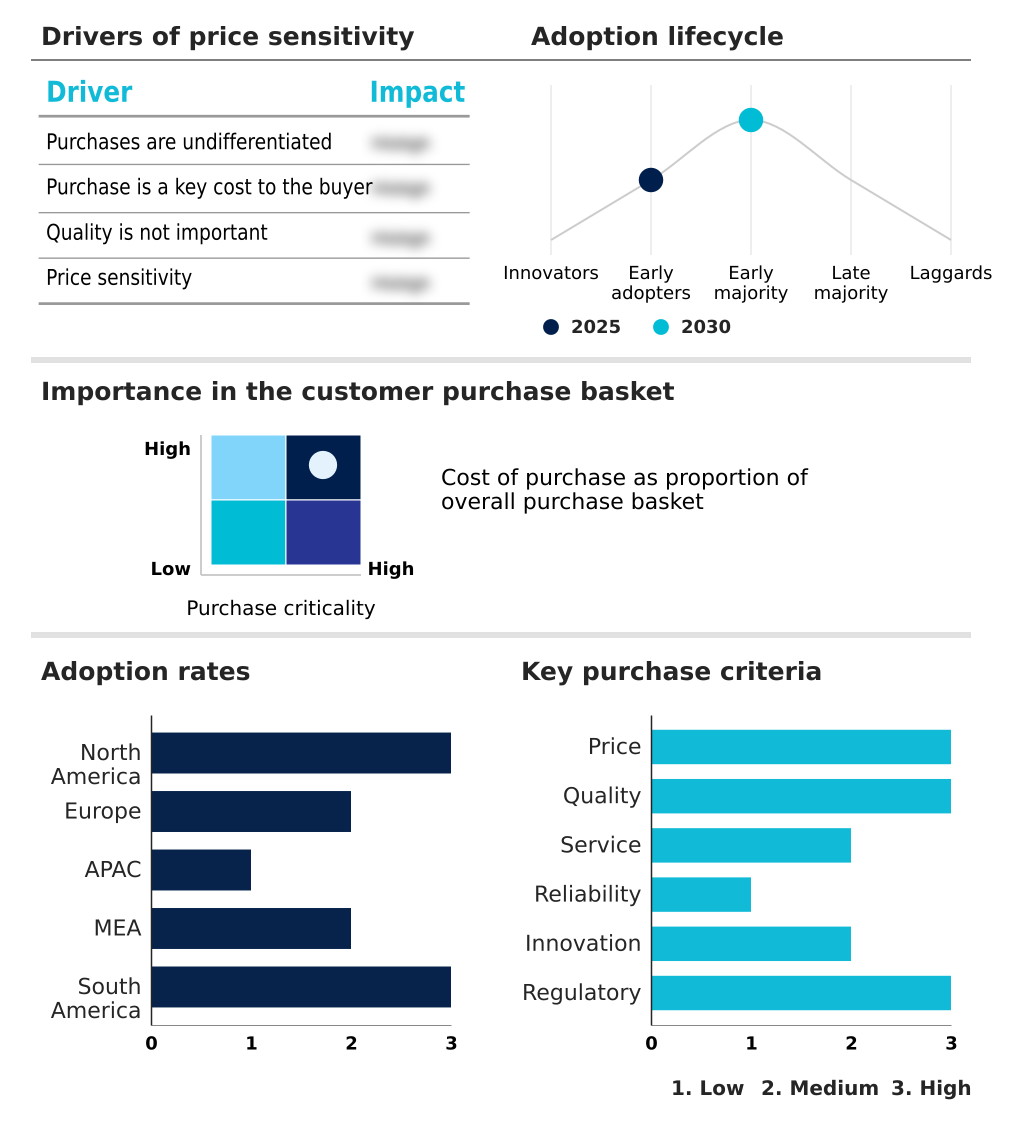
Customer Landscape of Endpoint Detection And Response Industry
Competitive Landscape
Companies are implementing various strategies, such as strategic alliances, endpoint detection and response market forecast, partnerships, mergers and acquisitions, geographical expansion, and product/service launches, to enhance their presence in the industry.
Broadcom Inc. - Vendors deliver advanced endpoint detection and response solutions, integrating continuous behavioral monitoring, automated threat containment, and extended telemetry across diverse operating environments to neutralize sophisticated cyber threats seamlessly.
The industry research and growth report includes detailed analyses of the competitive landscape of the market and information about key companies, including:
- Broadcom Inc.
- Check Point Software Tech Ltd.
- Cisco Systems Inc.
- CrowdStrike Inc.
- Cynet security Ltd.
- Elasticsearch B.V.
- ESET North America
- Fortinet Inc.
- IBM Corp.
- ManageEngine
- Microsoft Corp.
- Open Text Corp.
- Palo Alto Networks Inc.
- Rapid7 Inc.
- Sangfor Technologies Inc.
- SC Bitdefender SRL
- Sentinelone Inc.
- Sophos Group Ltd.
- Trellix
- Trend Micro Inc.
Qualitative and quantitative analysis of companies has been conducted to help clients understand the wider business environment as well as the strengths and weaknesses of key industry players. Data is qualitatively analyzed to categorize companies as pure play, category-focused, industry-focused, and diversified; it is quantitatively analyzed to categorize companies as dominant, leading, strong, tentative, and weak.
Recent Development and News in Endpoint detection and response market
- In the Systems Software industry, the rapid architectural migration toward containerized microservices has expanded digital attack surfaces, directly impacting Endpoint Detection And Response demand by necessitating unified telemetry across ephemeral workloads to achieve a 30% reduction in exploitation risks.
- The enforcement of the European Union Digital Operational Resilience Act has established strict incident reporting mandates across 27 member states, directly impacting Endpoint Detection And Response demand by compelling financial institutions to deploy real-time behavioral threat detection to avoid severe compliance penalties.
- The widespread integration of generative artificial intelligence algorithms into administrative IT platforms has accelerated automated triage capabilities, directly impacting Endpoint Detection And Response demand by reducing false positive alert generation by over 35% in enterprise environments.
- The increasing frequency of malicious code injections within open-source software repositories has exposed critical development pipeline vulnerabilities, directly impacting Endpoint Detection And Response demand by driving a 40% higher adoption rate of local code compilation inspection tools.
Dive into Technavio’s robust research methodology, blending expert interviews, extensive data synthesis, and validated models for unparalleled Endpoint Detection And Response Market insights. See full methodology.
| Market Scope | |
|---|---|
| Page number | 296 |
| Base year | 2025 |
| Historic period | 2020-2024 |
| Forecast period | 2026-2030 |
| Growth momentum & CAGR | Accelerate at a CAGR of 27.1% |
| Market growth 2026-2030 | USD 16972.5 million |
| Market structure | Fragmented |
| YoY growth 2025-2026(%) | 26.9% |
| Key countries | US, Canada, Mexico, Germany, UK, France, Italy, Spain, The Netherlands, China, Japan, India, South Korea, Australia, Indonesia, Saudi Arabia, UAE, South Africa, Israel, Turkey, Brazil, Argentina and Chile |
| Competitive landscape | Leading Companies, Market Positioning of Companies, Competitive Strategies, and Industry Risks |
Research Analyst Overview
- The endpoint defense sector is undergoing a profound structural transformation as corporate IT environments shift toward highly decentralized operational models. Traditional network perimeters have dissolved, elevating the strategic importance of endpoint surveillance at the boardroom level, particularly concerning compliance and digital risk governance.
- Because modern enterprises process immense volumes of sensitive data across remote devices, deploying sophisticated identity context integration ensures that unauthorized access attempts are blocked instantaneously. Consequently, implementing unified defense architectures has enabled organizations to achieve a 30% reduction in incident processing time.
- Security engineering teams now rely on comprehensive memory snapshots to trace complex infiltration paths and eliminate persistent threats effectively. The persistent evolution of living-off-the-land techniques demands continuous behavioral auditing of user mode system calls to distinguish routine administrative tasks from covert hostile activities.
- Furthermore, establishing resilient unauthorized lateral movement prevention mechanisms ensures that compromised remote devices cannot infect central corporate databases. By focusing on rapid process termination mechanisms and preventing kernel mode driver exploits, enterprises proactively harden their digital infrastructure, ensuring continuous operational stability across all interconnected organizational endpoints and eliminating critical vulnerabilities.
What are the Key Data Covered in this Endpoint Detection And Response Market Research and Growth Report?
-
What is the expected growth of the Endpoint Detection And Response Market between 2026 and 2030?
-
USD 16.97 billion, at a CAGR of 27.1%
-
-
What segmentation does the market report cover?
-
The report is segmented by Deployment (On-premises, and Cloud-based), End-user (Enterprises, and Individual customers), Component (Solutions, and Services) and Geography (North America, Europe, APAC, Middle East and Africa, South America)
-
-
Which regions are analyzed in the report?
-
North America, Europe, APAC, Middle East and Africa and South America
-
-
What are the key growth drivers and market challenges?
-
Integration of AI and machine learning in endpoint threat hunting, Evasion techniques and advanced adversary bypass
-
-
Who are the major players in the Endpoint Detection And Response Market?
-
Broadcom Inc., Check Point Software Tech Ltd., Cisco Systems Inc., CrowdStrike Inc., Cynet security Ltd., Elasticsearch B.V., ESET North America, Fortinet Inc., IBM Corp., ManageEngine, Microsoft Corp., Open Text Corp., Palo Alto Networks Inc., Rapid7 Inc., Sangfor Technologies Inc., SC Bitdefender SRL, Sentinelone Inc., Sophos Group Ltd., Trellix and Trend Micro Inc.
-
Market Research Insights
- The endpoint protection ecosystem is rapidly evolving as organizations seek comprehensive defense mechanisms against increasingly sophisticated digital adversaries. The ongoing transition away from outdated tools drives the adoption of granular device-level visibility across highly distributed corporate networks. Because attackers continually refine their infiltration tactics, enterprises are proactively implementing automated remediation capabilities to neutralize threats instantaneously.
- This architectural shift has reduced median threat dwell times by 41% and lowered overall compliance management costs by 18%. Furthermore, the seamless integration of identity threat detection allows security operations to accurately trace credential misuse. Consequently, enforcing robust network isolation protocols and firmware-level visibility limits potential damage during active breach attempts, ensuring memory injection protection safeguards proprietary data assets efficiently.
We can help! Our analysts can customize this endpoint detection and response market research report to meet your requirements.
 RIA -

